A Thousand Splendid Suns Virtual Book Discussion

A Thousand Splendid Suns by Khaled Hosseini. Published in 2007.

Synopsis: This novel is the epic story of Mariam, an uneducated woman born out of wedlock in 1960s Afghanistan, and Laila, a well-educated woman from a progressive family born on the eve on the 1978 Communist takeover of Kabul. A Thousand Splendid Suns, set between the early 1970s and 2003, intertwines the lives of these different, yet ultimately connected women. All the while, Afghanistan transitions from monarchy to Communist control to Mujahideen takeover to Taliban regime to transitional government.

About the Author: Khaled Hosseini is an Afghan-American author, who moved from Kabul to the United States in 1980. His first novel, The Kite Runner,  was an international best seller. He currently lives in northern California and is also a U.S. envoy to the United Nations High Commission for Refugess (UNHCR).

My Initial Reactions to the Book

Where do I begin? There is so much substance in this novel to discuss. I haven’t read The Kite Runner (although I watched the movie), and I admit that I am no expert on the cultural history and politics of Afghanistan aside from what is portrayed on CNN and in an old 1986 encyclopedia article I read on Afghanistan during my geography-obsessed childhood.

There are 3 points I would like to make. (1) I was intrigued by the comment that Laila’s father made to her, that woman never had it so good as under the Communist control of Afghanistan. While both living as Rasheed’s wives, Mariam and Laila came from incredibly different educational backgrounds – one with no formal education, the other a star pupil with a previously-thought promising future. However, under the patriarchal/matricidal tyranny of the Taliban, their fates were the same and neither of them had much possibility of breaking free from their abusive lives.

(2) The constant war-torn nature of Afghanistan. I think that it’s also Laila’s father who comments on constant invasion of the country – from the Ghengis Khan-led Monguls over one thousand years ago to the Soviets, the British, the Americans. I also found it ironic that every time a new regime would take over Kabul in the book, Rasheed appeared delighted and seemingly forgot he was now condemning his heroes from several years ago.

(3) I think if one word could sum up this book, it would be Nana’s advice in the beginning “endure.” Mariam endured her mother’s suicide, father’s rejection and his selling her off to marriage at the age of 15. She endured the half-dozen miscarriages, the constant beatings from her husband. In the end, she died the hero, becoming a celebrity in prison during her last days as someone who stood up to her husband. She martyred herself so that Laila and her children could live. Laila also endured becoming an orphan, constant beatings from Rasheed, her perceived knowledge that her true love was dead, the separation from her daughter when she was forced to go to the orphanage. In the end she persevered, and the story had a happy ending. Her life mattered.

So what did you think of the book? Have you also read The Kite Runner, and are able to compare the 2 books? Perhaps you have more background on Afghanistan than I, and can comment on Hosseini’s protrayal its culture and political events. Were you disturbed by the violence and/or optimistic/pessimistic for Afghanistan’s future? Please share your thoughts in the comments section below.

Next up for Discussion: Alice Sebold’s The Almost Moon. Discussion begins January 13th.

Posted in Around the World Virtual Book Club, Movie Reviews/Book Reviews | Tagged , , , , , , , | 1 Comment

Atomic Testing Museum

When one thinks of Las Vegas and Vegas tourism, one doesn’t usually think of the atomic bomb and nuclear testing. However, atomic testing at the Nevada Test Site approximately 100 miles north of Las Vegas has been a part of our history since the 1950s. You may not know that during “Operation Nutmeg” Nevada was chosen to host the tests on weapons of mass destruction because the location of Mercury, Nevada was not near any major population areas.

To explore this bit of Nevada history, today I went with my family to the Atomic Testing Museum, which is located just off the UNLV campus at 755 East Flamingo Road in Las Vegas. The museum is an affiliate of the Smithsonian Institution and a surprisingly good museum for Las Vegas.

Standard admission is $12 per person, but there are a slew of discounts for Nevada residents, military personnel, government employees, senior citizens, students and children. As locals, we ended up paying $9 per person.

The museum features 11 different galleries, and from the museum’s entrance one generally walks through these galleries in chronological order to learn about the nuclear age from the 1940s to the present.  In the ‘Entry Gallery’ and ‘The Atomic Age Gallery,’ one can learn about why the U.S. pursued a nuclear testing program in light of what was going on in the world during World War II and the Cold War.

In subsequent galleries there are a number of artifacts from the Nevada Test Site such as Geiger counters and radioactivity calculators. The connections between propaganda and atomic testing are also apparent in the museum – complete with Cold War-era Disney films, comic books and atomic cocktails. There is also a gallery that contains info on the geology of the region and another gallery tells the cultural history with prehistoric and historic archaeological artifacts.

Two small theatres show interesting short films about the history of above-ground testing and the use of the Nevada Test Site for scientific experiments beyond atomic testing. In light of the current ‘War on Terror,’ one of the current uses of the test site is to train first responders in how to mitigate the effects of a potential nuclear attack on the United States.

Overall the museum is very informative, and knowledgeable docents are around to answer questions about the exhibits. However, I felt the museum touched mostly on the ‘pros’ of the nuclear testing program, and barely brought to light the effects of radioactive fallout on human health, desert wildlife, the environment and climate change.

In addition to the permanent galleries, there is the Harry Reid Exhibit Hall with occasional temporary exhibitions, the Dina Titus Reading Room that serves as a public library/research area on atomic testing history in Nevada, and a museum store that sells an array of books, DVDs, astronaut ice cream and atomic testing memorabilia. After going through the museum, I felt I wanted to learn more about the history of atomic testing and so I purchased a copy of the book Arsenals of Folly: The Making of the Nuclear Arms Race by Pulitzer Prize-winning author Richard Rhodes. Perhaps this will be a future book club selection.

For more information about museum hours, special events such as lectures, and up-to-date entrance fees visit www.atomictestingmuseum.org. Note that photography is not permitted (hence, no pictures on this blog posting) and that aside from a few vending machines, food is not available on the museum premises. Allow at least 90 minutes to go through the museum.

Posted in Las Vegas | Tagged , , , , , , , , | 1 Comment

Christmas Time in Las Vegas/Ethel M Chocolate & Lights Spectacular

While much of the country has been experiecing frigidly-cold temperatures and near-blizzard conditions, for most of the week in Las Vegas we’ve been experiencing daytime highs in the mid- to upper-60s. Earlier in the week I went for a run wearing shorts and a t-shirt; about half-way through I thought to myself, “I should have worn a tank top.”

While it may not seem like Christmas weather here in Vegas, a few nights ago I went with my parents to check out the holiday lights at the Ethel M Chocolate Factory Botanical Cactus Gardens. These gardens are just up the road in Henderson, Nevada, and have been around almost my entire life, which is a rarity for anything in Vegas (we used to take field trips there when I was in elementary school).

A little bit of Vegas history: Ethel M is the upscale chocolate line of the Mars Corporation (of MnM, Mars Bar and Snickers fame) , and is named for the long-deceased Mars’ family matriarch, Ethel. Back in the day, many U.S. states did not permit alcohol-filled chocolate to be made in factories, and so the Ethel M factory was built in the most lawless state in the union – allowing for their delicious liquer-filled chocolates to be made legally.

And delicious liquer-filled chocolates they still are. One can still go on a free, self-guided tour of the chocolate factory, afterwards receiving great-tasting samples of their infamous peanut brittle and chocolates. Be warned: these chocolates are sold at a pretty price, but since my parents had a coupon, we paid less than the standard $18 for 12 fancy chocolates.

But now back to the best part of the Christmas lights in the botanical garden — admission is free. For us poor folk, this is a way better deal than the $9.75 general admission for the Magical Forest at Opportunity Village (although that is for a good cause!) and the $15 per car at the Las Vegas Motor Speedway’s Gift of Lights (which appears to be for-profit!). However, the Mars family is billionnaires and they did seem to be making a bundle on their chocolate sales…so I guess they can afford the free lights show.

For those interested in going to Ethel M’s Holiday Cactus Garden, the spectacular runs nightly (except Christmas day) from sundown to 10 pm through January 1st. Neon lights, cacti and booze-filled chocolates…what could be more Vegas than that?

Posted in Las Vegas | Tagged , , , , , , , | Leave a comment

Silent Spring Virtual Book Discussion

Silent Spring by Rachel Carson. Published in 1962.

Synopsis: Written nearly 50 years ago, Rachel Carson’s well-researched thesis on the mortal dangers of DDT and other pesticides in large-part spawned the modern-day environmental movement. In this book, Carson elaborately explains the dangers of pesticides on many elements of our ecosystem – soils, air, rivers, fish, birds, mammals and humans.

About the Author:  A biologist, Rachel Carson spent most of her career working with the U.S. Fish and Wildlife Service. Prior to the publication of Silent Spring, Carson published several other books, leading her to become a highly-respected science/nature writer. Carson overcame great odds while writing Silent Spring, battling breast cancer that would ultimately claim her life several years after the book’s publication. She is also the recipient of numerous science writing awards.

My Initial Reactions on this Book

Okay, so this wasn’t the biggest page turner out of my Around the World Virtual Book Club selections. However, in the end I was glad that I read this important book. I kept having to remind myself that 50 years ago, non-fiction wasn’t as exciting as the memoirs written today. Also, at the time of this book’s publication, Rachel Carson was likely considered an anomaly in a field heavily dominated by testosterone. A quick glance through the numerous pages in the ‘List of Principal Sources’ at the end of this book will tell you just how much evidence Carson had to gather to support her claims against the wealthy chemical industry.

One of the main points I garnered from the book is a quote from a Milwaukee woman found on page 114 of the 40th anniversary edition, “Isn’t it possible to help the balance of nature without destroying?” Humanity and it’s predecessors have managed to survive tens of thousands, if not millions of years, without the chemical means to control insect pests. In the latter third of her book, Carson does a convincing job of showing just how badly the balance of nature has been thrown off by the massive spraying of pesticides – malarial mosquitoes that just won’t die, the rise in the number of wormy-apples, and the list goes on and on.

As I’ve mentioned in previous posts, part of my reasons for including these ‘classics’ in book club selections is to examine the relevancy to our world today. Carson reminds us that human beings are oftentimes the guinea pigs for realizing the harmful/possibly deadly effects of human-made substances. It’s sad that it took rapid-onset leukemia, strange convulsions, and the massive genocide of animals for the United States Government to ultimately ban DDT. It makes me wonder how many chemicals we consume now-a-days are also harmful (albeit in a slower process towards death) that the FDA labels as “showing no scientific evidence of harm [as of yet] to humans.” While the human trials continue, I’ll gladly pay 30 cents extra for a pound of organic celery (non-organic celery has been found to contain over 60 kinds of pesticides) and rBGH-free milk.

So what did you think of the book? Feel free to completely disagree with me, as these book club discussions are the place to do so. Please post your comments below, whether you’ve recently read the book or read it many years ago.

Next Up for Discussion: Khaled Hosseini’s A Thousand Splendid Suns, the follow up novel to the author’s much-acclaimed book The Kite Runner. Discussion begins December 30th.

Posted in Around the World Virtual Book Club, Movie Reviews/Book Reviews | Tagged , , , , , , | Leave a comment

Three Cheese Fondue

In my house, winter means fondue time. My family has a tradition of preparing this hearty dish every Christmas Eve, a tradition that has grown since I’ve spent time living in Switzerland. Recently while at a used bookstore, I picked up a copy of The Fondue Cookbook. This recipe for Three Cheese Fondue is adapted from this book.

To make fondue the traditional way, you will need some equipment. I purchased a fancy pants fondue set a few years back while on a spring break trip to Zermatt, Switzerland. Stateside, many department stores such as Macy’s and Target sell reasonably-priced fondue sets. Critical equipment in a fondue set include a fondue pot, special forks, a stand, and a heat-source holder. You’ll also need some Sterno to keep the fondue pot warm while you’re enjoying your tasty creation. Most grocery stores carry Sterno in the charcoal/camping equipment department, but you might need to ask.

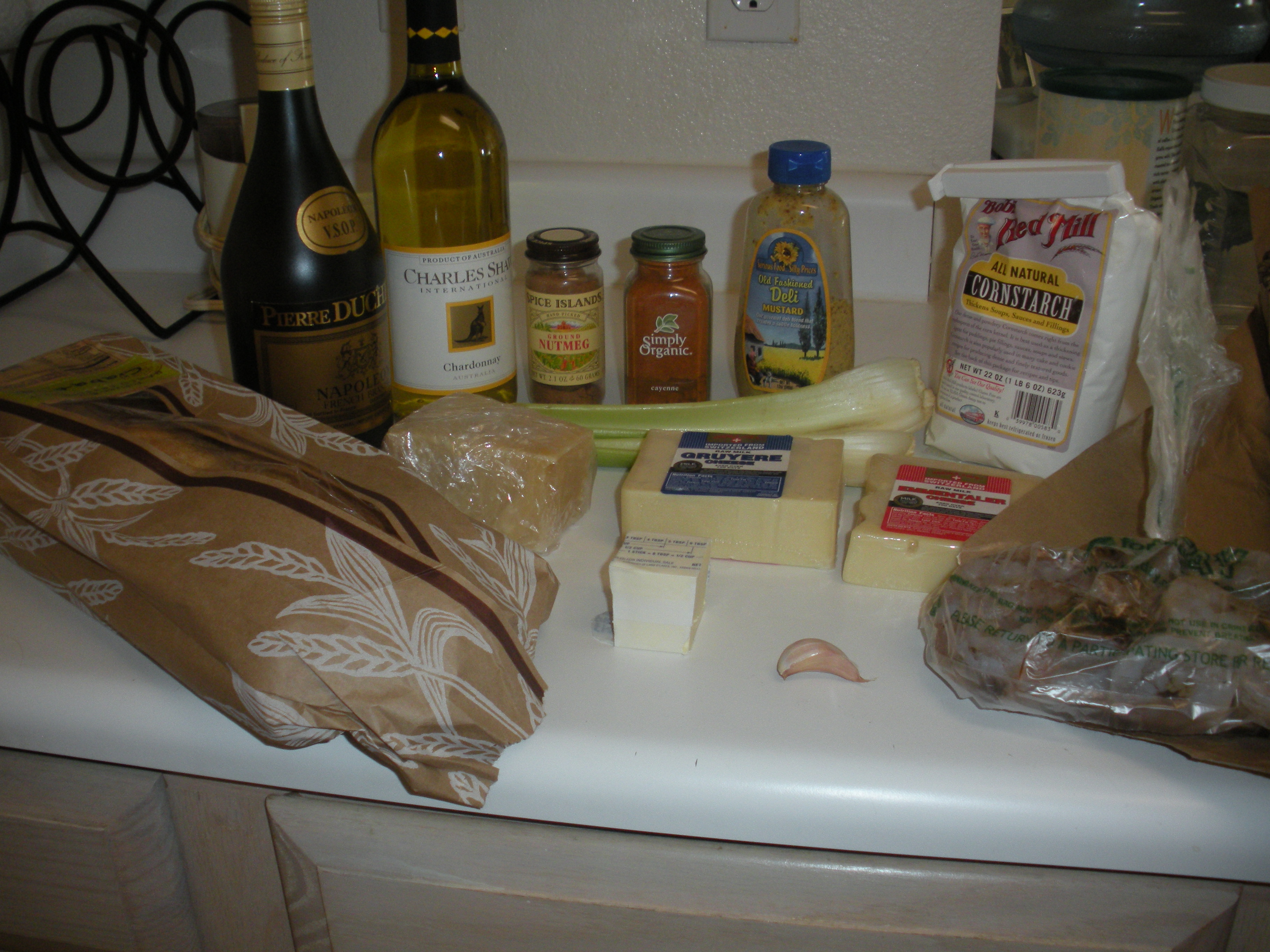
For ingredients, you’ll need 1 clove of garlic, 4 tablespoons of butter, 2 stalks of celery, 1-1/4 cup of dry white wine, 12 ounces of Emmentaler (aka ‘Swiss’ cheese), 12 ounces Gruyere cheese, 2/3 cup of Parmesan cheese, a pinch each of dijon mustard, nutmeg and cayenne pepper, 3 teaspoons of cornstarch, 2 tablespoons of brandy, one pound of shrimp, and a loaf of cubed French bread.

For prep work, begin by finely chopping the celery:

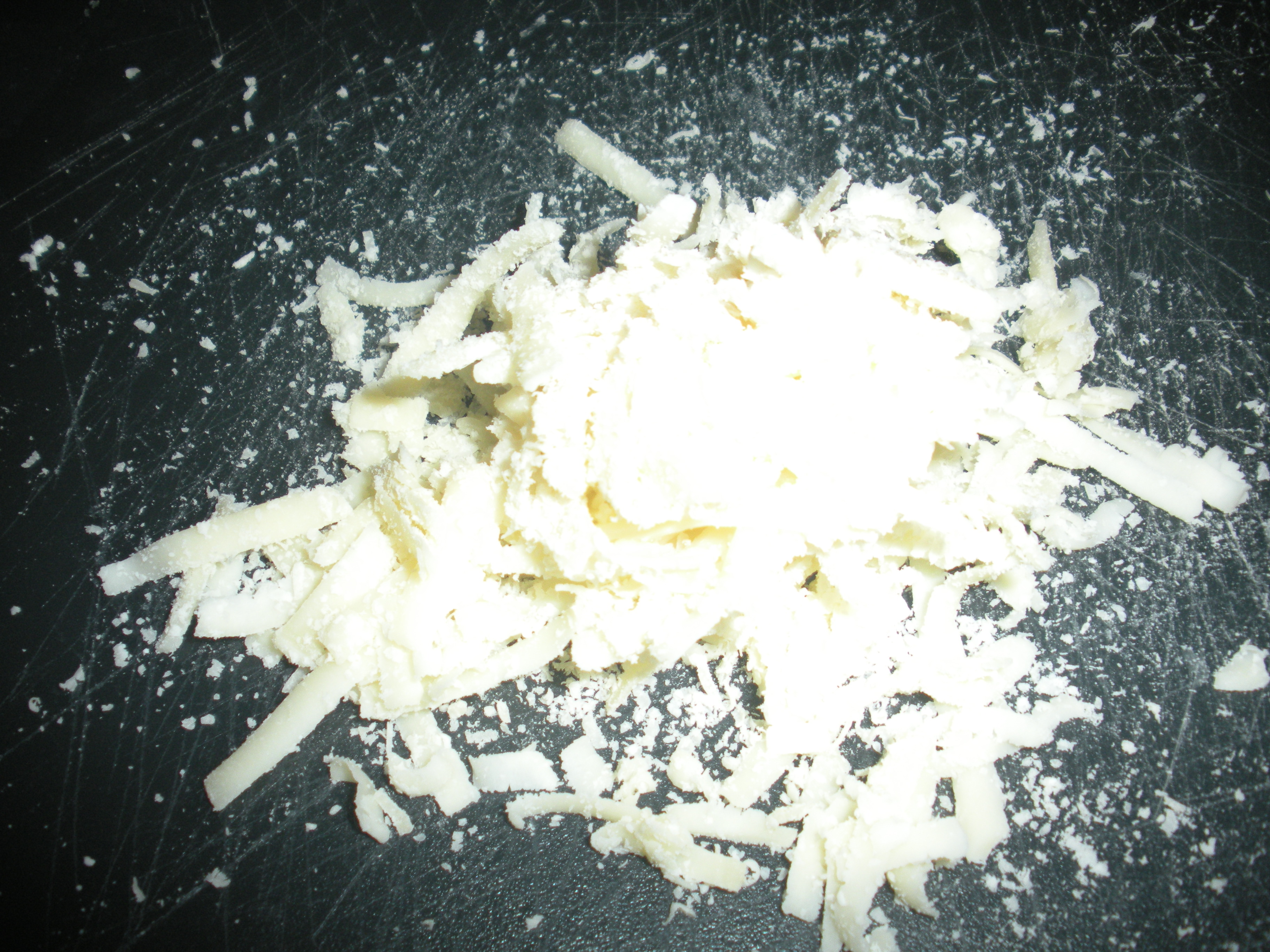
Shred the cheeses and mix together in a large bowl.

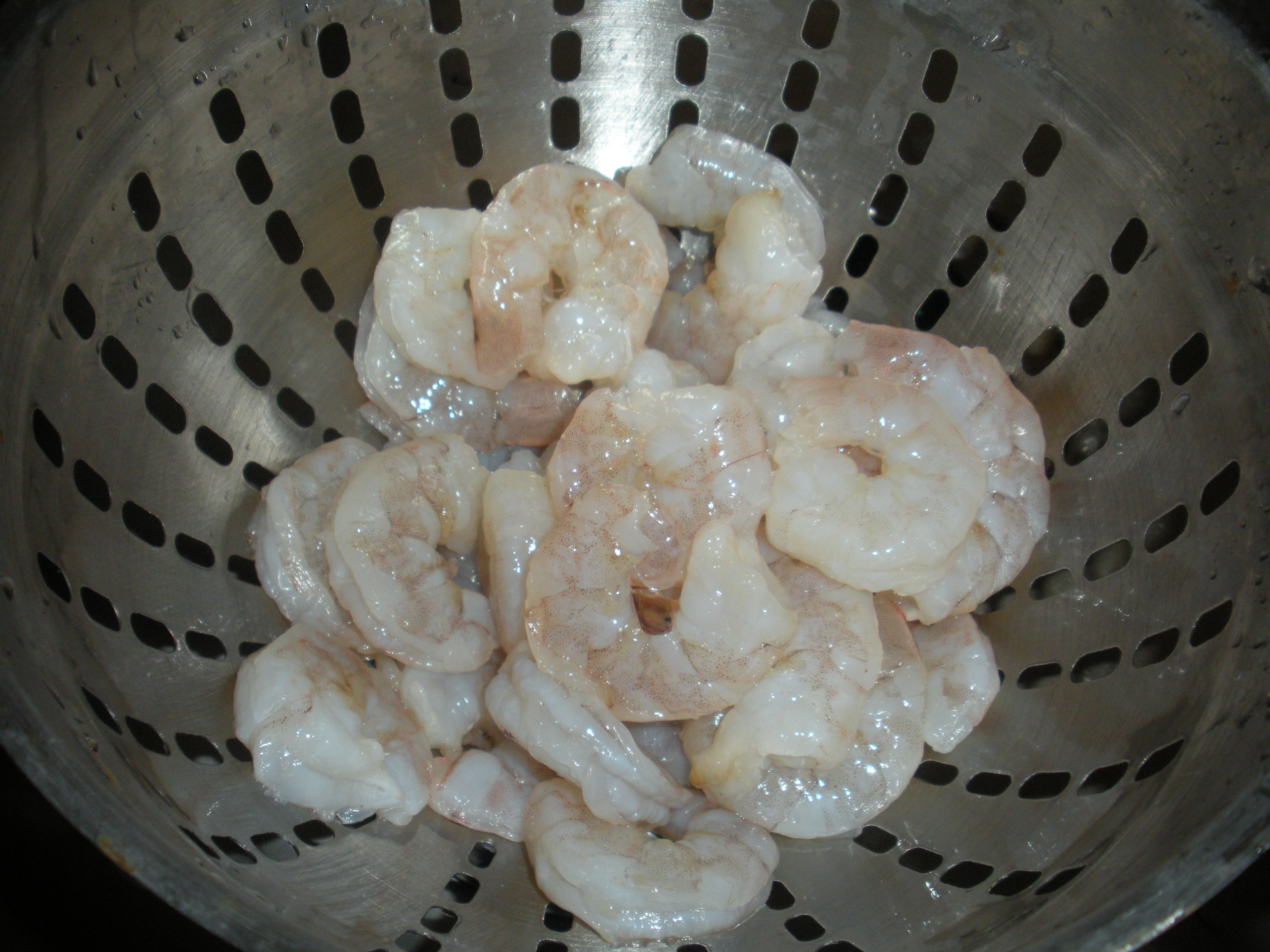
Peel and clean the shrimp…

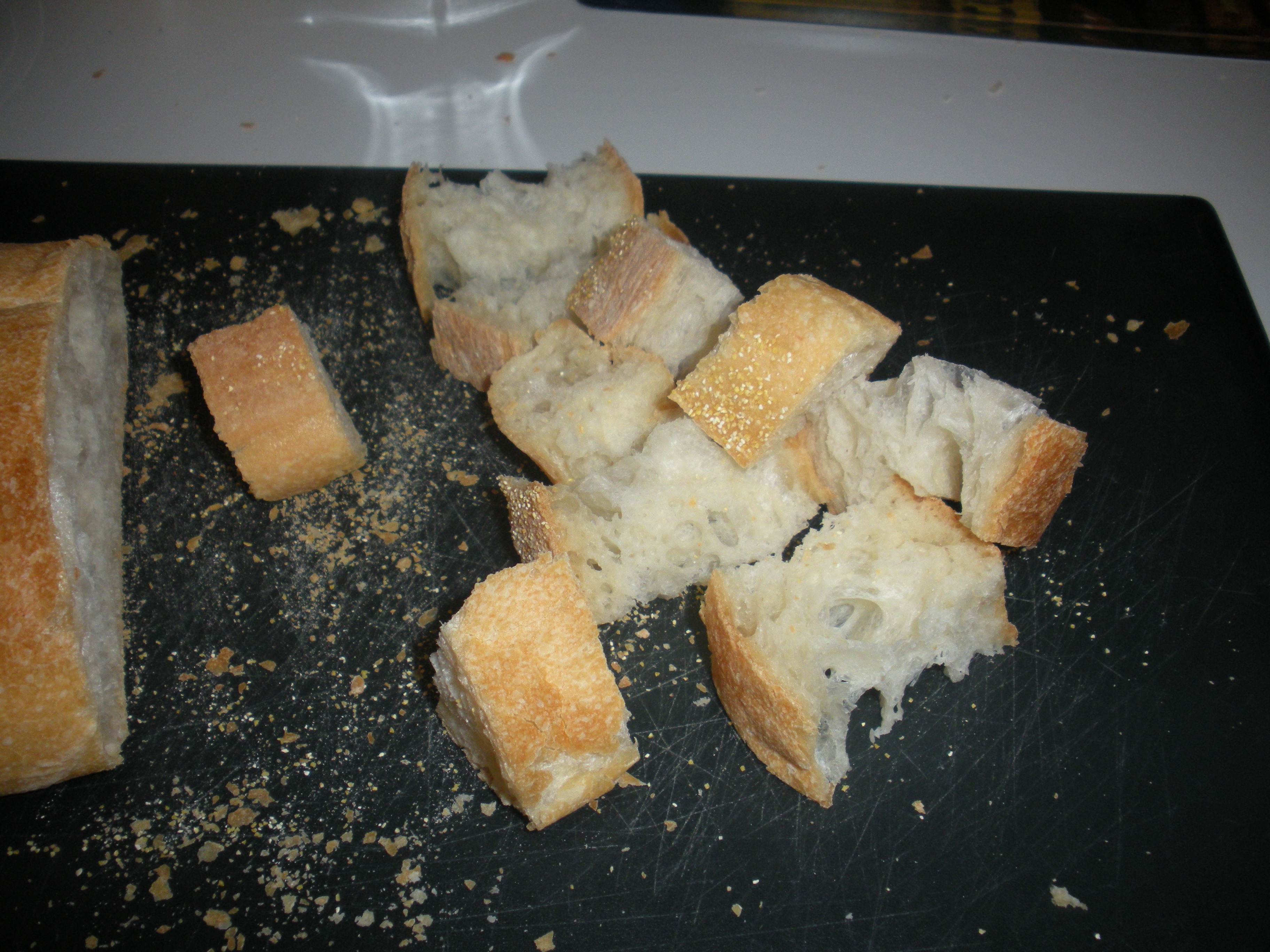
Cube the bread into bite-size pieces.

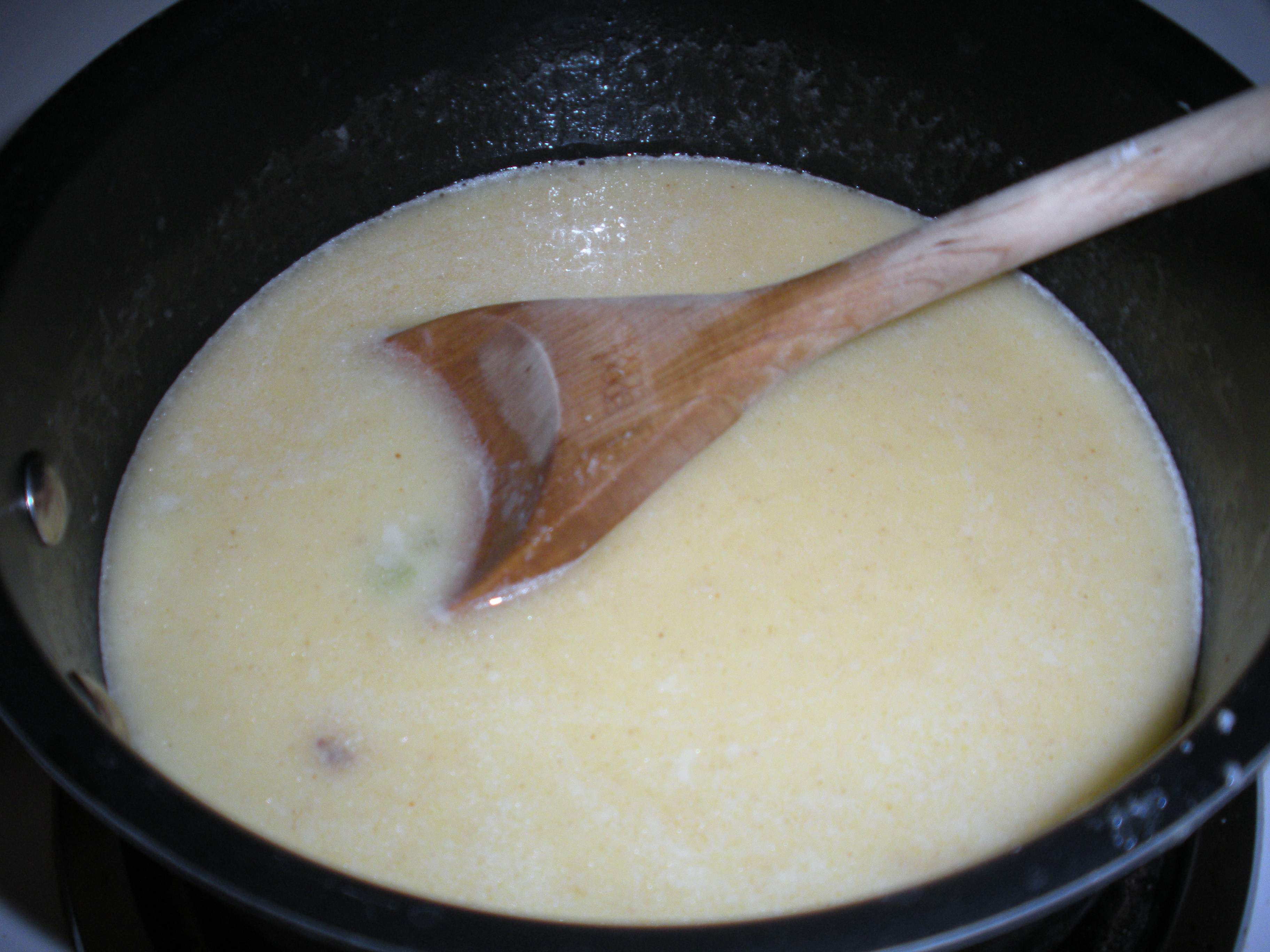
About 30 minutes before you’re ready to eat, rub the inside of the fondue pot with a cut clove of garlic. Add the butter, and cook over medium heat until it is fully melted. Add the celery and fry for about 5 minutes. Stir in the white wine.

Add the cheese about 1 cup at a time, stirring until it melts. Add the mustard, nutmeg and cayenne pepper. In a separate bowl, combine the cornstarch and brandy, adding to the fondue mixture. Bring the fondue mixture to a bowl and stir continuously for 10 minutes until the mixture thickens. You may need to add additional cornstarch to thicken your mixture.

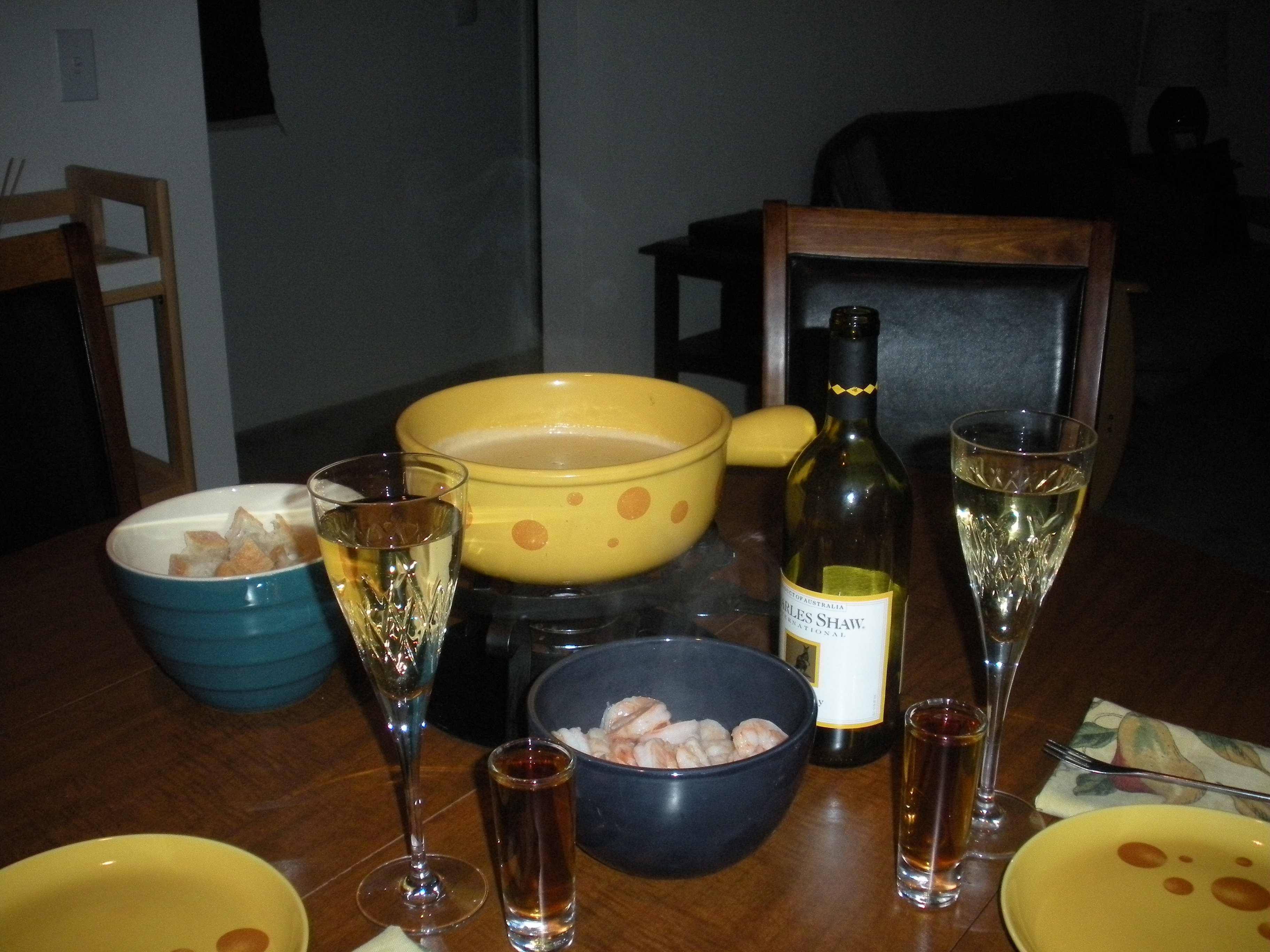
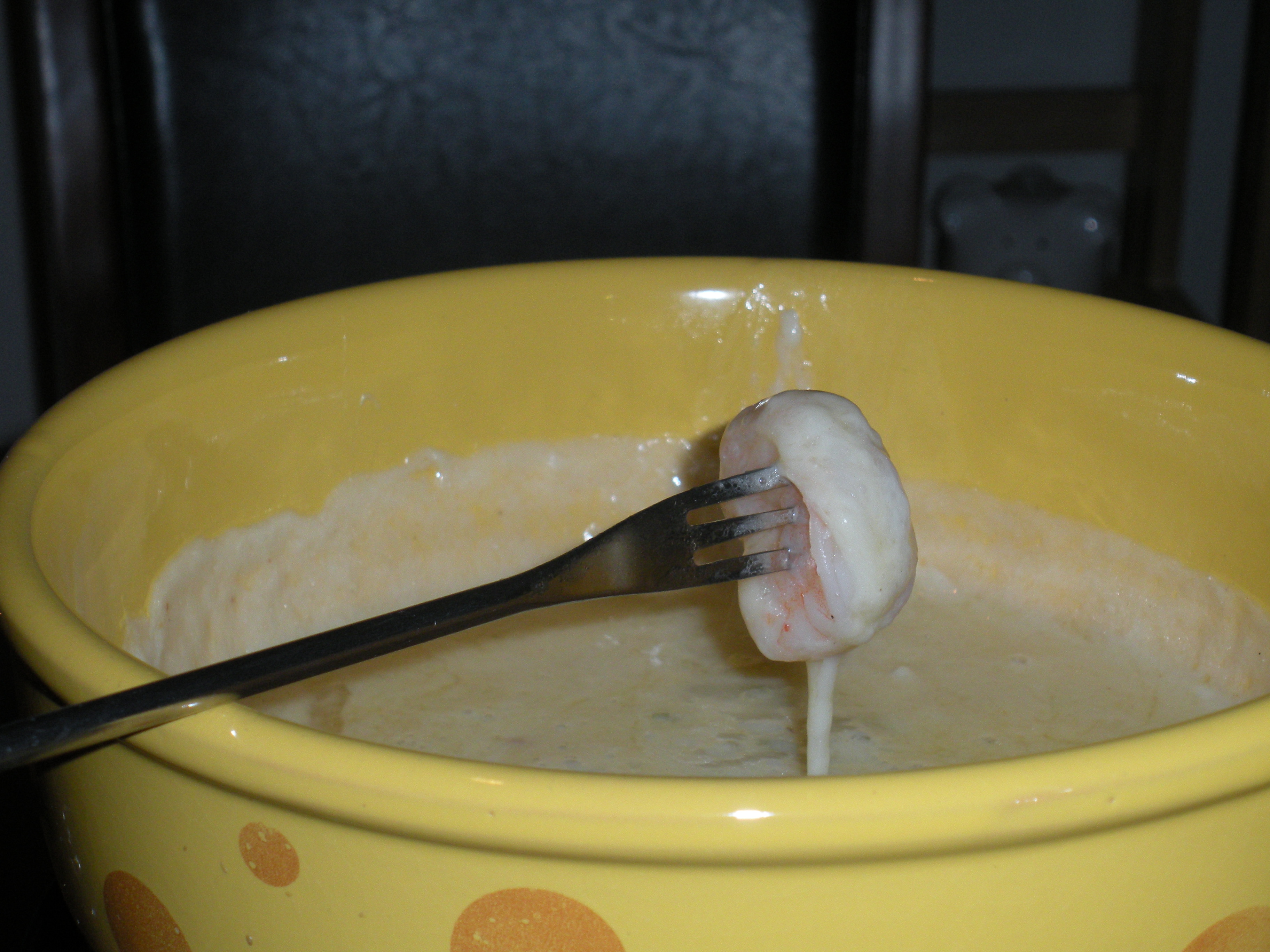
While the fondue is cooking, cook the shrimp in a separate frying pan with a pat of oil or butter. Once everything is ready, transfer the fondue to the special fondue stand on the table with the sterno lit underneath.. Serve with the bread cubes and shrimp.

Other useful tips:

  • Most traditional fondue sets come with an adjustable fire gauge to be placed under the fondue pot. You may need to start with high or medium heat, adjusting to low heat or extinguishing the flame before the meal is complete.
  • Traditionally the Swiss Romande (French-speaking Swiss) do not consume water with a fondue meal because it would cause the massive amounts of bread to sit in your stomach for too long, expanding. Alternatively, serve with white wine to drink and a shot of whatever other liqueur is included in the fondue (brandy, kirsch, aqua vite, etc.) to be enjoyed half-way through the meal. You may wish to enjoy a cup of peppermint tea after the meal to aid in digestion.
  • The little bit of cheese that burns at the bottom of the fondue pot is the best part.

Bon appetit!

Posted in DIY, Recipes | Tagged , , , , | 1 Comment