Cucumber-Tomato Smoothies

If you’re like me, your initial impression of cucumber-tomato smoothies may be a bit…gross. As someone who is trying to lose a few pounds, this summer I’ve been experimenting with different smoothie recipes. Most have been fruit and dairy-based, but this combination is quite refreshing and delicious. At around 100 calories and $1 per serving, it’s a pretty good deal on both your belly and your wallet. Think of it as a sort-of virgin Bloody Mary for your health.

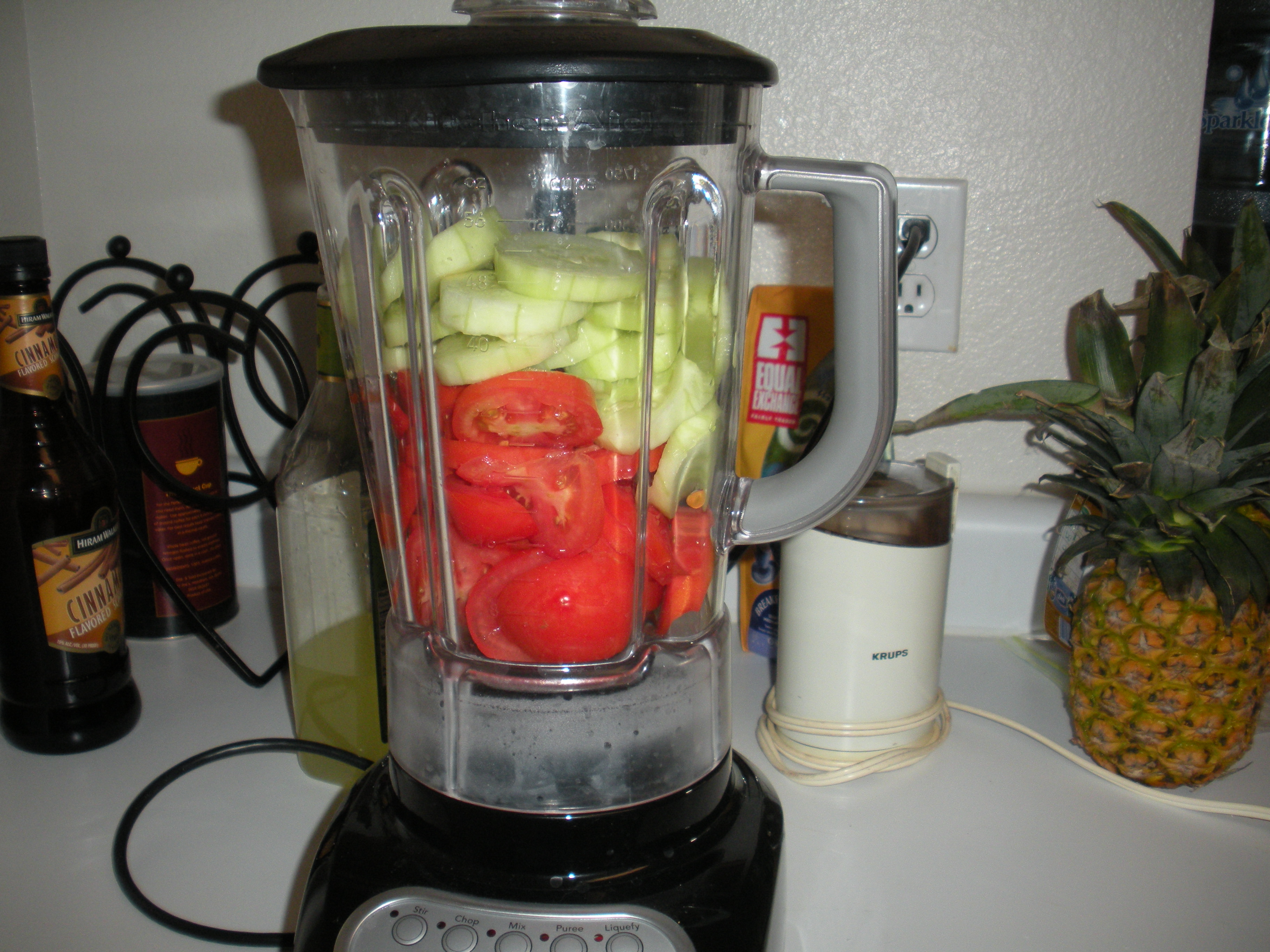
For ingredients, all you need is about 1 pound of tomatoes, 1 medium cucumber, 2 ice cubes, 1 teaspoon of hot pepper sauce (like Tabasco or Tapatio), 1 teaspoon Worcestershire sauce, the juice of 1 lemon, salt and pepper.

Slice the tomatoes and cucumber before putting into the blender so it reduces nicely. Put into blender and place on the ‘chop’ setting for about 10-15 seconds, or until the combo is nicely blended.

Add the remaining ingredients and set to ‘puree’ for another 5-10 seconds and voila – super quick and easy smoothie!

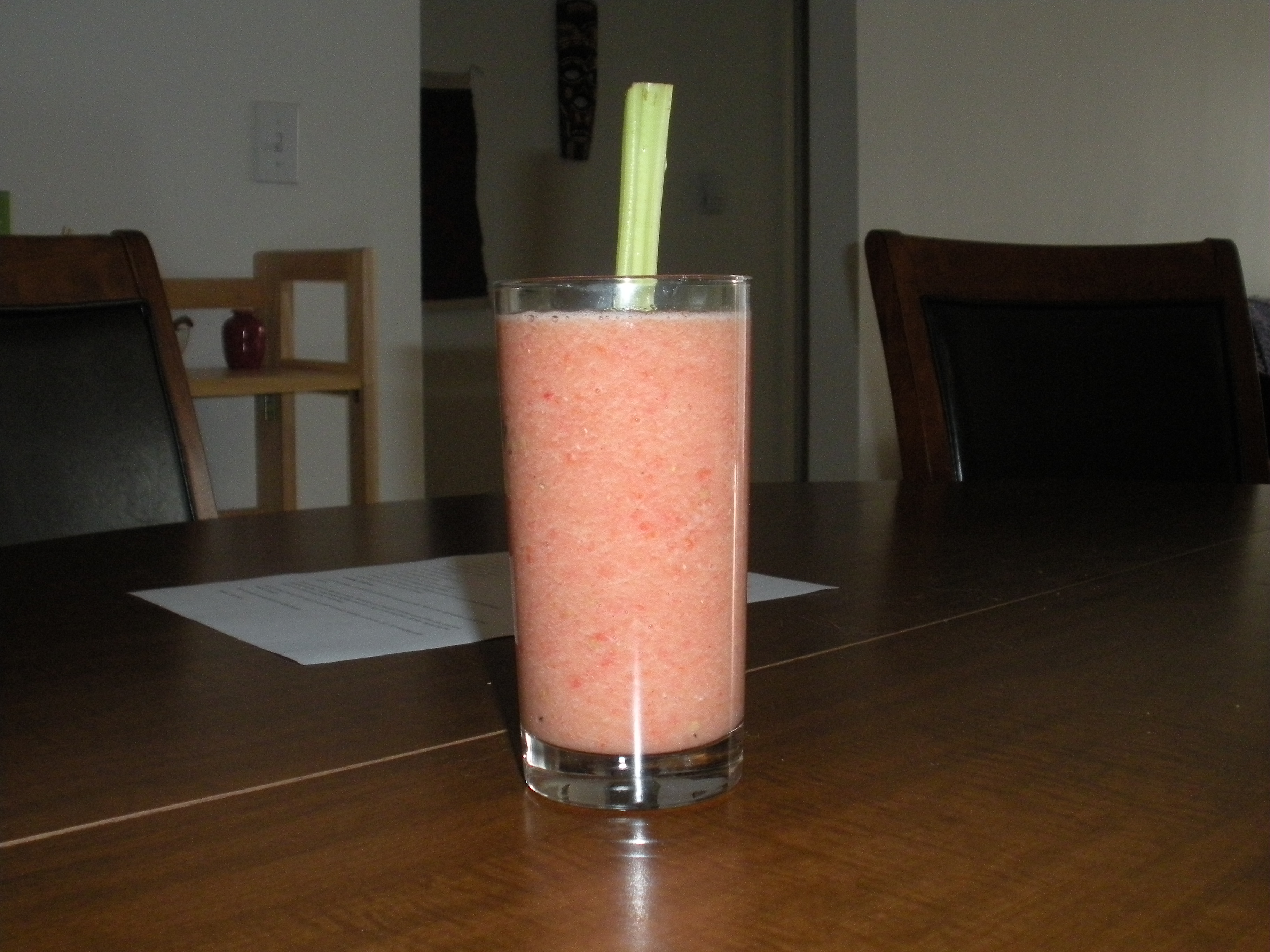
This recipe makes about two 12-ounce servings. Garnish the glass with a single stalk of celery before serving.

Posted in Healthy Living, The Simple Living Experiment | Tagged , , , , , | 6 Comments

In the Land of Believers Virtual Book Discussion

In the Land of Believers: An Outsider’s Extraordinary Journey into the Heart of the Evangelical Church by Gina Welch. Published in 2010.

Synopsis: Gina Welch grew up a secular Jew in Berkley, California. After moving to Virginia for graduate school, Welch joins Jerry Falwell’s Thomas Road Baptist Church as part of an experiment to learn more about evangelical Christians. While many recent books on evangelical Christians expose them in negative ways, Welch’s book serves as an anthropological study, seeking to show evangelicals in a more positive light. Along her journey, she gets baptized, fills out the necessary paperwork to get saved, makes friends through the church’s singles ministry, endures Jerry Fawell’s death, and goes on a mission trip to Alaska with the goal of saving 100 souls.

About the Author: A graduate of Yale University, Gina Welch teaches English at George Washington University. This is her first book.

Becky’s Initial Reactions:

In, general I appreciated Welch’s style of writing and handling the subject matter. As an anthropologist who also studies religion, I found the book to be an educational study about some of the United States’ most conservative Christians. After reading this book, I am left with so many questions.

Why do you think Welch had a hard time connecting with Thomas Road members in the beginning? Do you think it was necessary for her to go through baptism and pretend to be saved for her to get the full story?

As a woman of faith, I found it hard to believe that the way to salvation is through saying a prayer and then filling out an index card, as if God has nothing to do with it. Sometimes I also feel slighted that evangelical Christians get all the press, while more mainline Christians and other religions are not as much in the limelight, perhaps because their belief systems are more mainstream (even mainline Muslims are slighted by the media) and fundamentalist religions can be considered by many to be outrageous. What did people in the book club from religious backgrounds think about Welch’s story and experiences at one of the most conservative churches in the United States? What did people  from secular backgrounds think?

I found it interesting that Welch’s analysis even shows a split between evangelicals when she talks about California Christians from Rick Warren’s mega-church, which seemed to be scorned by members of Jerry Falwell’s church in Virginia (pages 108-109). I remember the controversy surrounding Rick Warren leading the invocation at Barack Obama’s inauguration because of evangelical Christians’ scorn of gays and lesbians, but it’s interesting that “days after Rick Warren agreed to step onto Obama’s stage, the anti-gay language disappeared from his church’s website” (page 109). Welch really shows the connections between religion, politics and culture. Do you think that in order for one to become part of a religious community, one needs to also subscribe to certain political and cultural beliefs?

Lastly, I found it interesting that during the Alaska mission trip, to meet their 100 souls quota, the group seemed to focus on converting homeless people and children, while seemingly avoiding the general population. Do you think the message of evangelical Christianity is more appealing to certain groups of people?

So what did you all think of the book? You don’t necessarily have to answer my questions, but please post your comments here.

Next Up : Spooky Little Girl: A Novel by Laurie Notaro. Discussion begins August 12th, 2010.

Posted in Around the World Virtual Book Club | Tagged , , , , | 2 Comments

Summer Yoga Challenge

Today I ended my long streak of inactivity and signed up for the Yoga Sanctuary in Las Vegas’ Summer Yoga Challenge. The challenge entails completing 45 yoga classes in 60 days. I really debated about this because I am so frugal and yoga can get to be expensive, but doing the math the challenge came out to only $5 per class and it seems I rarely do anything for myself anymore. The best part is that if I complete the challenge, I get either 2 free classes or 10% off my next yoga package. Since I am goal-oriented and love free stuff, it seems to be a good deal. For my readers in Las Vegas interested in the challenge, you must sign up by July 31st.

My reasons for signing up are many. I’m sad to admit this, but I’ve gained about 7 pounds since my wedding last year, and I wouldn’t mind losing them back. When I started practicing yoga back in 2004 when I lived in South Africa, I used to go 2-3 times per week. I attended classes in Las Vegas at the Yoga Sanctuary with about the same frequency from 2007-2008, but with the wedding planning last year and my limited finances I let it go. I would say the times I have been practicing yoga have been the periods in my life when I have been the most focused. Now I want to regain that focus because lately, as my husband would say, I have been a complete spaz.

I have never practiced yoga with this level of consistency, but now since my money is invested in this challenge, I have to complete this. Today in class, our instructor Heidi referenced the Yoga Sutras, noting that the best way to cure misperception is through consistent, long-term yoga practice. I’m kind of curious to discover where I’m at 60 days from now. Will I be skinnier, better built and more fit? Will I be more focused and super Zen?

So I’m committed, and 60 days from now I’ll report back how far I’ve come on this little experiment.

Posted in Healthy Living | Tagged , , , , , , | Leave a comment

Homemade Blueberry Pie

I absolutely love everything containing blueberries, so yesterday my simple living project involved making blueberry pie from scratch (yep, the crust and everything). It’s not as difficult as one would think and takes about 2 1/2 hours from start to finish.

For ingredients, you need 2 1/4 cups of flour plus extra for rolling the crust, 1 teaspoon salt, 2/3 cup plus 2 tablespoons Crisco, ice water, 6 cups of blueberries, 3/4 cup of sugar, the juice of 1 lemon, 1 egg, milk, and butter. For the flour, I used Bob’s Red Mill 100% Stoneground Whole Wheat Flour, which made for a healthier and absolutely delicious pie crust. For the blueberries, I opted to use frozen, although fresh would work just as well. Living in the desert, it’s hard to come by good quality fresh produce, and organic produce is generally cheaper when frozen.

For the pie crust, mix 2 cups of flour, the salt and Crisco in a large bowl. You’ll want to mix with something light, like a fork, so the dough doesn’t get too tough. Add up to 6 tablespoons of ice water, 1 at a time, until the dough sticks together. Separate the dough into 2 balls.

Cover each with plastic wrap, flatten into pancakes, place in the refrigerator, and chill for at least 45 minutes.

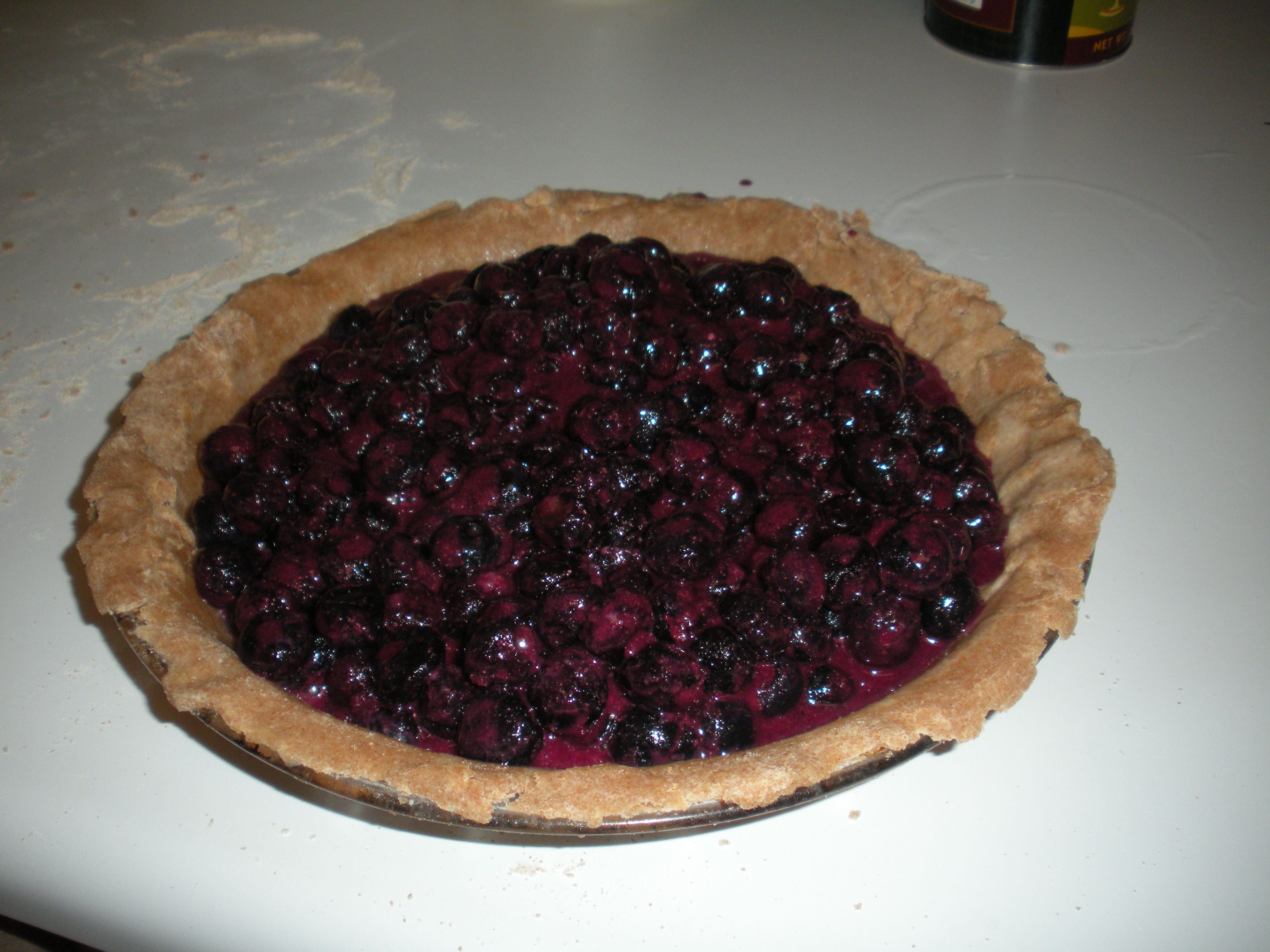
While the pie crust is chilling, mix up the filling: 6 cups of blueberries, 3/4 cup of sugar, 1/2 cup of flour, and the juice of 1 lemon. The mixture may end up looking something like zombie brains, but it will be oh-so-delicious.

When it’s time for the dough to come out of the fridge, preheat the oven to 425 degrees Fahrenheit.  Now comes the tricky part: rolling the dough. Sprinkle your clean countertop and rolling pin with flour, and roll the dough into a large circle that is several inches larger than the diameter of your pie plate. Don’t worry about it being a perfect circle, because you can fix it up once it’s in the pie plate. Here, size is what matters.

Now, tranfer the dough to the pie plate. Since this is a bit difficult, I recommend folding it up a bit and then unfolding it once it’s in the pie plate. Move scraps of dough around to ensure the pie plate and edges are 100% covered. Paint the dough with a beaten egg white to help prevent soggy pie crust.

Then, add the berry mixture.

Roll the top crust in the same way as the bottom. Moisten the edges of the bottom crust with water, and lay the top crust over the pie. Trim the excess dough with kitchen scissors or a knife, leaving about 1 inch on all sides. Brush milk over the pie top. Crimp the top and bottom together all the way around with either a fork or your fingers. Carve 4 tiny holes in the center of the pie to ensure proper venting. Wrap the edges of the pie with aluminum foil to prevent burning.

Bake the pie for 30 minutes. Remove the aluminum foil border, and bake for another 10-15 minutes. Remove from the the oven and let cool before serving.

Posted in The Simple Living Experiment | Tagged , , , , | Leave a comment

International AIDS Conference in Vienna, Austria

For the past week I have been in Vienna, Austria participating in events associated with the XVIII International AIDS Conference. The purpose of my trip has been focused on work – contributing a few blog postings to the Ecumenical Media Team’s coverage, helping to staff the Multi-Faith Networking Zone in the Global Village at the conference, and presenting the findings of my most recent research in a press conference today. Work aside, here is a (partially) illustrated account of my time in Vienna.

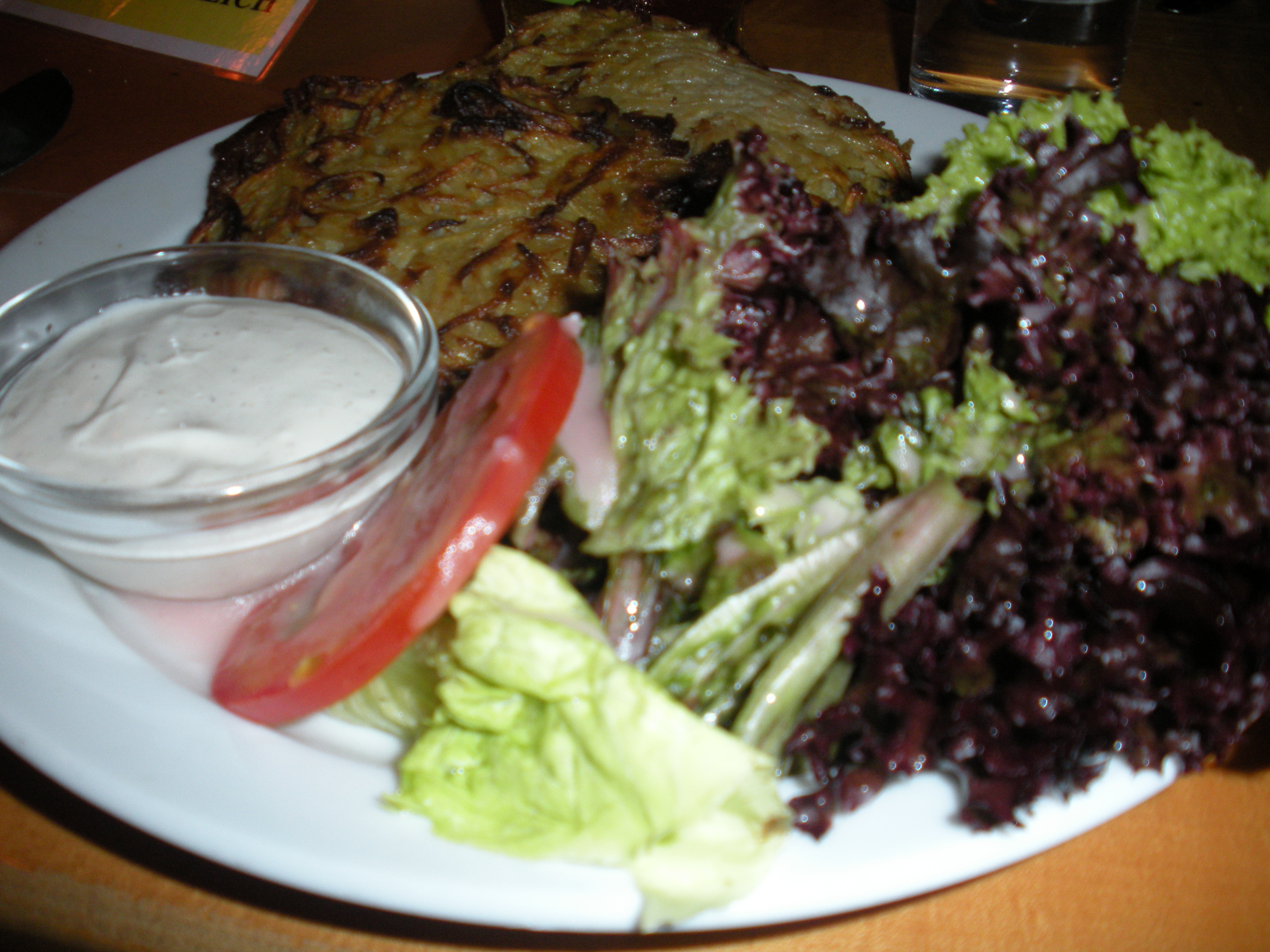
My first night in Vienna, I joined members of the Ecumenical Media Team, Ecumenical Advocacy Alliance staff, and Multi-Faith Working Group members for dinner at Wieden Brau near Karlsplatz. For dinner, I had the equivalent of a half-pint of Marzen microbrew beer, potato pancakes with sour cream, and a green salad. I love that beer comes in multiple sizes in Vienna – from 0.2 liters (less than half a pint) to 1.0 liters (more than 2 pints in one glass). The food here is largely fried, and I can’t figure out how most Viennese are so skinny! Maybe because they walk everywhere?
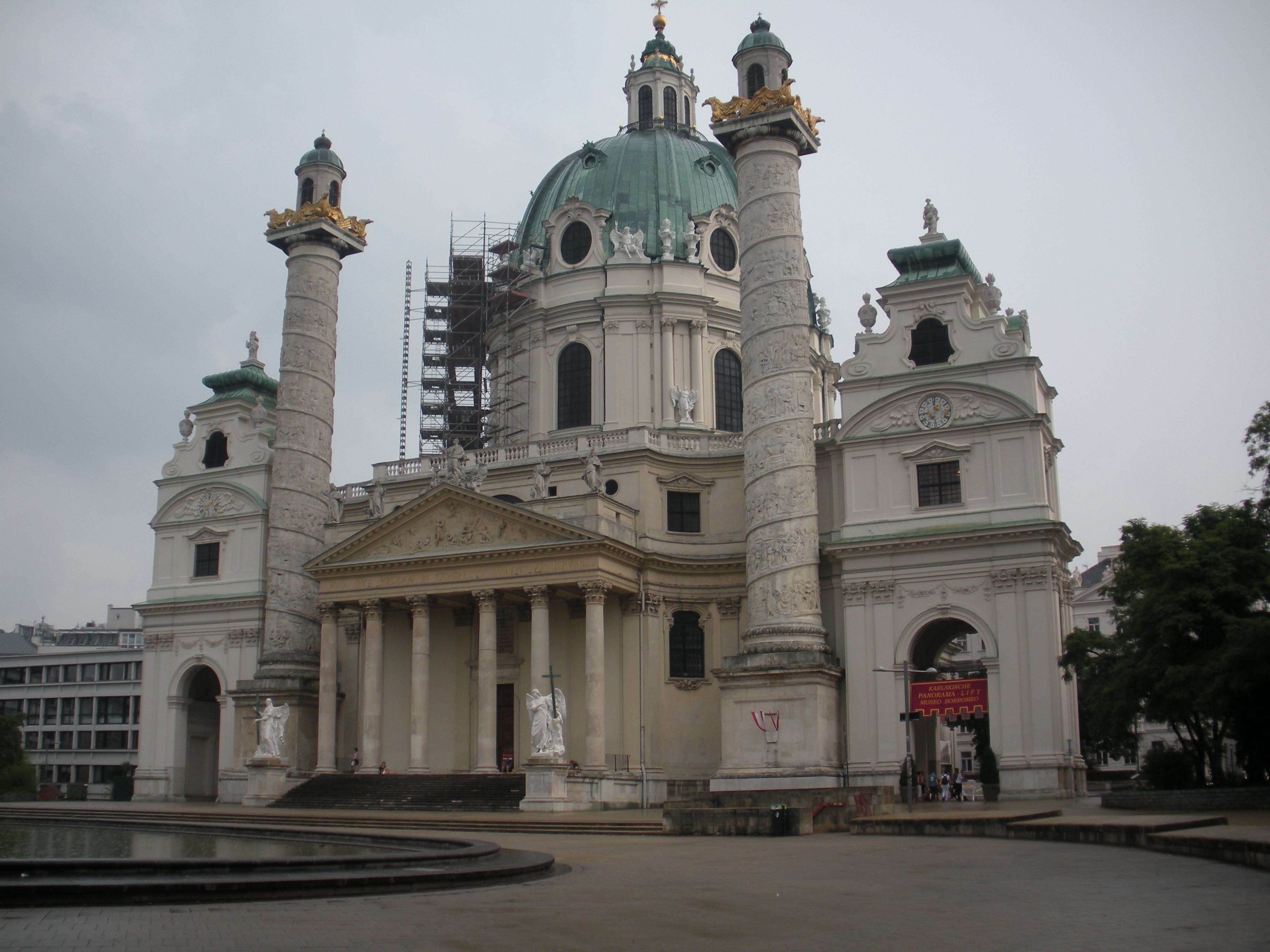
Friday and Saturday were incredibly hot and humid in Vienna. Unfortunately, neither my hotel nor the Technical University where the Multi-Faith Pre-Conference were held were air conditioned. By lunch time it had started to rain, and I wandered outside to explore the area architecture.
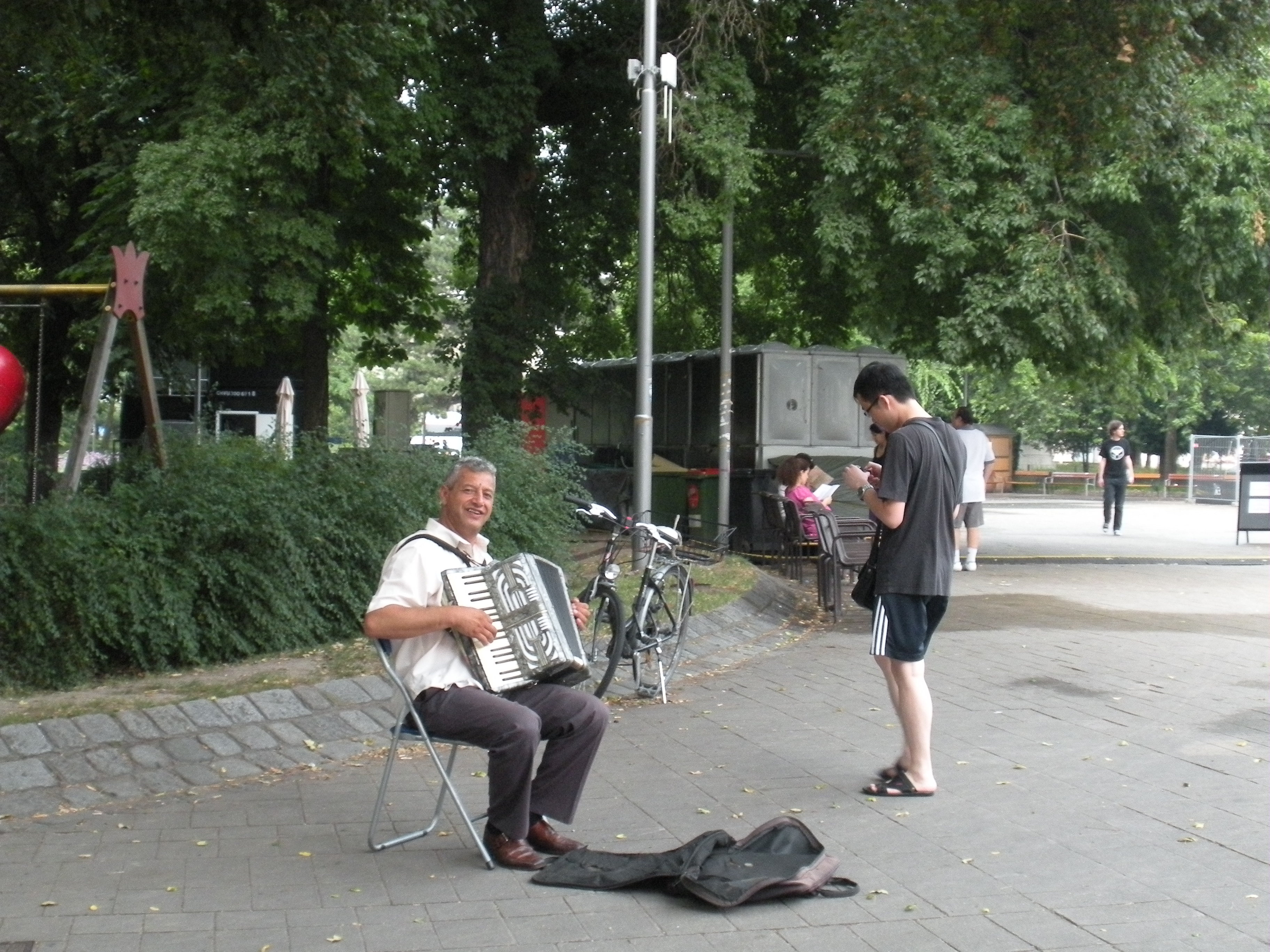
For a few minutes, I enjoyed this man playing the accordion in Karlsplatz public square. I was so moved, that I gave him my spare change. Too bad I also gave him the money I was supposed to use for public transport that evening and had to borrow from a colleague.

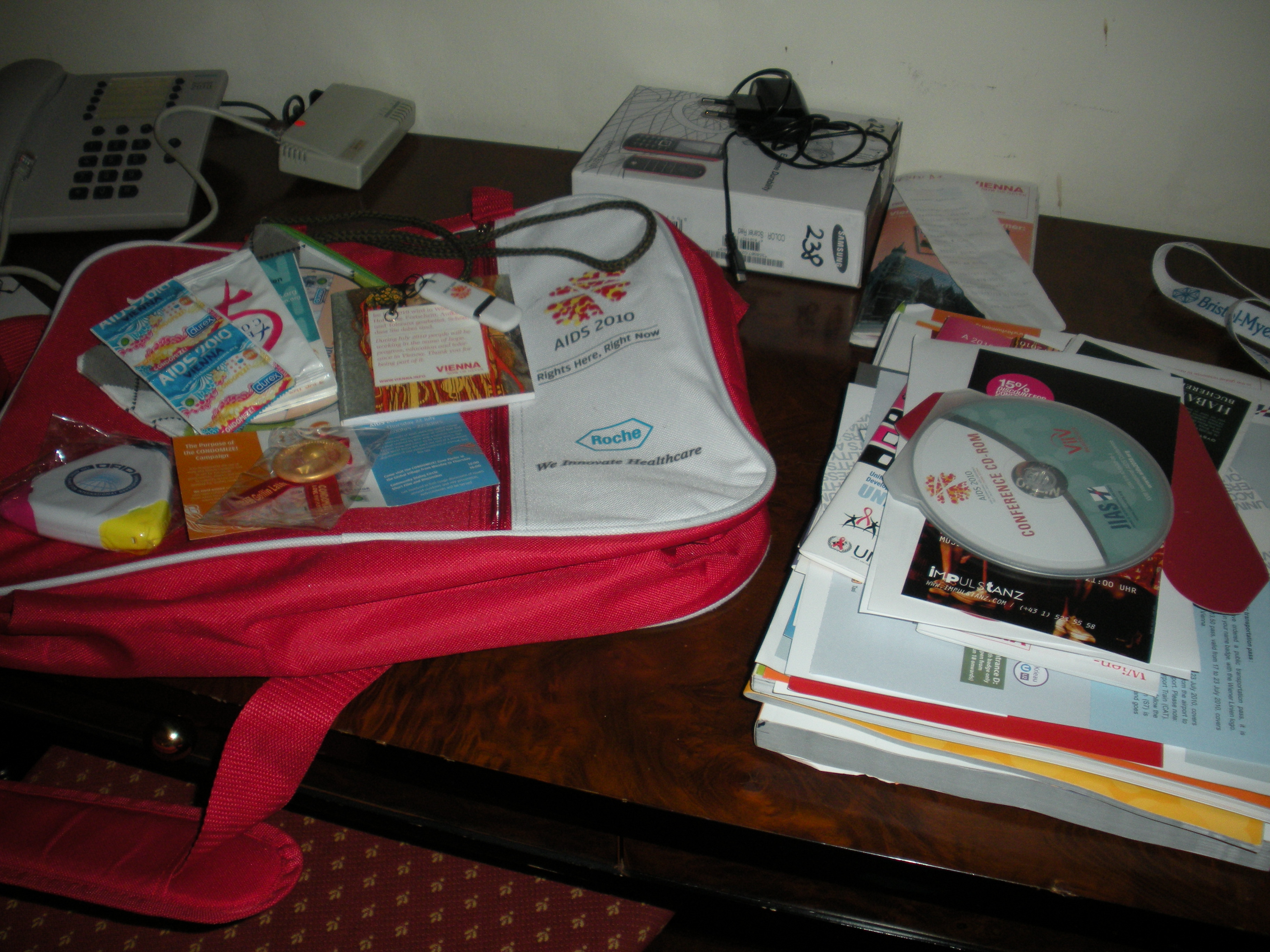
Later, I went down to the Messe Prater Conference Centre to register for the conference. Upon checking in, one gets a conference bag filled with about a tree’s worth of paper materials and a few cool things. When I got back to the hotel, I divided my loot into piles of things to toss and things to keep. Fortunately, this year they had a recycle bin. The few cool things included a flash drive, highlighter/tri-lighter, small purse, condom pin, and the official conference free condoms. Too bad I didn’t bother to save the official condoms of the last International AIDS Conferences I attended in Mexico City and Toronto, as each year there is a new design and I could have quite a collection by now.

Sunday was spent helping my colleagues set up the Multi-Faith Networking Zone at the Global Village. I did manage to have some free time on Monday morning to explore both the Global Village and Exhibition Hall on my own. Since this was my third conference, I was less concerned about attending sessions in my free time (I could always read the research findings at a later time) and more concerned with networking and in general experiencing the conference culture.

The Global Village is the community space, open to people who have not necessarily paid the 800 euros to attend the conference. Networking zones are spaces for gathering and information sharing, films are screened, and NGOs sell handicrafts from around the world. Some of the highlights include:

Bras & panties on a clothesline welcome visitors to the Women's Networking Zone
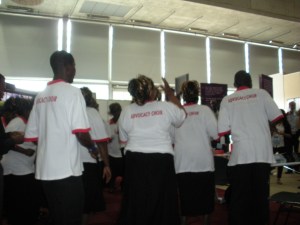
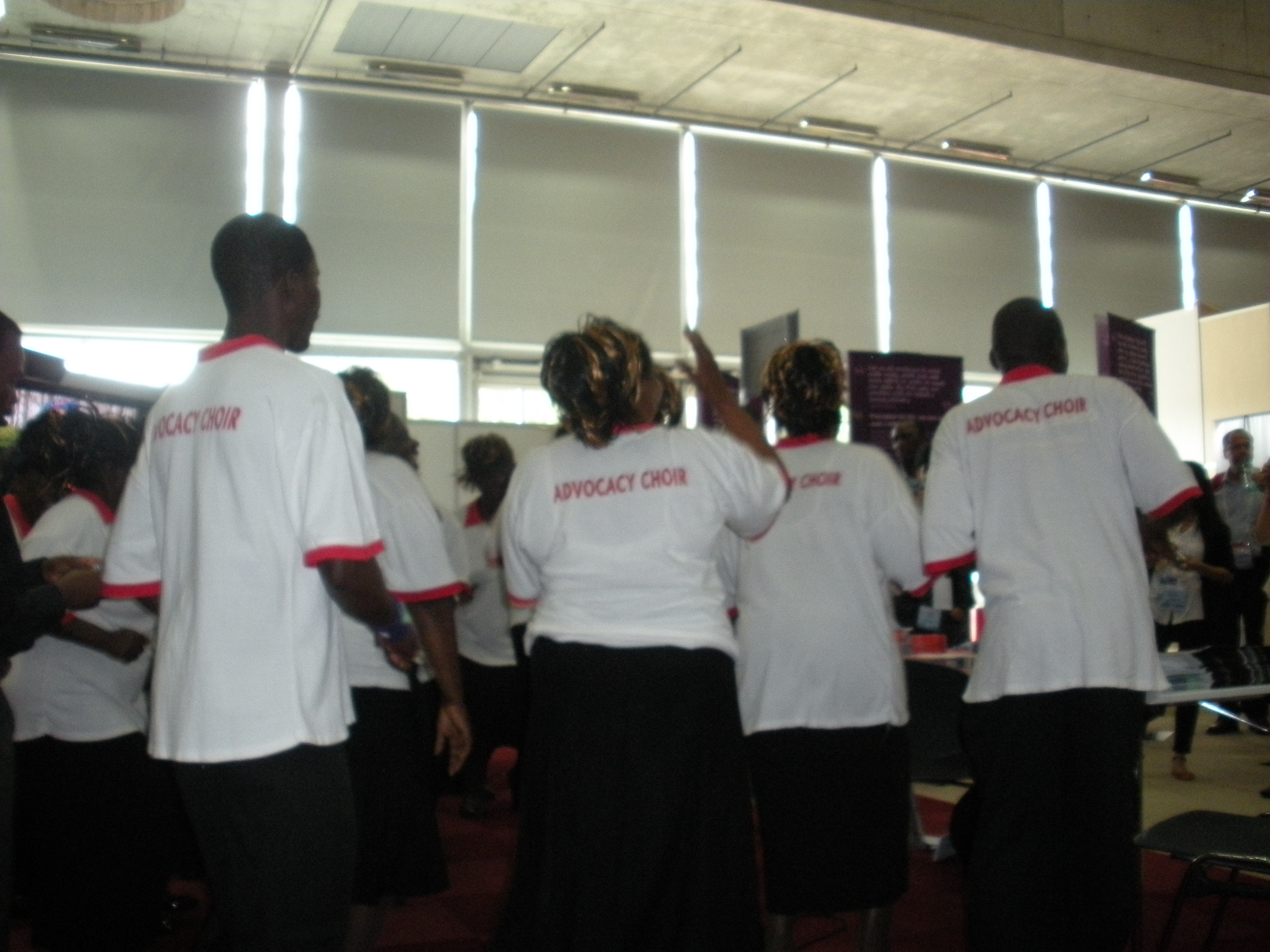
The Betseranai Advocacy Choir from Zimbabwe performs at the Multi-Faith Networking Zone

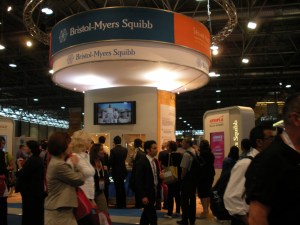
In contrast, the Exhibition Hall is for conference delegates only and primarily showcases exhibits from pharmaceutical companies, the biomedical industry, and governmental programs. A long queue formed in front on the Bristol-Myers-Squibb exhibit, not to talk to industry reps about why the high costs of their drugs and high staff salaries serve as a major barrier for universal access to AIDS drugs, but to receive free coffee, juice and cookies from smiling young Austrian women. The pharma reps, sadly, were nowhere to be found.
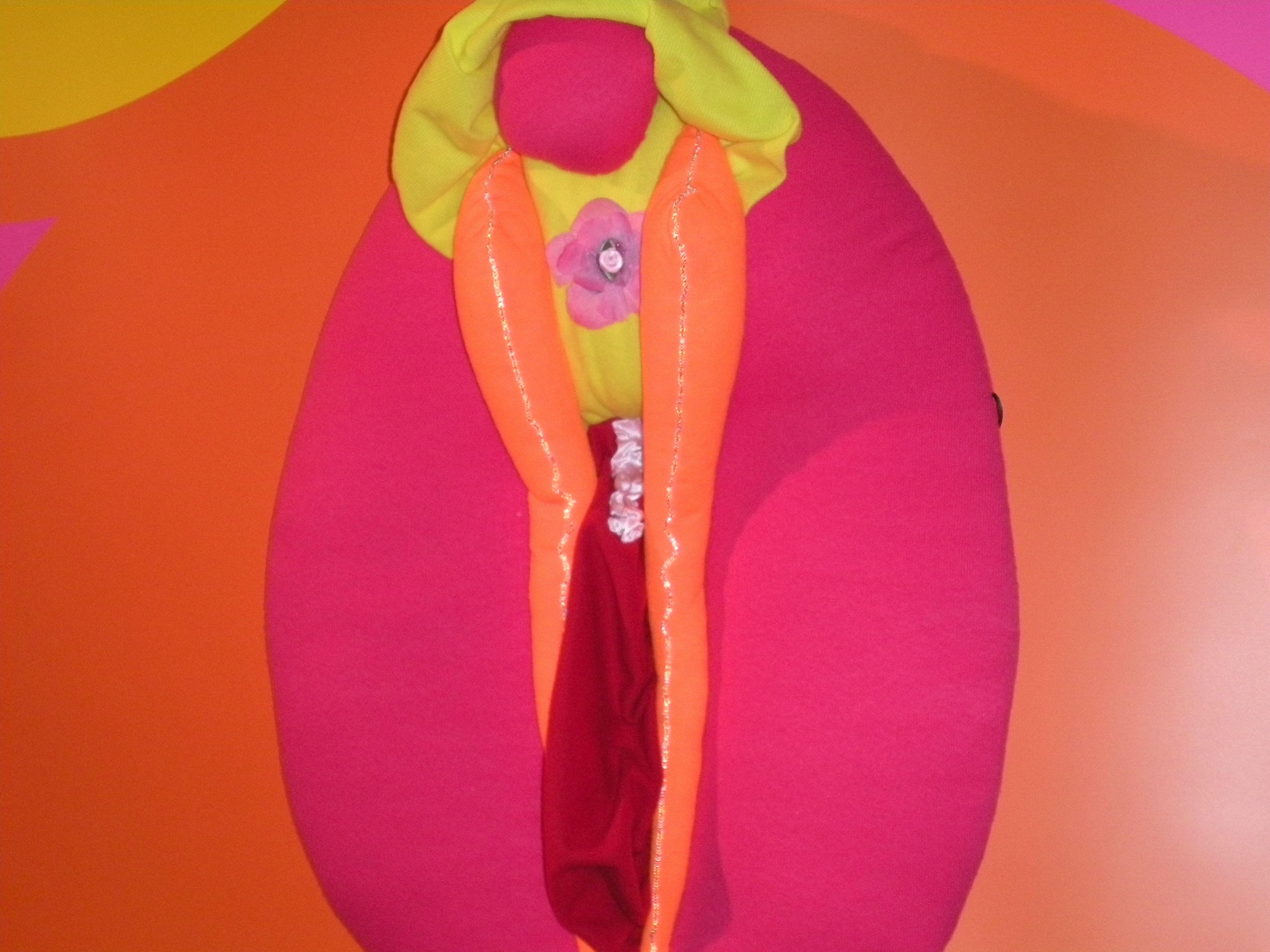
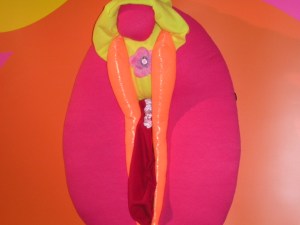
A few NGOs could afford the high cost of exhibiting here, and I must give props to the Women ARISE exhibit as one of the most creative. Twice daily, delegates could gather at the booth to play games like ‘Pin the Clit on the Vulva,’ and the winner’s prize was this cool, anatomically-correct puppet.
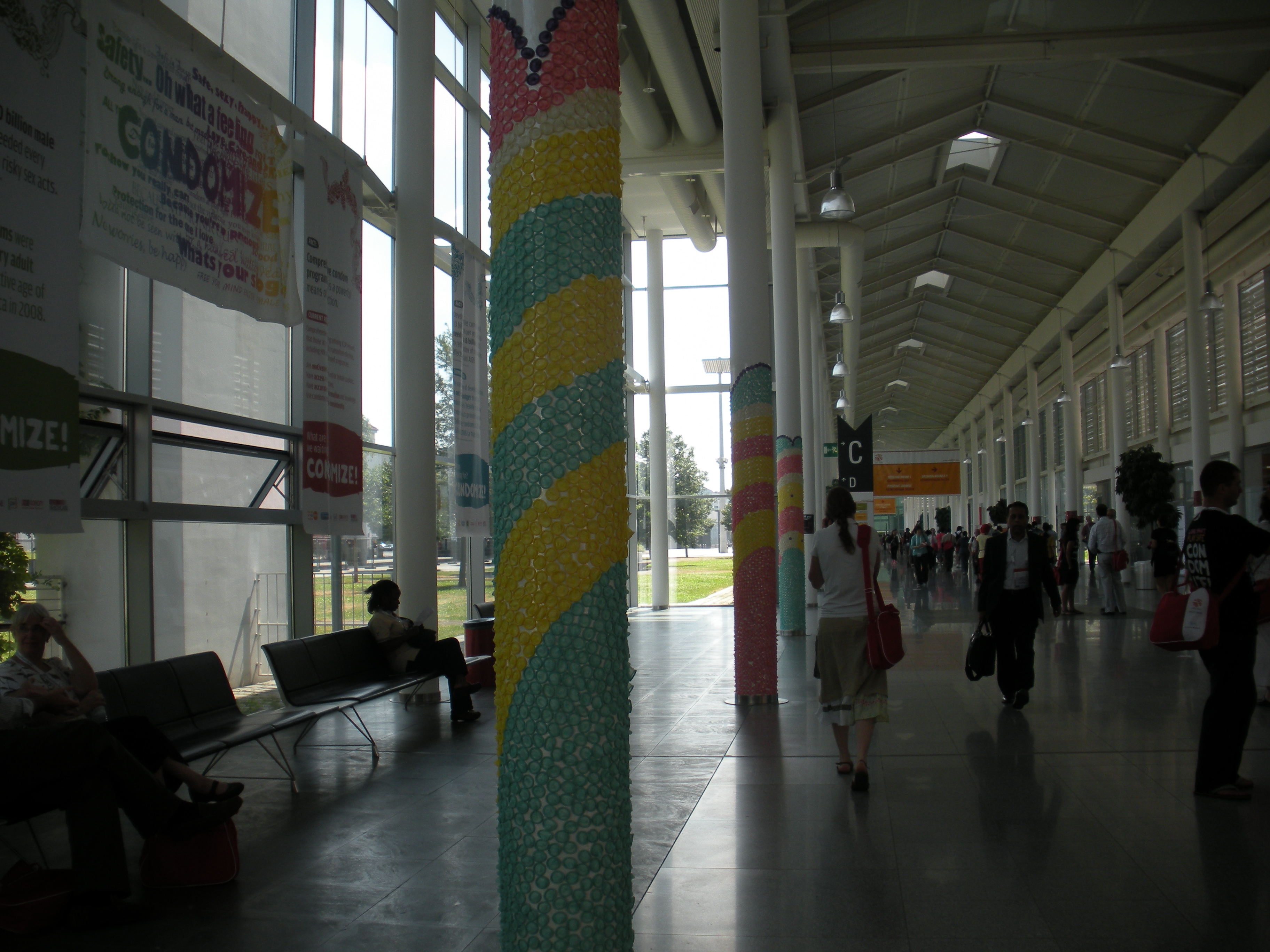
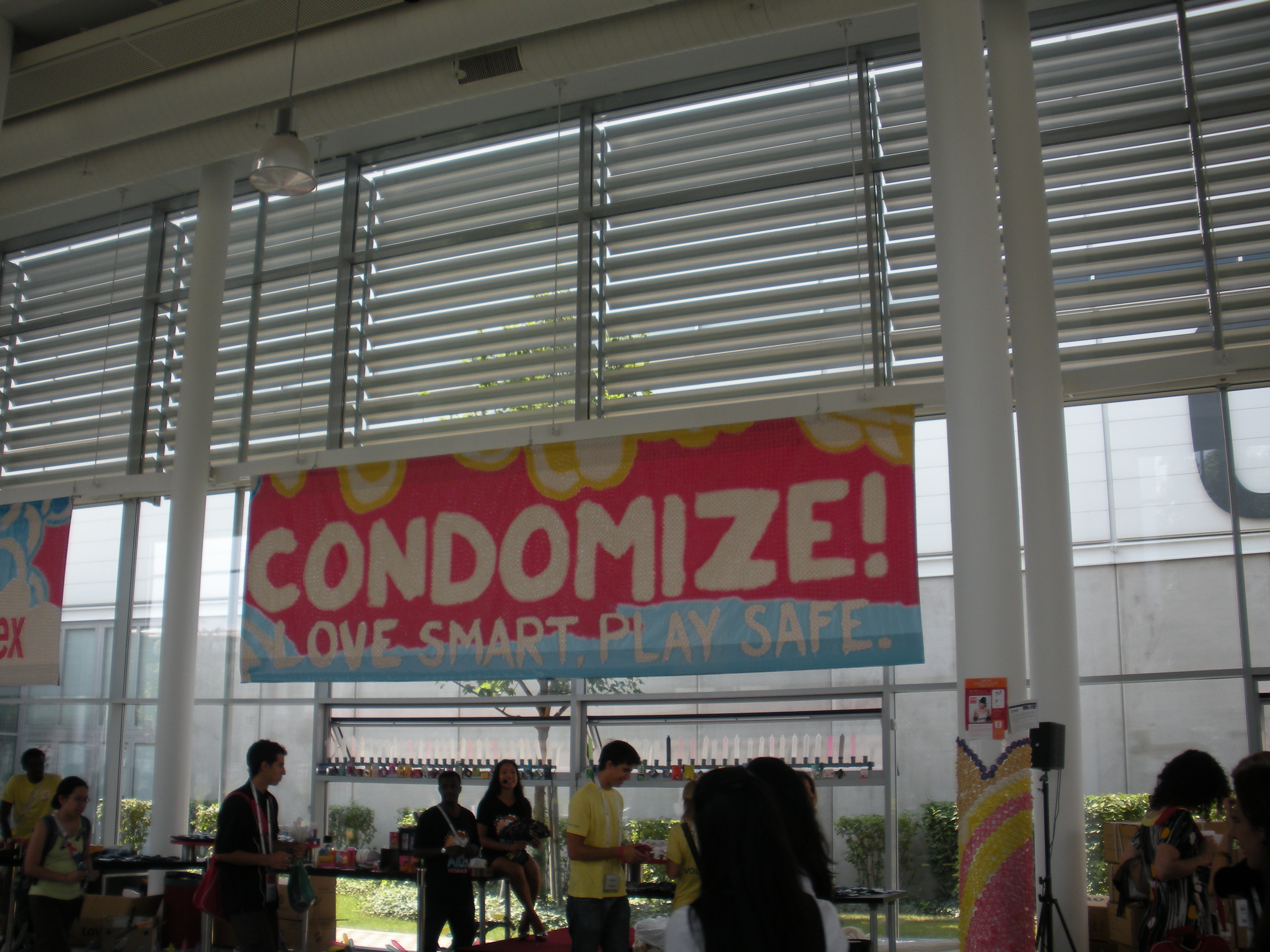
The UNFPA-supported Condomize campaign had a large presence in both the Global Village and the hallway of the main conference venue. At the conference, they had the goal to distribute 1 million condoms. Now, I must vent on a little pet peeve of mine. While condoms are distributed in abundance at this conference – I probably had over a dozen handed to me while not seeking them on my own – people at risk for HIV in low-income countries have limited access to them. When I was in Uganda in 2008, I believe the figure was 3 condoms per adult male per year. I am not opposed to condom distribution at conferences, but I do have a problem when thousands of condoms are wasted on decorations such as these:

These poles were actually decorated with condoms.

And this sign? Made from only condoms too.

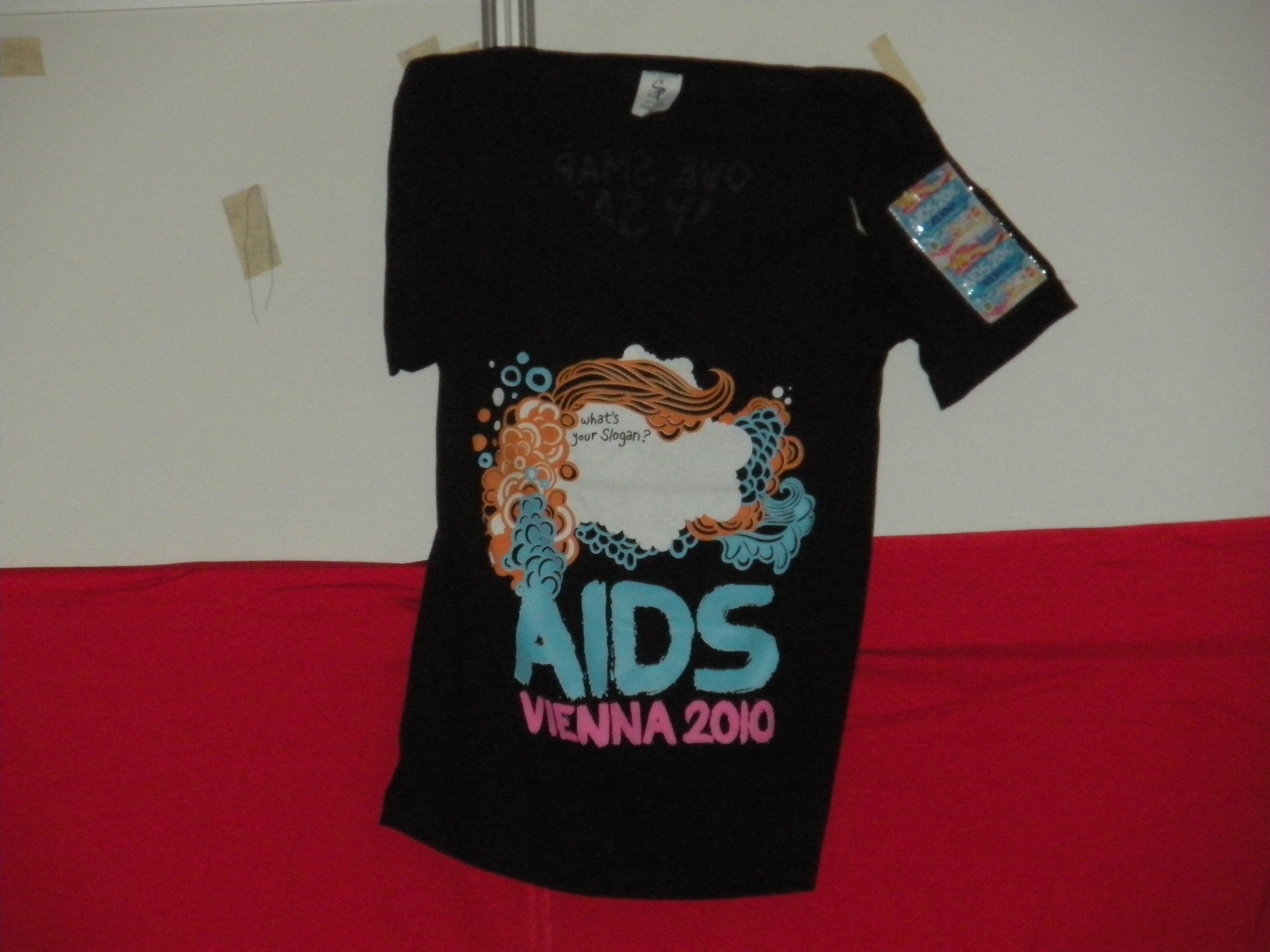
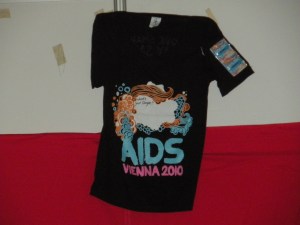
However, the Condomize campaign did give out the best free t-shirts throughout the entire conference.
 Tuesday afternoon, I went on an engagement tour to SOPHIE, an organization that provides counseling, social support, and German and self-defense classes to female sex workers in Vienna. Prostitution is regulated in Austria, meaning that female sex workers can work legally if they register at the local police department. They are considered ‘self-employed’ and required to pay taxes, pay into the national health insurance scheme, undergo a weekly medical check-up for STDs, and have an HIV-test every 3 months. If they are found HIV-positive, they are no longer permitted to work as sex workers, although there are some rumblings this should change now that research shows anti-retroviral treatment for HIV-positive people is an effective way to prevent new infections.

Wikipedia tells a different story of sex work in Austria in terms of human trafficking, but the SOPHIE staff member who spoke to our group indicated that most of the clients they serve are working in the sex work industry voluntarily. Most sex workers in Vienna come from the European Union countries in Eastern Europe – especially Hungary, Bulgaria and Romania – and thus have a legal right to work in Austria. One recent sex worker from Hungary who came to SOPHIE’s office had a master’s degree and had been recently laid off from her job. Her friend had experience as a sex worker, and it is known to be good money.

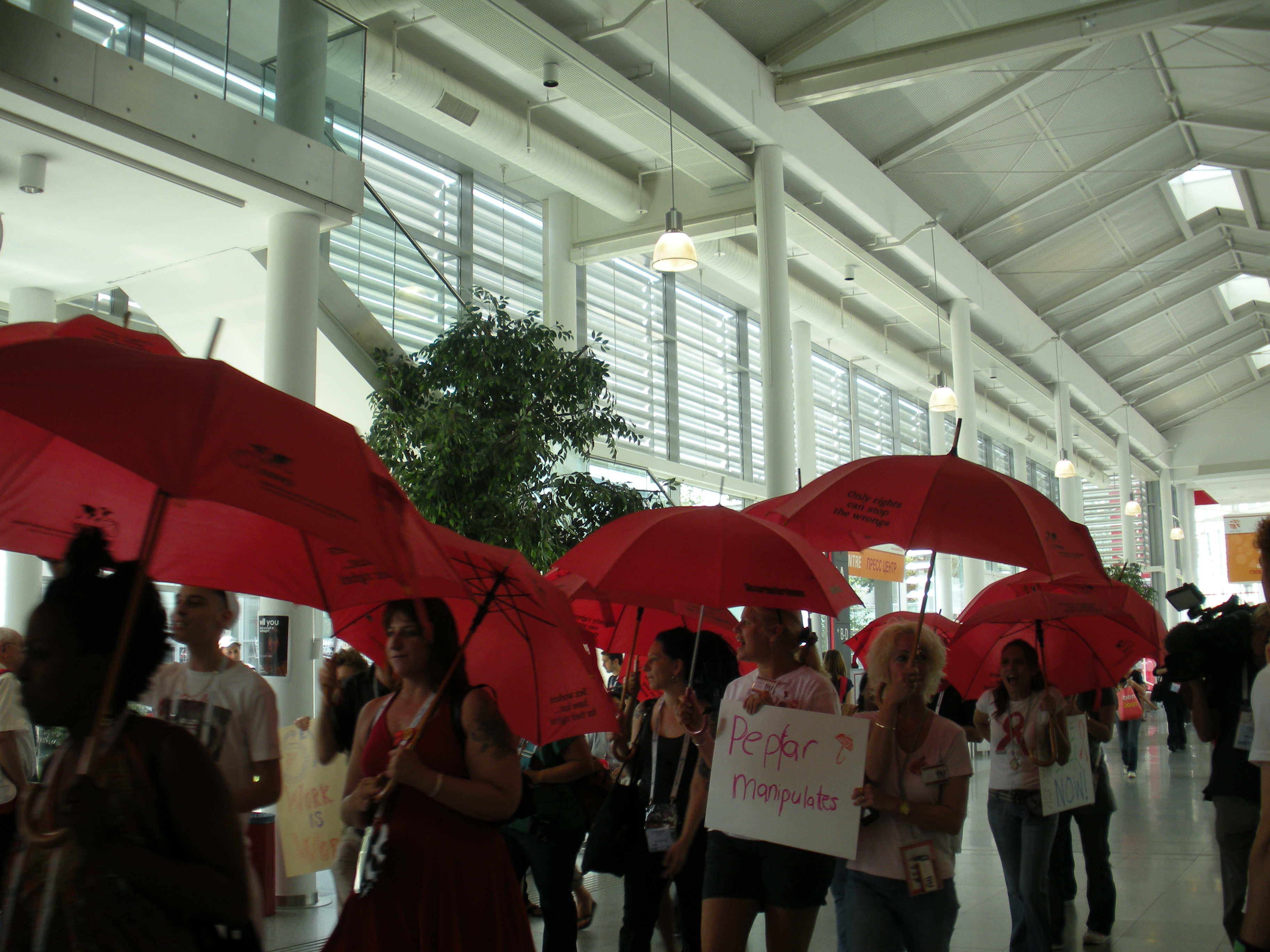
I am always impressed with sex worker advocacy at these conference, and yesterday they held a rally throughout the conference venue, protesting how US Government funding of HIV and AIDS programs is detrimental to sex workers. The red umbrella is an international symbol of solidarity with sex workers and standing up to violence against sex workers.
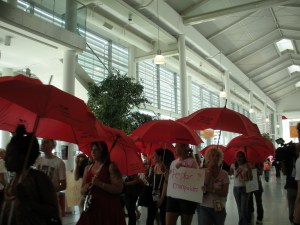
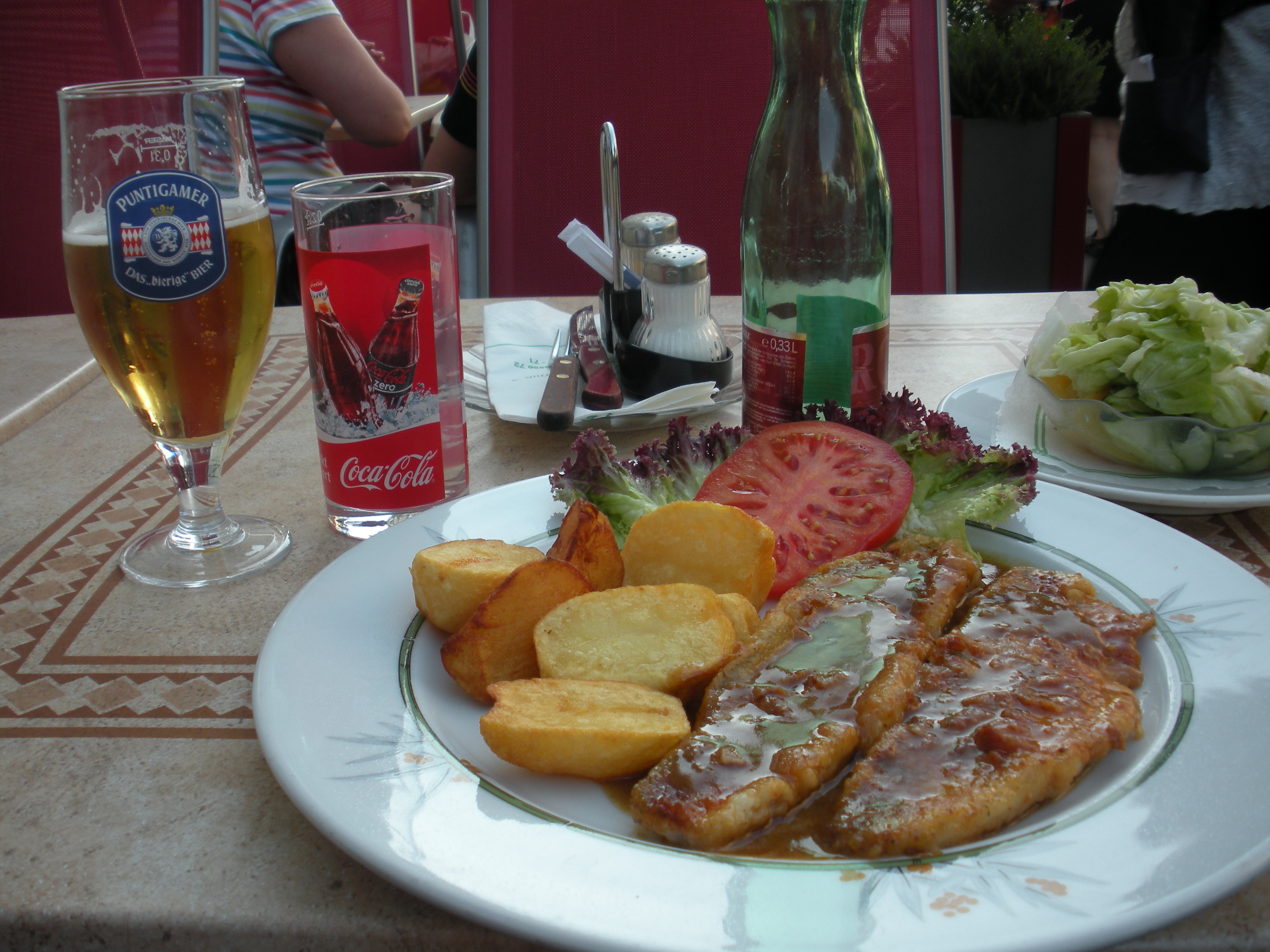
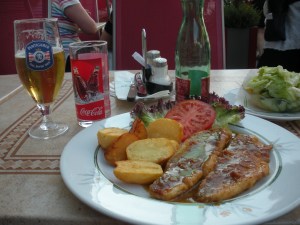
Last night I had planned to attend the Multi-Faith Prayer Gathering at Votivkirche and the Human Rights March and Rally, but I was feeling extremely tired and in need of a beer. Instead, I ate dinner near my hotel at a little side-walk cafe called Restaurant Ausgarten. Dinner consisted of an Austrian lager (thankfully European restaurants generally serve beer in aspecial glass for each featured beer), an excellent mixed salad, Serbian style pike perch lightly fried and served with a gravy, and roasted potatoes.
Enough blogging. Now back to work on my last day in Vienna.
Posted in Becky's Activism, Becky's Adventures | Tagged , , , , , , , | 3 Comments