Can We Place a Price Tag on the Value of an Education?

The question “is higher education worth it?” has received considerable media attention lately, partly because of the recently released book Is College Worth It?: A Former United States Secretary of Education and a Liberal Arts Graduate Expose the Broken Promise of Higher Education. According to authors Dr. William J. Bennett and David Wilezol, the answer is only in certain circumstances. Current student debt load is more than $1 trillion, with the looming possibility of interest rates doubling, leading many to wonder if student loans are becoming a second housing bubble. Unemployment and underemployment in young adults, including among college graduates, continues to be worryingly high, dispelling the belief that higher education is a golden ticket to a better life.

PayScale.com has an extensive database where they calculate the so-called “Return on Investment” of a college education. It was disconcerting to see the school I received my master’s degree from ranked 250th, outside of the realm of what Bennett considers “worth it.” Even more dismal is the 982nd rank of my undergraduate institution, with a negative return on investment over a 30 year period, despite its regular appearance in the book Colleges That Change Lives: 40 Schools That Will Change the Way You Think about Colleges.

Despite the fact that I have a master’s degree (albeit in a liberal arts field with a high rate of unemployment), I currently work a handful of near-minimum wage jobs and live below the poverty line. Yet the above data makes me cringe because it suggests that there is nothing to be gained from higher education beyond a paycheck.

Because of my college education, I have travelled to over 30 countries (many times on others’ dimes) for study abroad, internships, volunteer commitments, conferences and consultancies. I have played a small part in working to overcome one of the greatest public health and human rights issues in history, and worked myself out of a job (in a good way). I have a greater appreciation for literature, the fine arts, science and diverse world religions. I find it impossible to put a price tag on all of this.

However, I do see some validity in the concerns about the tremendous growth of student loan debt. I couldn’t have made it through school without taking out some student loans, yet I bargained with the financial aid offices at both schools I attended to only take out half the amount of loans I was offered, which is what I determined I actually needed. Throughout most of my college career, I typed all of my papers on library computers, went without a car, worked a variety of odd jobs, attended hundreds of extra-curricular events that promised free food, and subsisted on a diet of ramen noodles when not partaking in a meal involving free food. After graduation, I continued to penny-pinch so I could pay off my student loans early. To me, becoming debt free has been just as big of an accomplishment as the degrees I hold.

Last week on my blog, I mentioned that I was currently pondering a major career decision. Despite all the slack that higher education is taking recently, I am contemplating going back to school to become a registered dietician. I have seemed to reach a dead-end in my current career path, nutrition and health promotion have been passions of mine for a long time, and according to a recent article in the Wall Street Journal, dietician is listed as one of the best careers of 2013. I have found an accredited distance education program that would allow me to work full-time while going to school full-time, so that I will hopefully not have to take out any more student loans. I have begun the process of gathering paperwork to have my transcripts evaluated, the first step in this new academic journey.

It is impossible to know in advance what the “return on investment” of this pursuit will be, but it seems that in life there are many risks worth taking.

Posted in Introspection | Tagged , , , , , , | 2 Comments

Salvage the Bones Book Review

The 2011 National Book Award Winner for Fiction (U.S.), Salvage the Bones by Jesmyn Ward tells the story of the Batiste family, a poor, Black family living in a rural community near the Mississippi Gulf Coast. A first-person narrative told from the point of view of the Batiste family’s only female member, the teenager Esch, the story takes place in the 10 days preceding Hurricane Katrina, the day of the storm and the day after.

Jacket

The book is largely character driven, and throughout most of the story the hurricane preparations are secondary. Esch is a smart, strong-willed character in her late teens, who especially likes reading and is currently infatuated with the Greek mythology story of Jason and Medea. Her mother died following the birth of her youngest brother, and she has clearly become the matriarch of the Batiste family. Early into the story she also learns that she is pregnant.

The characters are well-written, and for me, they are what made the book a great read. Esch lives with her brothers, each who have interesting character traits — an older brother trying to get into college on a basketball college, a younger brother who has a borderline-obsessive relationship with the family’s dog and her newly born puppies, and the curious and active youngest brother. They live with their alcoholic father, and despite his short-comings, as the novel progresses you can clearly see his love and concern for his children. There are also a handful of other secondary characters living in Esch’s community of Bois Sauvage. Through narrating their daily lives, the author presents issues of poverty, race, and the familial bonds that tie humans together.

For me, the most difficult chapter for me to get through was the day the actual hurricane hit. Ward describes the storm in great detail, and the steps the Batiste family went through to try to survive. According to the author’s Wikipedia page, she herself is a survivor of Hurricane Katrina, and I wondered how much of this book was autobiographical.

I would classify Salvage the Bones in the same realm as To Kill a Mockingbird, a book that can be enjoyed by both teens and adults for its unique, likeable characters, and appreciated for its subtle commentary on the human condition.

Posted in Movie Reviews/Book Reviews | Tagged , , , , , | Leave a comment

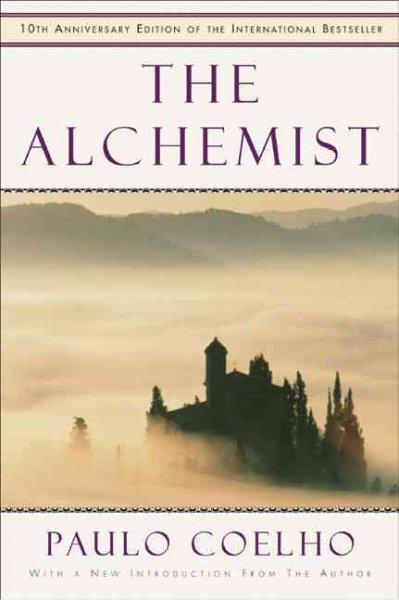
The Alchemist Book Review

Although it was first published in 1988 and has become one of the best-selling novels of all time, I only recently learned of The Alchemist, written by Brazilian author Paulo Coelho. This 174-page allegorical story of an Andalusian shepherd, who follows a dream in search of a treasure, can be read in just a few hours.

Jacket

The protagonist of the novel, Santiago, is described as a “shepherd boy,” although his exact age is never revealed. Nor is the time setting of the story, so it is up to the reader to imagine these details. Santiago is seemingly well-educated, having gone to school to study toward the priesthood as per his parents’ urging. However, he longs to travel and determines that the best career path for him to pursue is that of a shepherd, which affords him the opportunity to roam the countryside.

Early in the story, Santiago consults with a gypsy mystic regarding a recurring dream he has had which he believes may be prophetic. He is somewhat skeptical of her interpretation: he must travel to Egypt in search of a lost treasure. Shortly thereafter, Santiago encounters another interesting character, who introduces himself as Melchizedek, the King of Salem. Following their conversations, Santiago begins a spiritual journey to follow what he believes to be his destiny.

I would classify this allegorical, adventurous and inspirational story in the realm of young adult fiction, because at the core level its message is easy to comprehend. Each of us has a personal legend to live out, something that grows in us from a very early age, yet very few of us will actually seek to live out our destinies. Despite hurdles that we may encounter along the way, if we are meant to achieve this legend, the universe will work in our favor to help us achieve it. However, we must learn how to detect omens that the universe places in our way.

At a deeper level, there is much spiritual symbolism throughout the book to keep the adult reader and perpetual philosopher happy. For starters, Melchizedek, High Priest and King of Salem, blesses Abram in Genesis 14 and requests a tithe from Abram in return, similar to how in The Alchemist Melchizedek requests from Santiago one-tenth of his flock of sheep. God and universal direction are also recurring themes throughout the story, so this likely would not be a good book for atheists. There are also similarities between Santiago’s story and that of Joseph in the Book of Genesis, and I am sure there are a host of other religious parallels that I missed on my first reading.

Reading The Alchemist was timely for me as well, as I am currently pondering a major career decision (more on this next week). I am now also curious to check out more of Coelho’s books, especially his memoir The Pilgrimage, about his journey along the Camino de Santiago in northern Spain.

Posted in Around the World Virtual Book Club, Movie Reviews/Book Reviews | Tagged , , , , , | 2 Comments

Portland’s 4T Trail

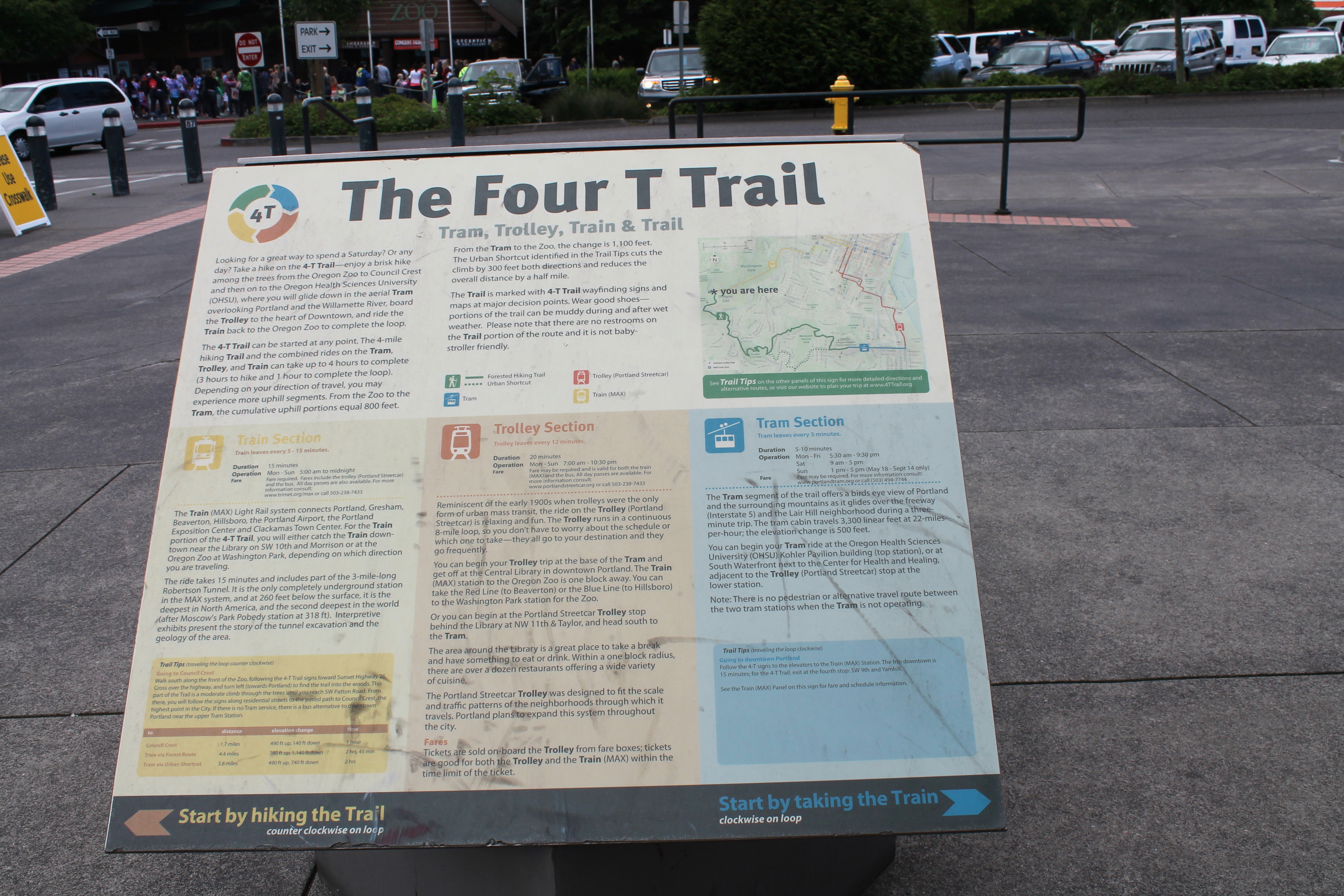
For my birthday this year, my husband vowed to take a day off from writing and go with me on an adventure of my choosing. Since nice weather was in the forecast after a long rainy spell, I opted to do Portland’s 4T Trail, aptly named because it uses 4 modes of transportation (trail, tram, trolley and train) to explore the southwest quadrant of Portland.

IMG_1306

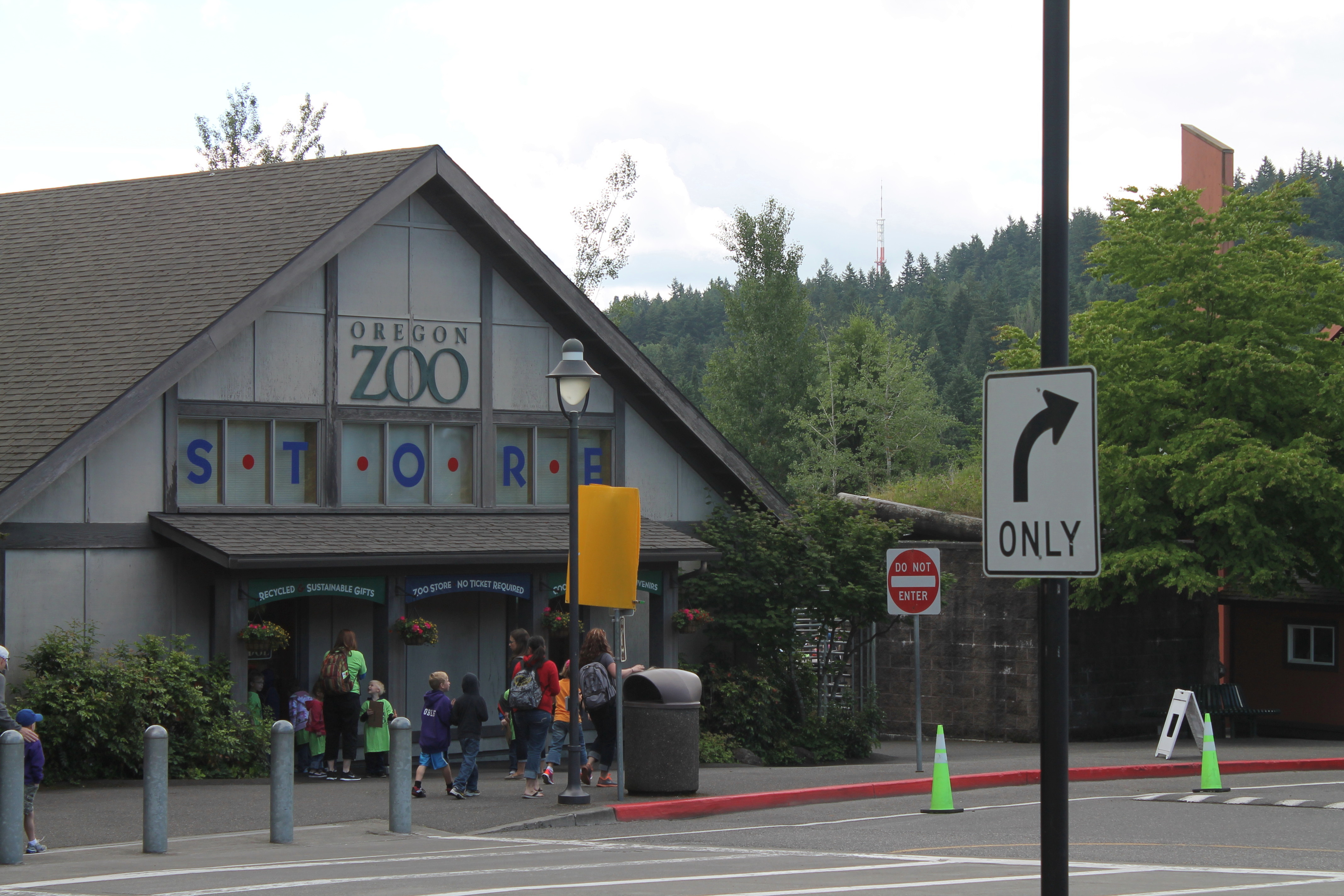
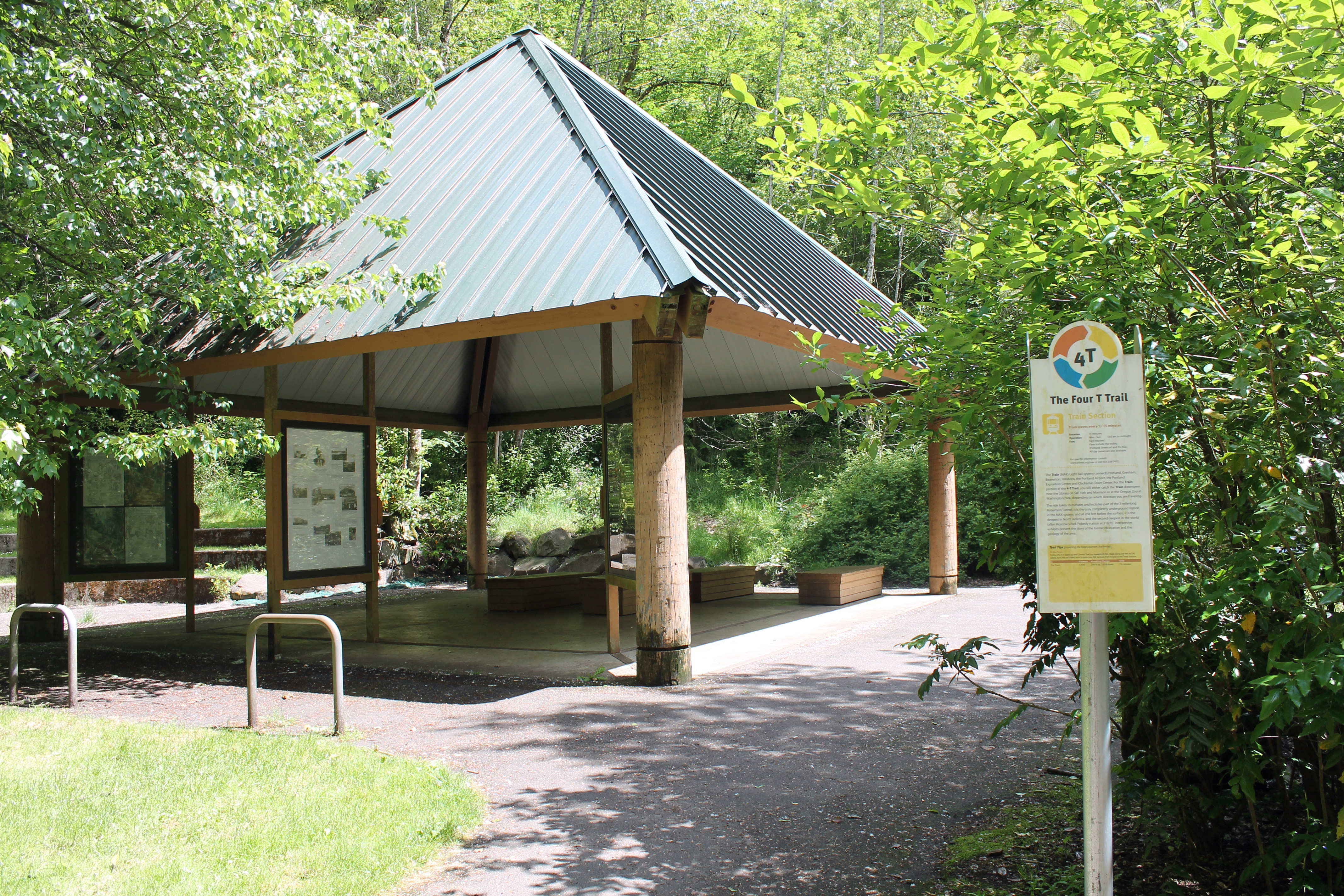
Since we live close to a MAX train station in Hillsboro, we decided to invest in an all-day public transportation pass for $5 each, as it would grant us access to both the train and trolley. You can technically begin the trail at any of the four modes of transport and do it either clockwise or counterclockwise. We started with the trail portion of the journey beginning at the Oregon Zoo MAX Station.

IMG_1307

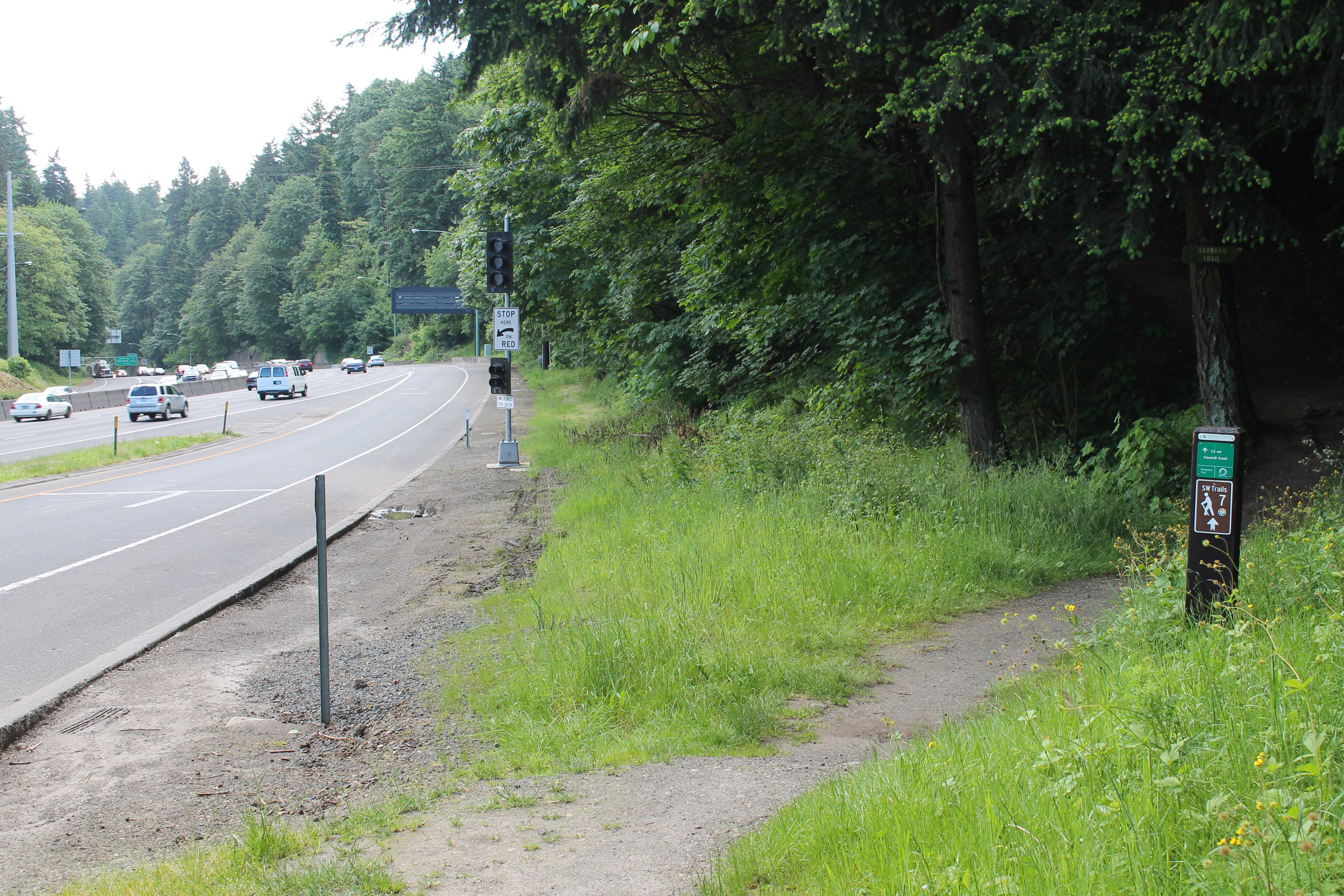
The 4T Trail was one of the best-marked trails I have ever been on, with well placed brown guideposts on the urban portions of the trail and green signs to help you navigate the forest trails. Yet I was still glad I had printed directions to bring with me, as it was slightly confusing in a few places.

For example, the trailhead for the forested portion of the Oregon Zoo to Oregon Health Sciences University (OHSU) hiking trail oddly begins next to the freeway on ramp of Highway 26. Luckily, the cars were willing to yield to pedestrians.

IMG_1309

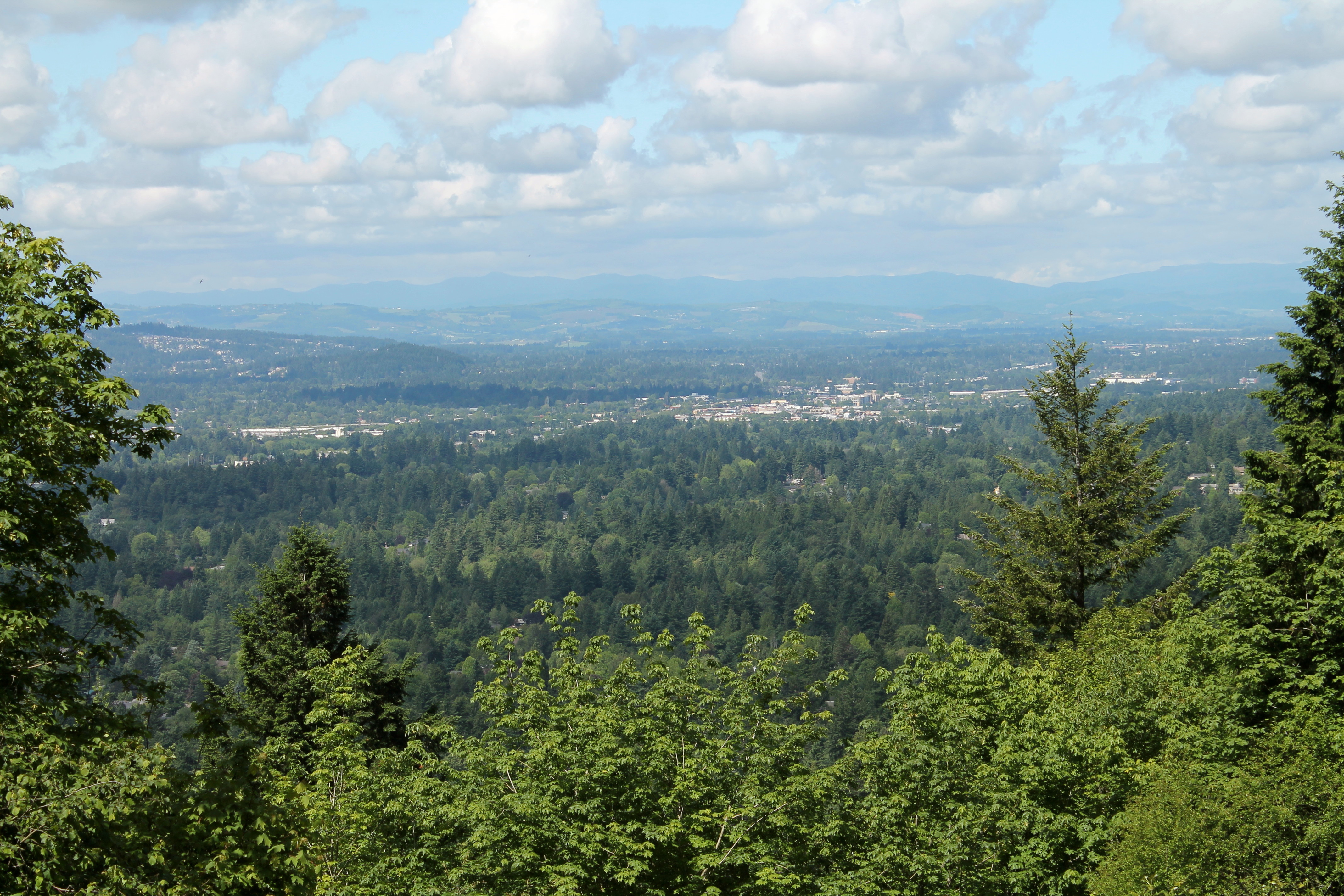
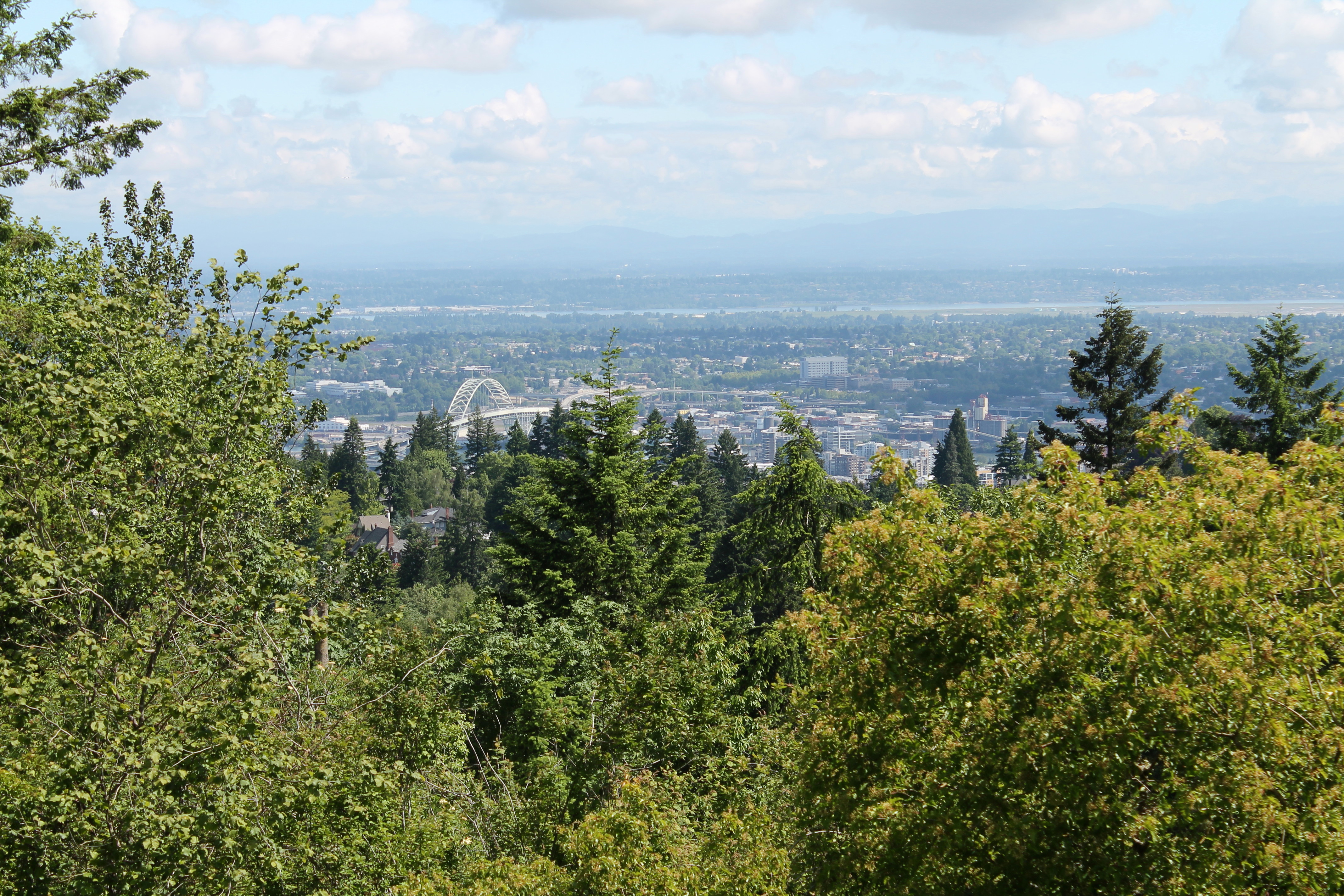
The first portion of the trail follows the 40-mile Marquam Loop Trail, which circumnavigates around the entire city of Portland. We walked only a 1.3 mile portion of the trail, along a gradual incline, to Council Crest — the highest elevation in Portland at 1,073 feet. As it was a partially cloudy day, we were unable to catch a glimpse of Mount Hood, although we had nice views both looking back toward the cities of Beaverton and Hillsboro and of the city of Portland itself.

IMG_1311

IMG_1315

From Council Crest, hikers can choose to take either the longer, forested route (along the Marquam and Connor trails) that has an additional 300-foot elevation gain just prior to arriving at OHSU, or the shorter urban route that is about a half-mile less with no additional elevation gain. We opted for the longer, scenic route. The next portion of the trail was a 1.7 mile, mostly downhill segment to the Marquam Shelter.

IMG_1316

The last portion of the hike was also the most strenuous — 0.6 miles of switchbacks up to the OHSU campus.

IMG_1318

Here the trail actually cuts through the hospital (or our interpretation of it did), which was a good thing because we had access to restrooms and drinking fountains for the first time in 2 hours. The tram station at OHSU also surprisingly had better views of the city of Portland than at Council Crest Park.

IMG_1320

Since we rode the tram downhill, we got to ride for free. Otherwise, it is $4 per person uphill or roundtrip.

IMG_1325

Immediately after exiting the tram station, a trolley arrived.

IMG_1327

The trolley portion of our journey wasn’t as exciting for me because it was very similar to the MAX train — which I ride all the time — only slower and with more frequent stops. However, I did find it slightly funny that each trolley station is sponsored by a different local business, which they boldly announce as you approach each stop. We exited the trolley at the Central Library stop, which was sponsored by the Julie Lawrence Yoga Center.

IMG_1328

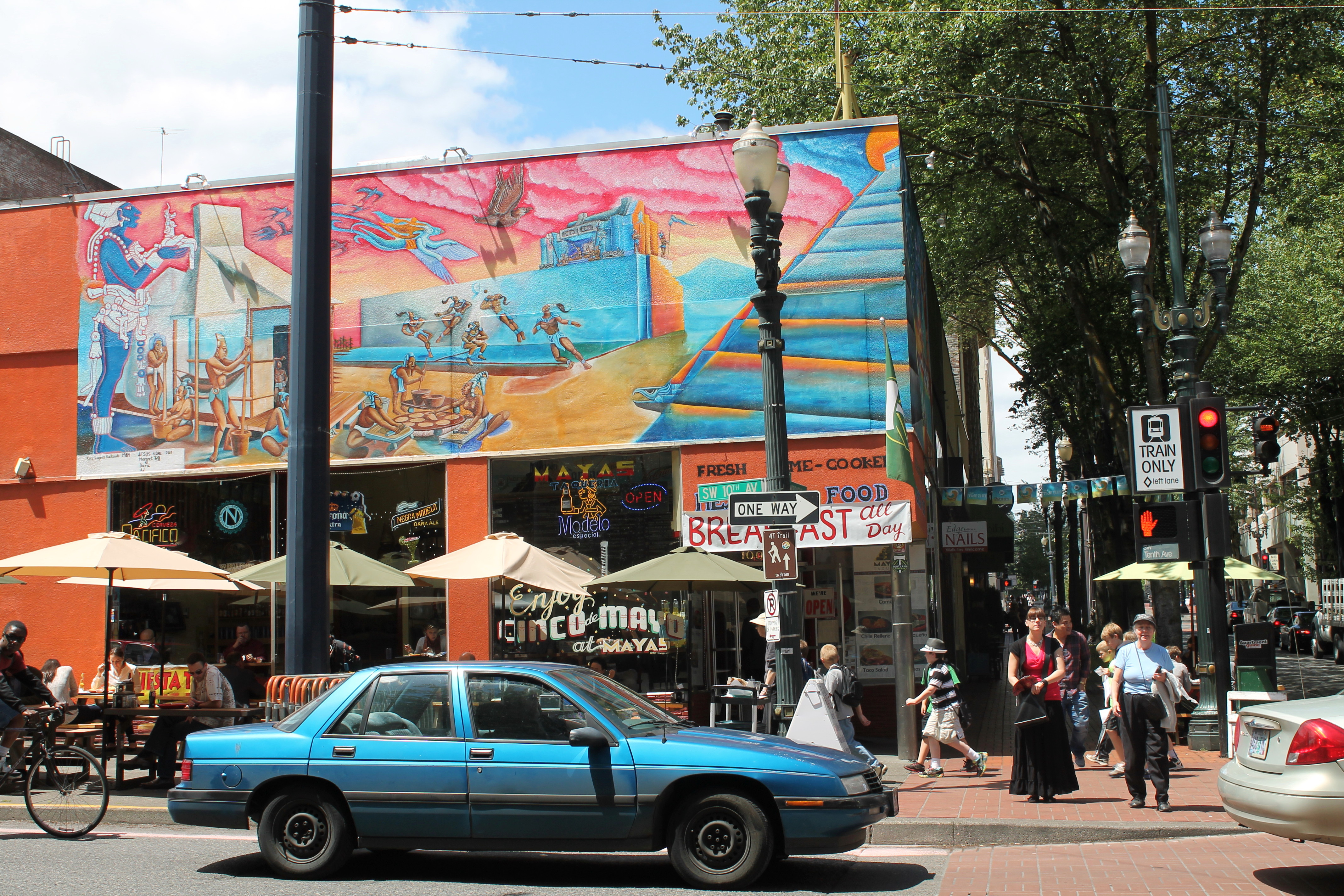
By this time, we were both really hungry, and fortunately there are ample dining options to choose from in downtown Portland. We spotted the colorful Mayas Taqueria across the street from the trolley station and headed there for a late lunch.

IMG_1329

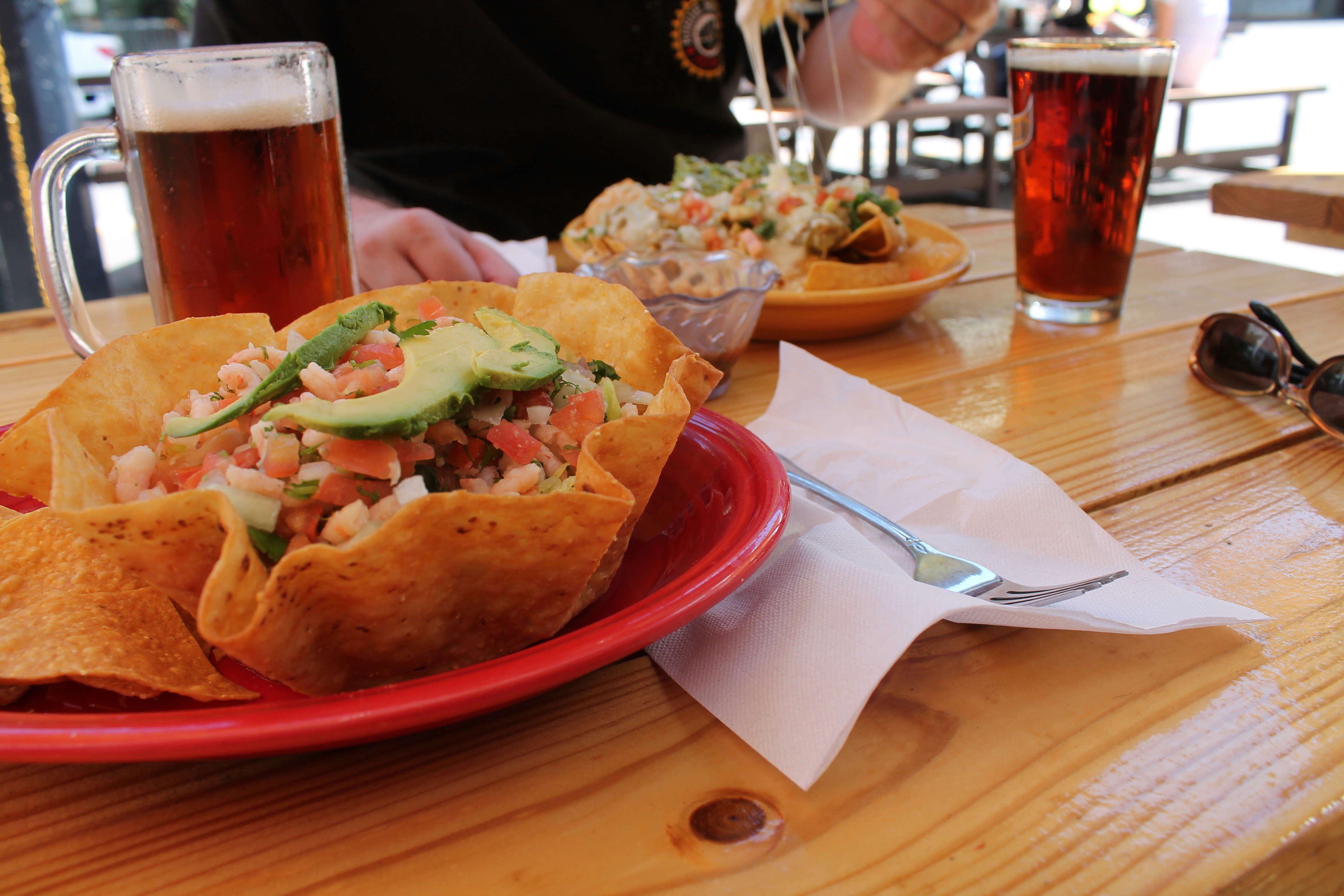
I devoured a ceviche taco salad and a pint of Dos Equis Amber Ale, while my husband chowed down on Nachos Grande and a pint of Negro Modelo. ¡Muy delicioso!

IMG_1330

After lunch, we boarded the MAX train at SW 10th & Morrison and headed back to Hillsboro — the final “T” of our journey.

Posted in Becky's Adventures, Healthy Living, Oregon | Tagged , , , , , | Leave a comment

Shark’s Fin and Sichuan Pepper Book Review

Recently I joined a book club that focuses on food-related books. For my first meeting I read Fuchsia Dunlop’s 2008 memoir Shark’s Fin and Sichuan Pepper: A Sweet-Sour Memoir of Eating in China.

Jacket

Fuchsia Dunlop is somewhat the Julia Child of Chinese cuisine. English by birth, she first went to China on a university study abroad program in the early 1990s, fell in love with the country and its cuisine, and was determined to learn to speak fluent Mandarin. On a return trip as a research fellow, Fuchsia decided to abandon her scholarly pursuits and become the first Westerner to enroll in the Sichuan Institute of Higher Cuisine. She has previously published several cookbooks on Chinese regional cuisine, including Revolutionary Chinese Cookbook: Recipes from Hunan Province and Land of Plenty.

I was most impressed by the thoroughness of Dunlop’s writing. Prior to reading this book, I hadn’t given much thought to Chinese cuisine beyond the westernized dishes that are found on the menus of most Chinatowns around the world. Dunlop started out in Sichuan Province — home to the spicy pepper of the same name — but from there explored many other regional cuisines and customs of China, including Hunan Province, ethnic minorities in Xinjiang, Mao Zedong’s Hunan homeland, Yangzhou, Hong Kong and Tibet.

Throughout the course of her travels, Fuchsia vowed to eat everything that she was offered, and the Chinese do pretty much eat everything you can imagine — including stinking offal, civet cat, bear paw, the ovarian fat of a snow frog, and even a live caterpillar. Most of the chapters conclude with recipes, and this is the first food memoir I have read in a long time that I haven’t tried at least one of the recipes. Many contain obscure Chinese ingredients that would likely be hard to find, although I was intrigued to try the Chicken and Papaya Soup, which was hailed as a preventative concoction for SARS.

Dunlop also delves a bit into the ethics of Chinese eating, such as their widespread use of MSG, the eating of endangered species, and recent food safety issues. In doing so, she explains the implications from both a Chinese and a Western perspective, and I appreciated her balanced views. The only downside of the book is the less than stellar editing, with frequent typos and duplicate words in each chapter.

For our book club meeting, we met at Shandong Restaurant in northeast Portland. While their menu wasn’t quite as adventurous as what Fuchsia Dunlop ate in China, I was excited to try a cocktail made with Sichuan pepper-infused vodka and pineapple juice, and garnished with a whole Sichuan pepper (of course I had to eat it for dramatic effect). They also had delicious Chilean Rock Crab and Shiitake Shao Loong Bao.

After discussing the book, we went around the table and each said the weirdest thing we’ve ever eaten. I was proclaimed the most adventurous eater, having nibbled on Mopani Worms in South Africa.

Post in Comments: What’s the weirdest thing you have ever eaten?

Posted in Around the World Virtual Book Club, Movie Reviews/Book Reviews | Tagged , , , , , , , | 1 Comment