Peach Fest Part 2: Peach-Infused Vodka

Last Thursday I wrote about the 2 dozen+ fresh peaches my cousin gave me and the peach-whole wheat muffins I made from a handful of them. While my muffins were baking in the oven, I began another peach-fest project: peach-infused vodka.

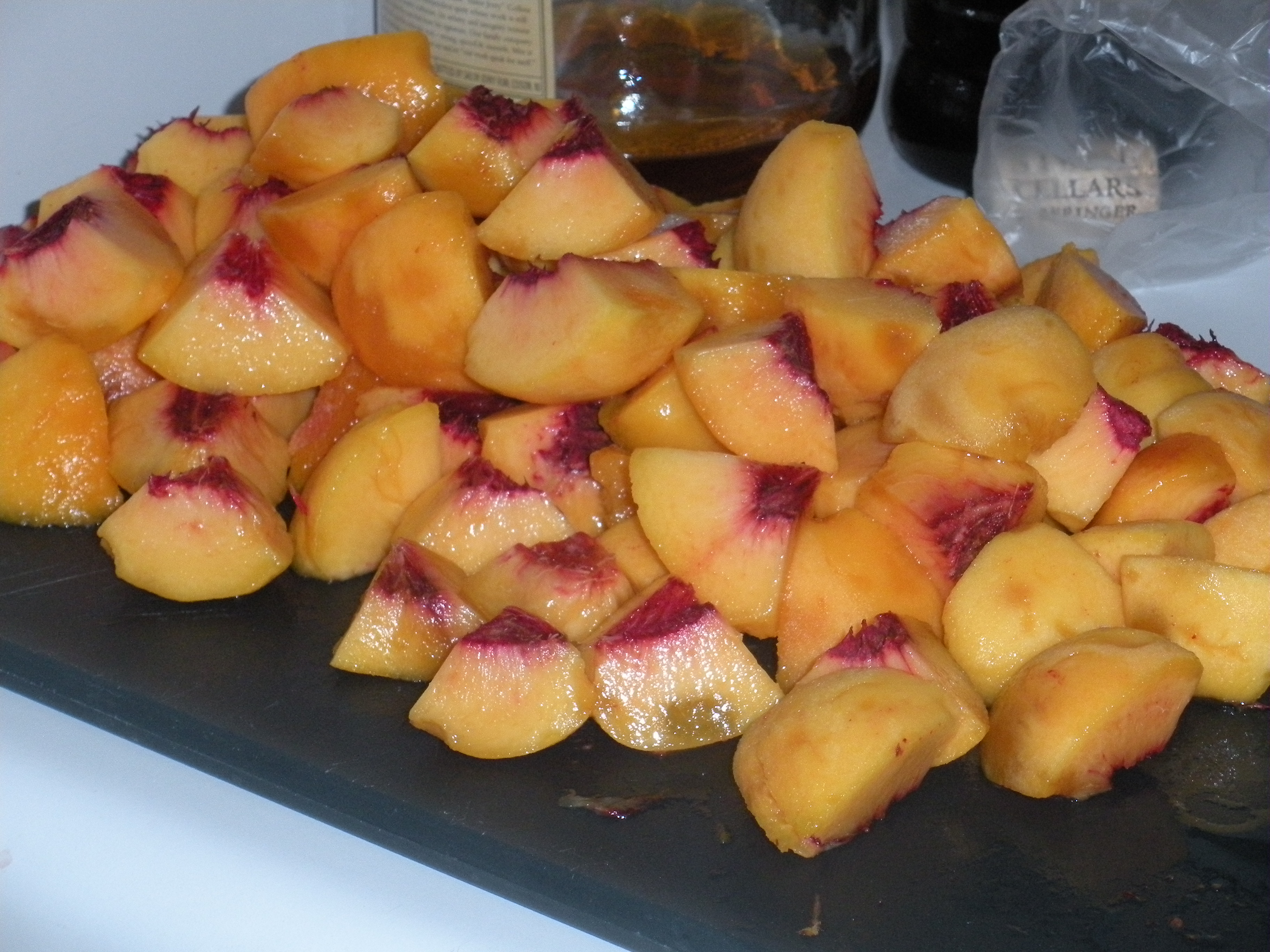
The recipe is super simple and not too time-consuming. The only ingredients you’ll need are a 1.75 liter bottle of medium-grade vodka (think ~$20 range) and about 3-4 cups of chopped, cored and peeled fresh peaches.

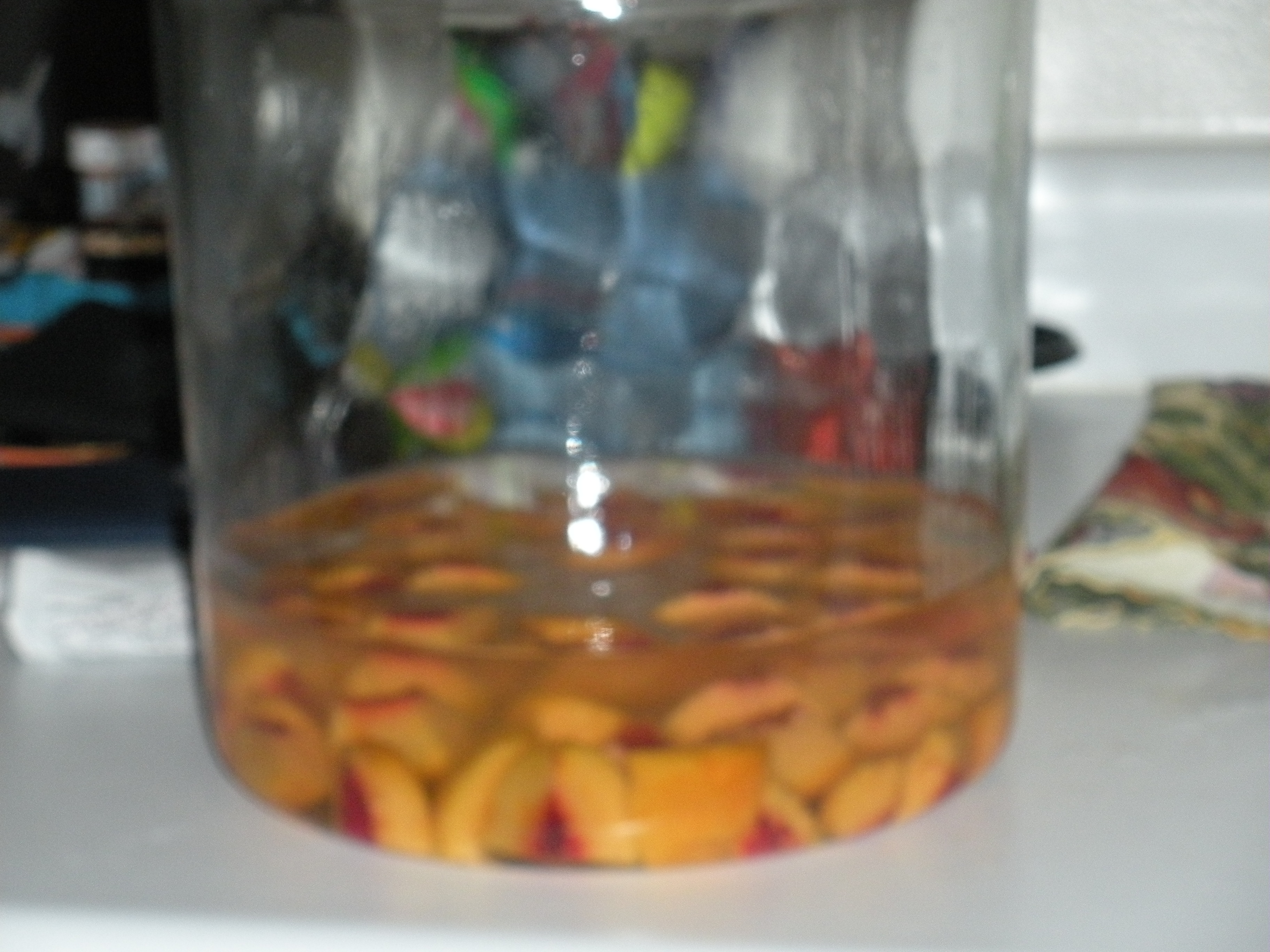
Pour the vodka in a sterilized glass jar and add the peaches.

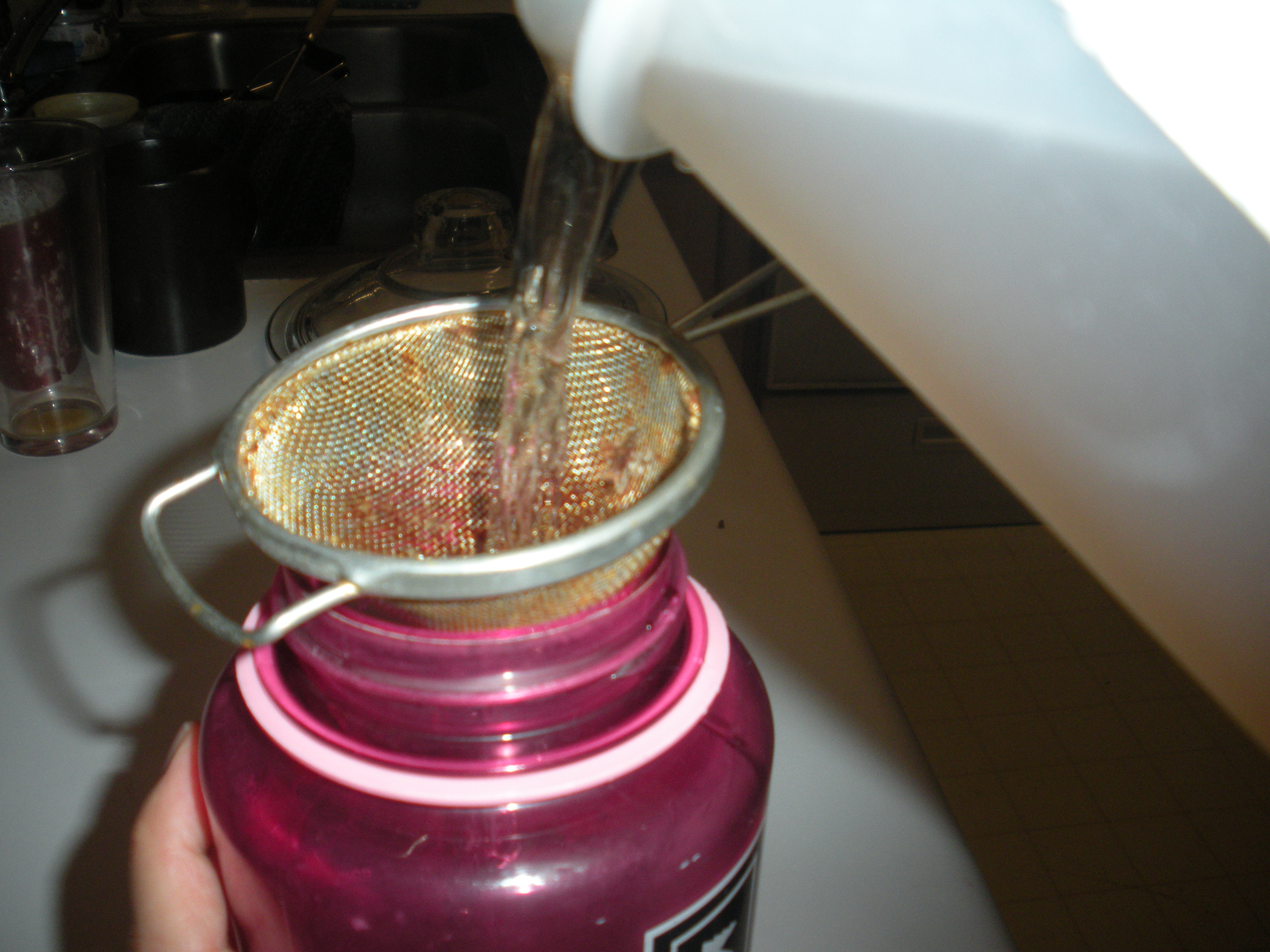
Cover and store in a cool, dark and dry place for 2-5 days. Shake daily. When the vodka is ready to be processed, use a strainer or cheese-cloth to drain into smaller glass or plastic bottles.

Store in the refrigerator and/or serve in a chilled shot glass. We let our vodka infuse for 3 days, and it had a nice peach color with a strong vodka flavor. After straining out the peach particles, the longer you store the vodka, the better the vodka will age and improve the peach flavor.

This recipe works with other types of fruits as well. We’re looking forward to trying cranberry-infused vodka this Christmas.

Posted in DIY, The Simple Living Experiment | Tagged , , , , | Leave a comment

Canning Homemade Strawberry Jam

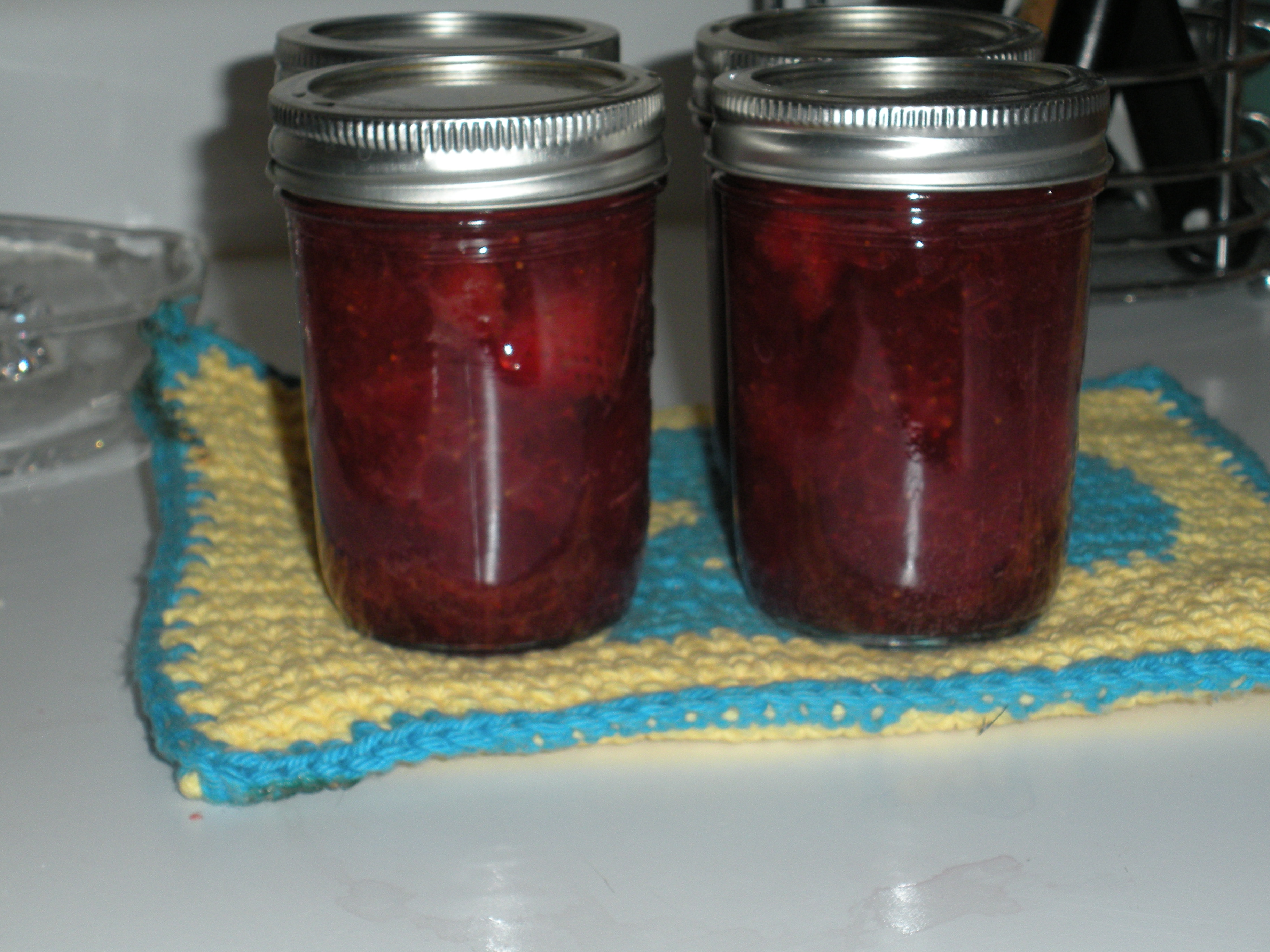
Last week was my first experience in canning, as I canned 3 pints of homemade salsa. Today I tried out a recipe for 8 half-pints of strawberry jam, adapted from How to Sew a Button and Other Nifty Things Your Grandmother Knew. My version of the recipe made about 8 half-pint jars.

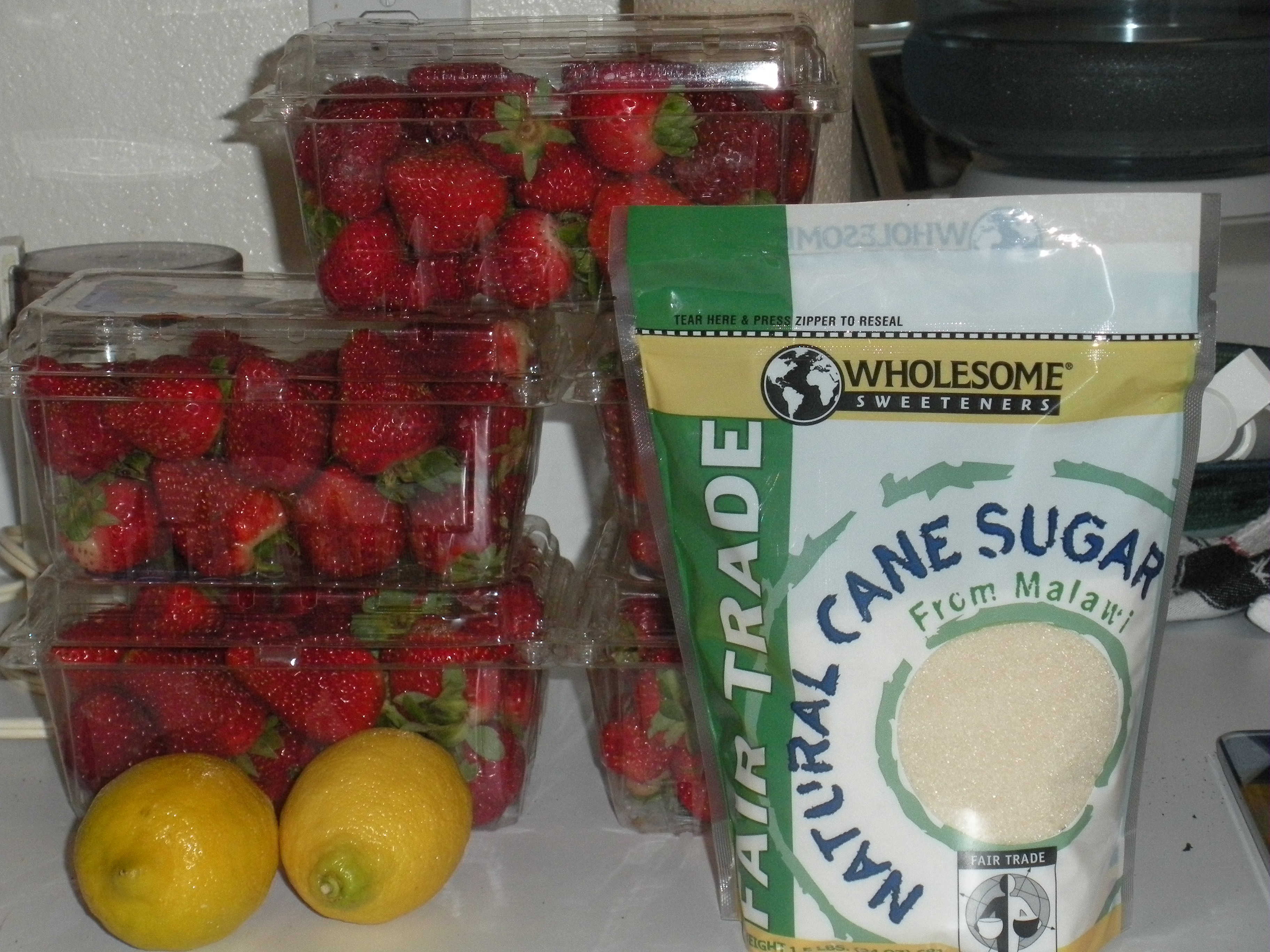
For ingredients, you’ll need 5 pints of fresh strawberries, 4 cups of sugar, and the juice of 3 lemons (about 1/3 cup of lemon juice).

For canning equipment, you’ll need a large stockpot with cover, 8 half-pint glass jars with rings and unused lids, a plastic or wire rack to prevent your jars from rattling during the canning process, a funnel and some tongs. If you’re new to canning, you can buy all the equipment as a home canning kit, which can be purchased for as little as $20 from most major grocery stores. Sterilize all of the equipment by hand-washing it in hot, soapy water before use.
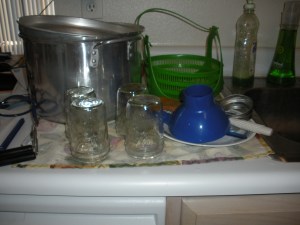
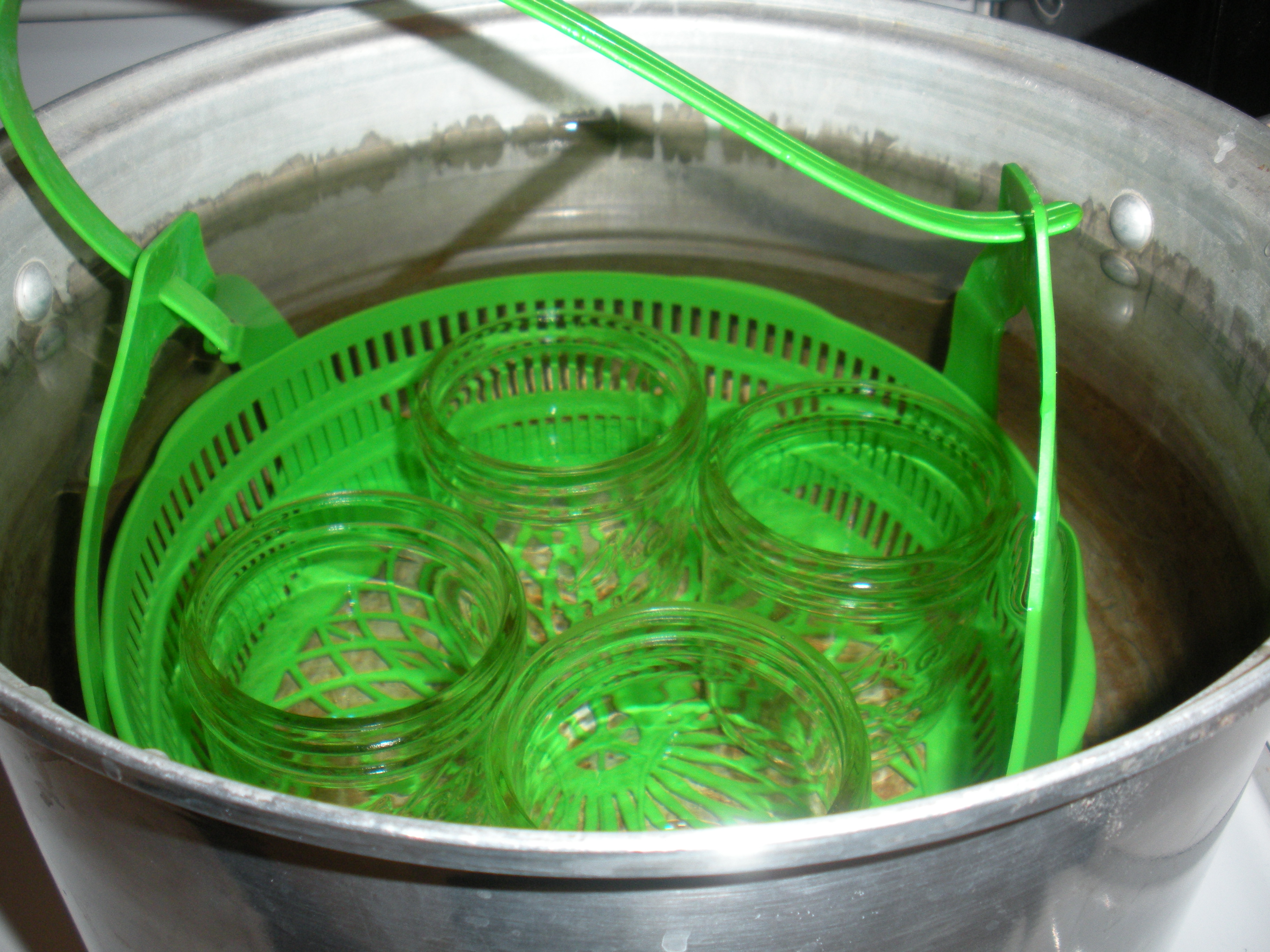
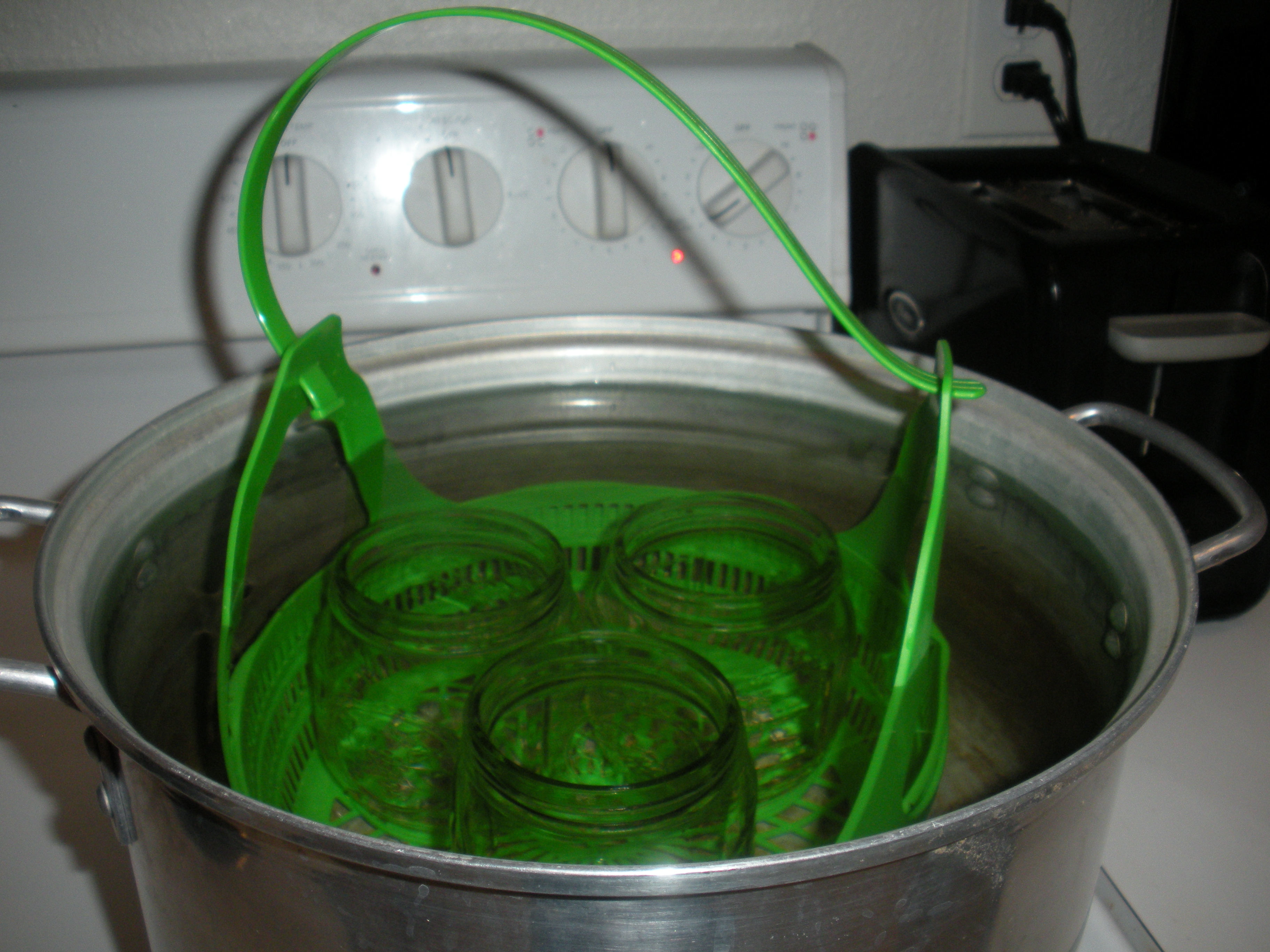
The jars should be kept hot and sterile while you prepare the jam. To do so, place the jars in the canning rack inside your stockpot, ensuring the jars are covered by at least one inch of water. Bring to a boil and continue to keep them in hot water until you are ready to begin the canning process. (Note: My canner only held 4 jars at a time, so I had to repeat the canning process twice.)

Thoroughly wash all of the strawberries, remove their caps, and place in a large saucepan.

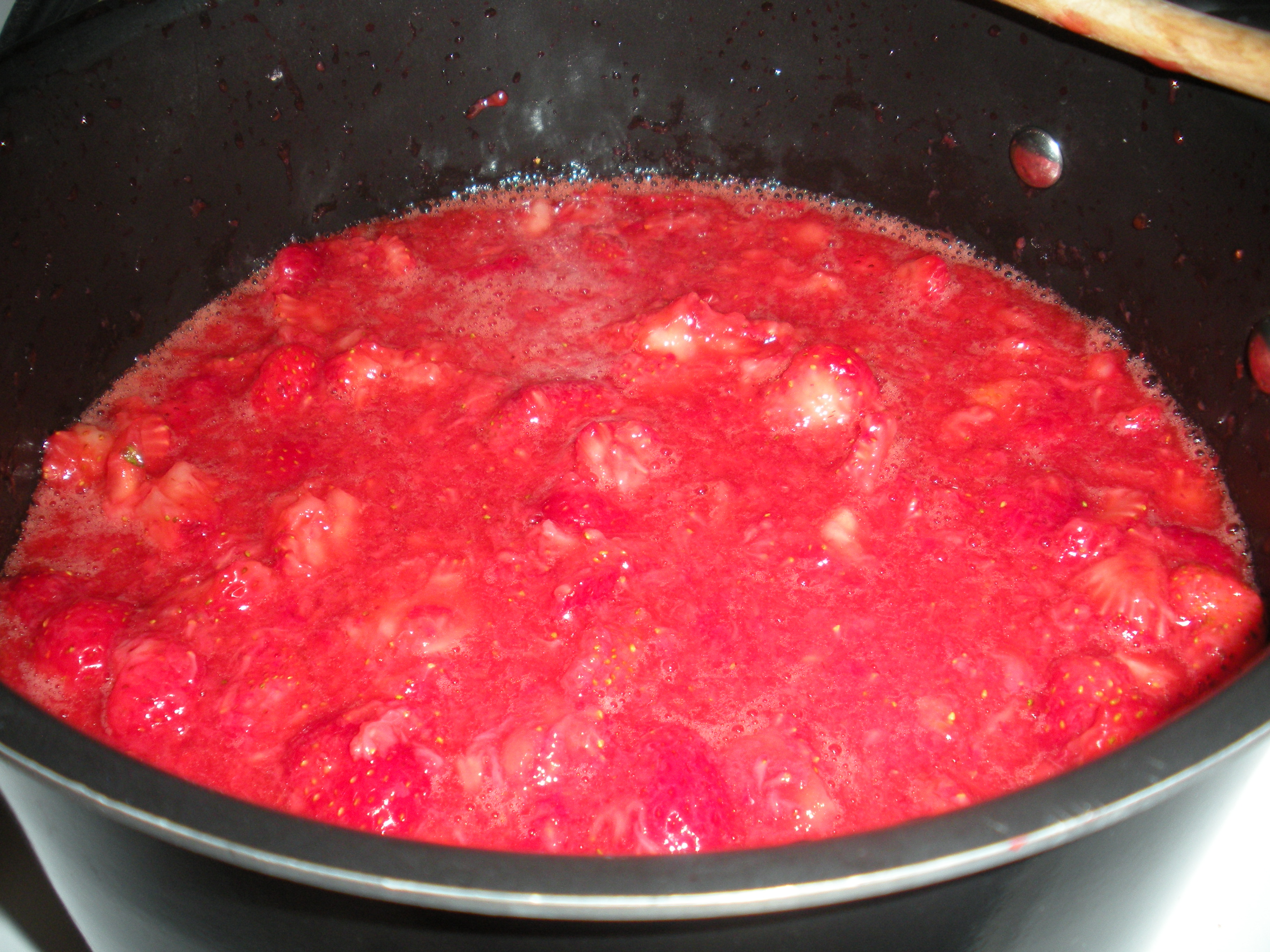
Mash the strawberries, leaving a few strawberries slightly smashed/slightly intact. Cook over medium-low heat for about 10 minutes.

Add the sugar and lemon juice, stirring constantly until all of the sugar is dissolved.

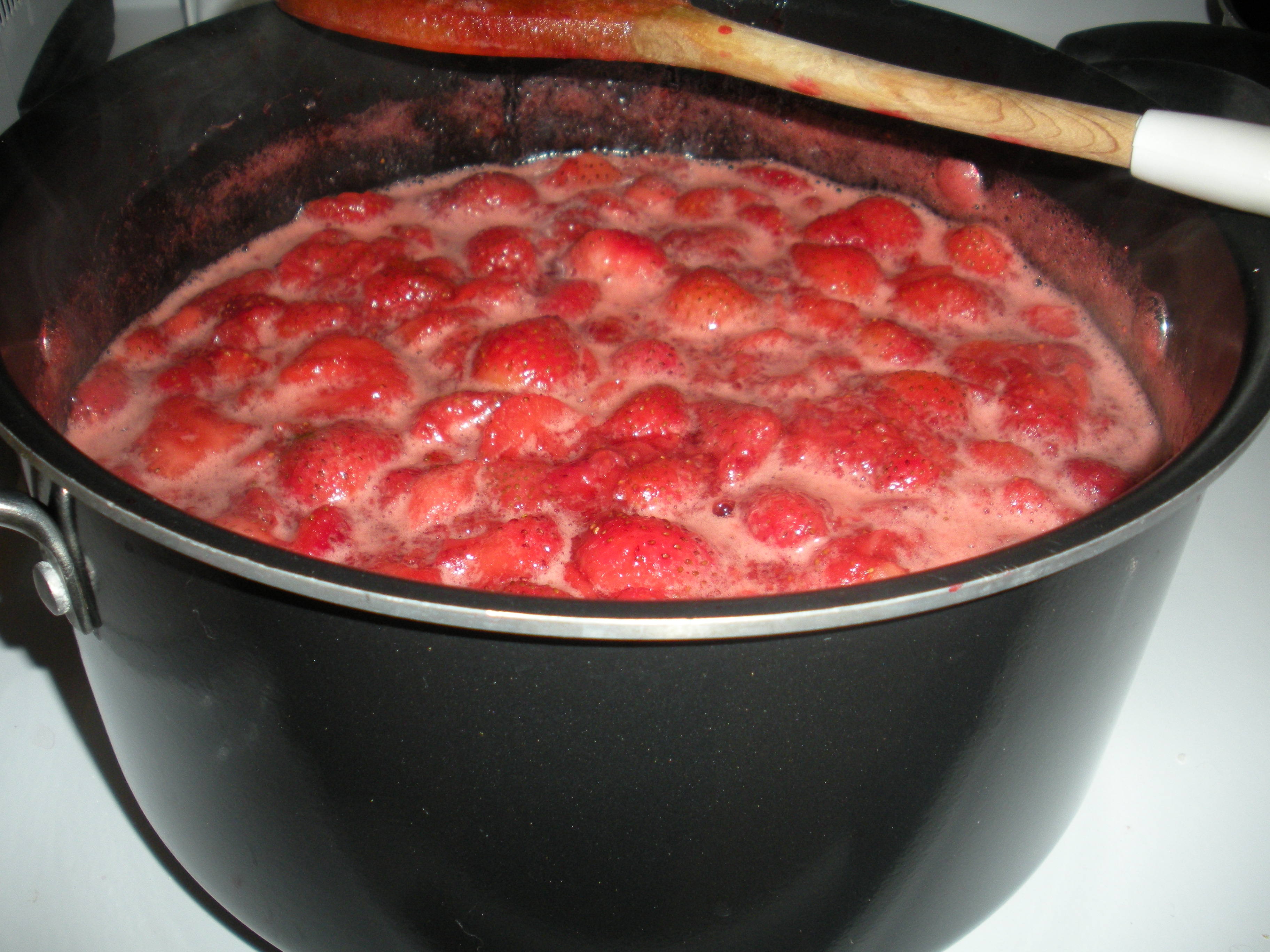
Bring the mixture to a boil, then cook for another 20 minutes or until the mixture thickens a bit and slightly gels. A good way to check if your jam is the right consistency is to place about 1 teaspoon of jam on a plate that has been sitting in your freezer for at least 30 minutes. Wait 30 seconds and then tip the plate. If the gel easily slides down the plate back into your mixture, continue cooking until it is the right consistency (thanks, Erin Bried, for the useful tip!).

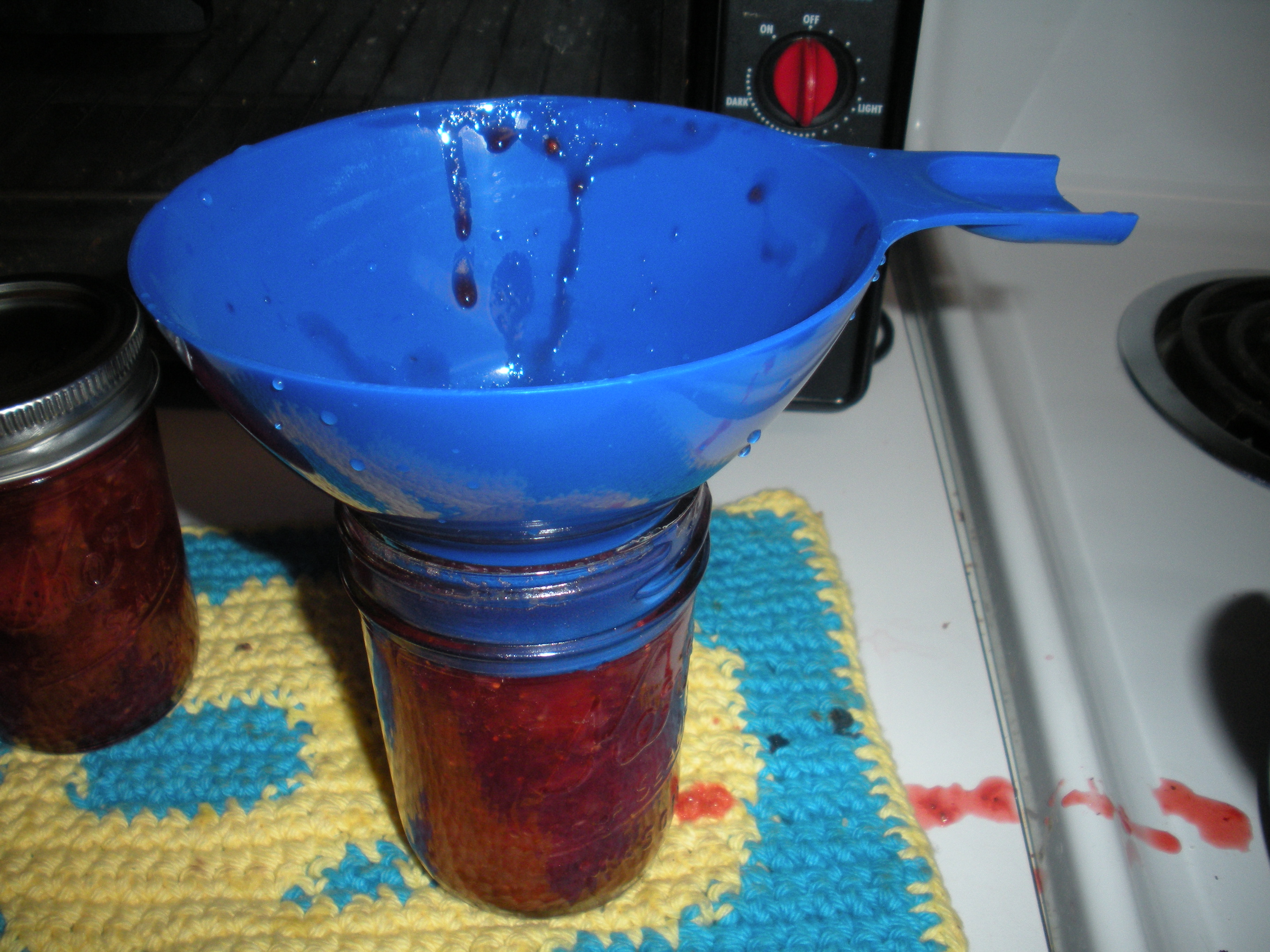
Remove the glass jars from your canner with your tongs, dumping the water back into the pot. Carefully ladle the mixture into the jars, leaving 1/4-inch space at the top. Wipe the top of the jars with a clean cloth or paper towel to remove any goo that could impact the sealing process. Place the lids on top and tighten with the rings.

Place the filled jars back into the canner, ensuring they are still covered by at least one-inch of water. Cover the stockpot and bring to a boil. Once boiling, continue to cook for 5 minutes (10 minutes if you live between 1,000-3,000 feet elevation and 15 minutes if you live above 3,000 feet elevation. Then, turn off the heat and let your jars sit in the pot for another 5 minutes.

Carefully remove the jars with your tongs and cool on a wire rack or potholders for 12-24 hours.
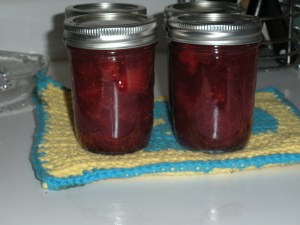
If the jars have sealed properly, the lids will not flex when pressed (after they have cooled a bit). Properly sealed jam can be stored in the cupboard for up to one year. If you have any leftover jam, , or if any of your jars did not seal properly, refrigerate immediately and consume within 3-4 weeks.


Posted in DIY, The Simple Living Experiment | Tagged , , , , | Leave a comment

Peach Fest Part 1: Peach-Whole Wheat Muffins

My cousin gave about 3 dozen peaches today. I was super excited because it is so rare to find local produce that’s grown in the middle of the desert. The peaches were ripe, so I needed to figure out a way to use them immediately. Idea number one? Peach-whole wheat muffins.

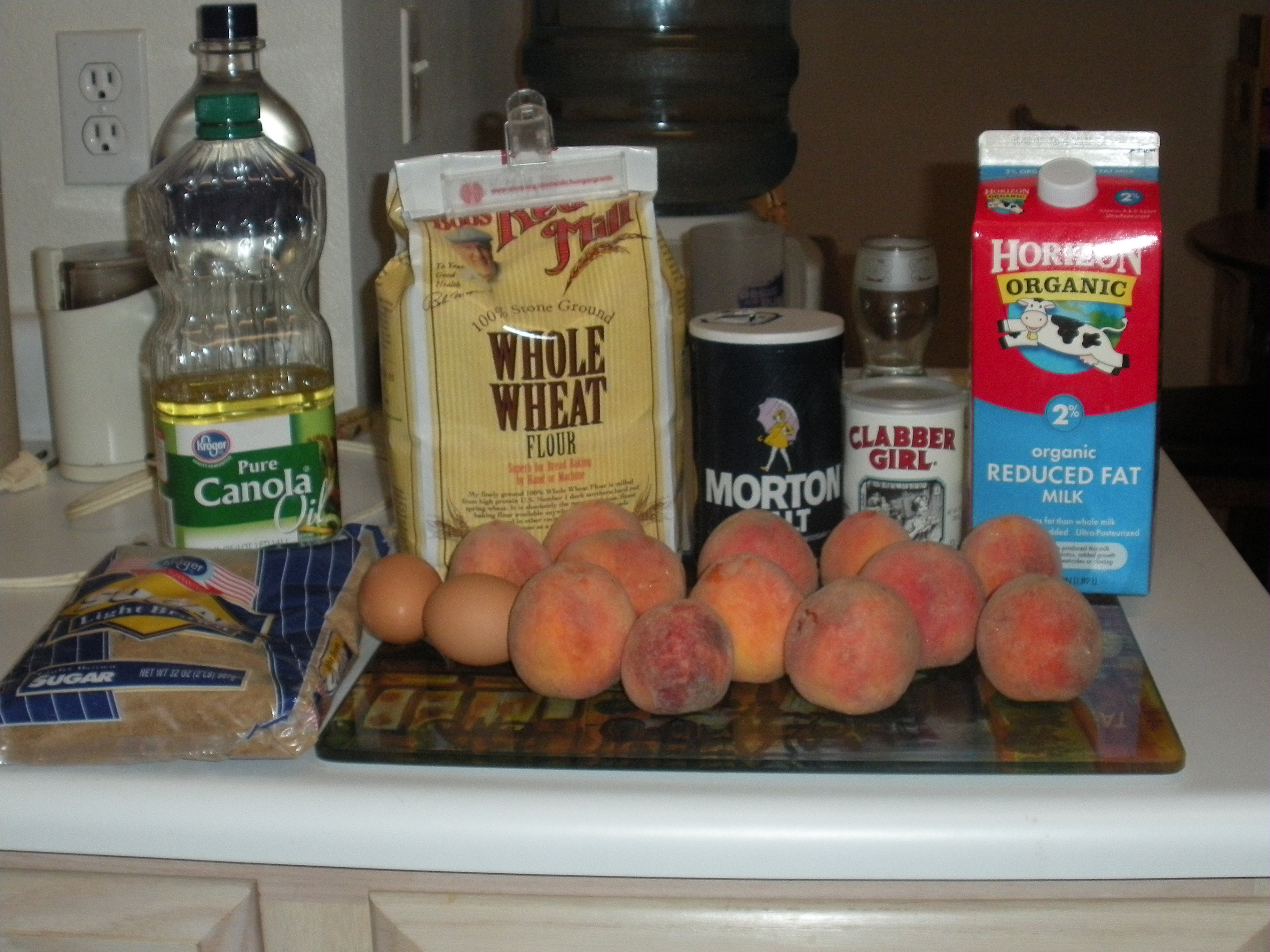
For ingredients, you’ll need 4 cups of chopped, peeled & pitted peaches, 4 1/2 cups of whole wheat flour, 1 tablespoon baking powder, a pinch of salt, 2/3 cup packed brown sugar, 2 eggs, 1/2 cups canola oil, and 1 cup of milk.

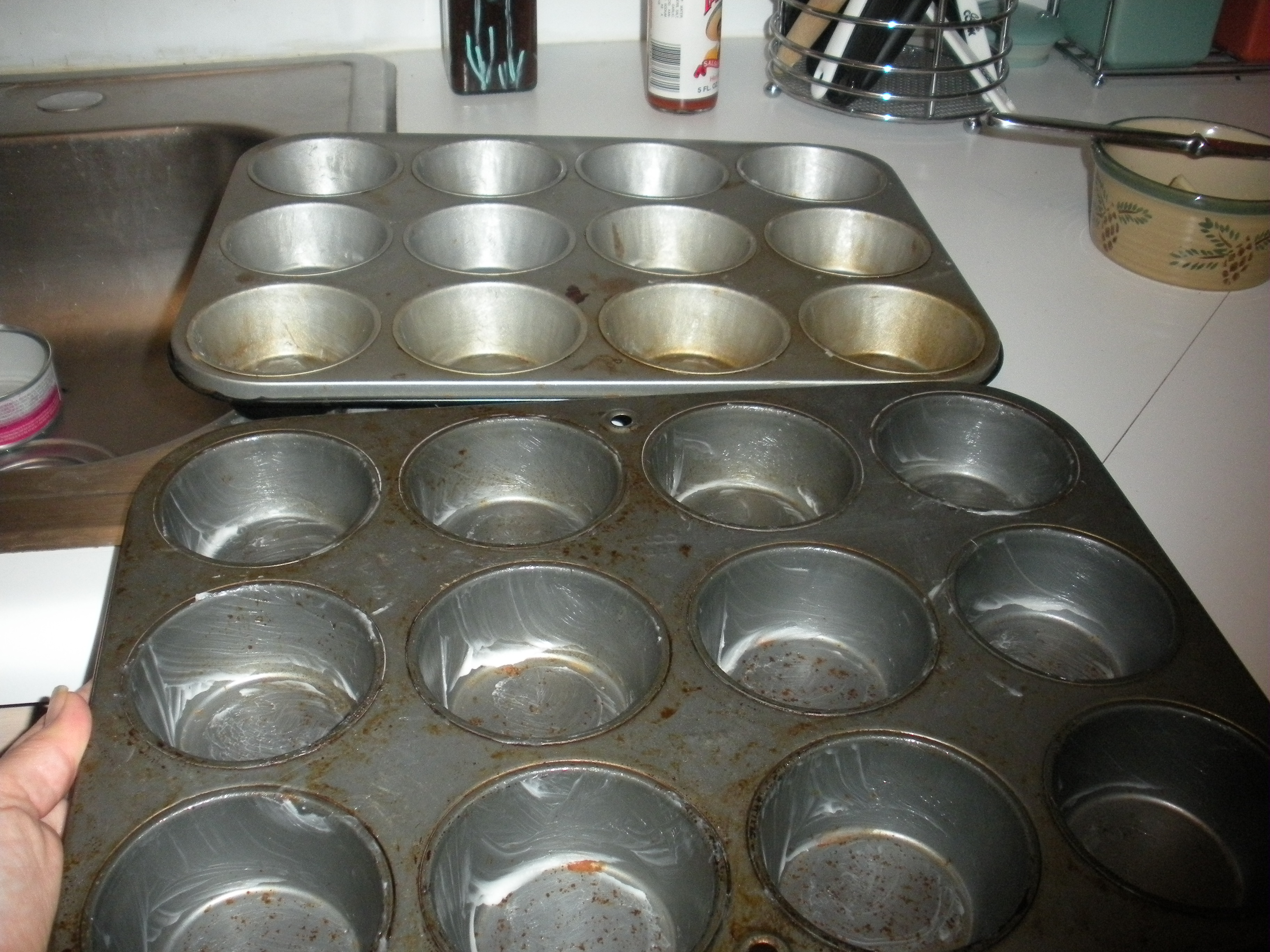
Preheat the oven to 350 degrees Fahrenheit. Grease two 12-cup muffin tins with Crisco.

Chop, pit and peel the peaches.

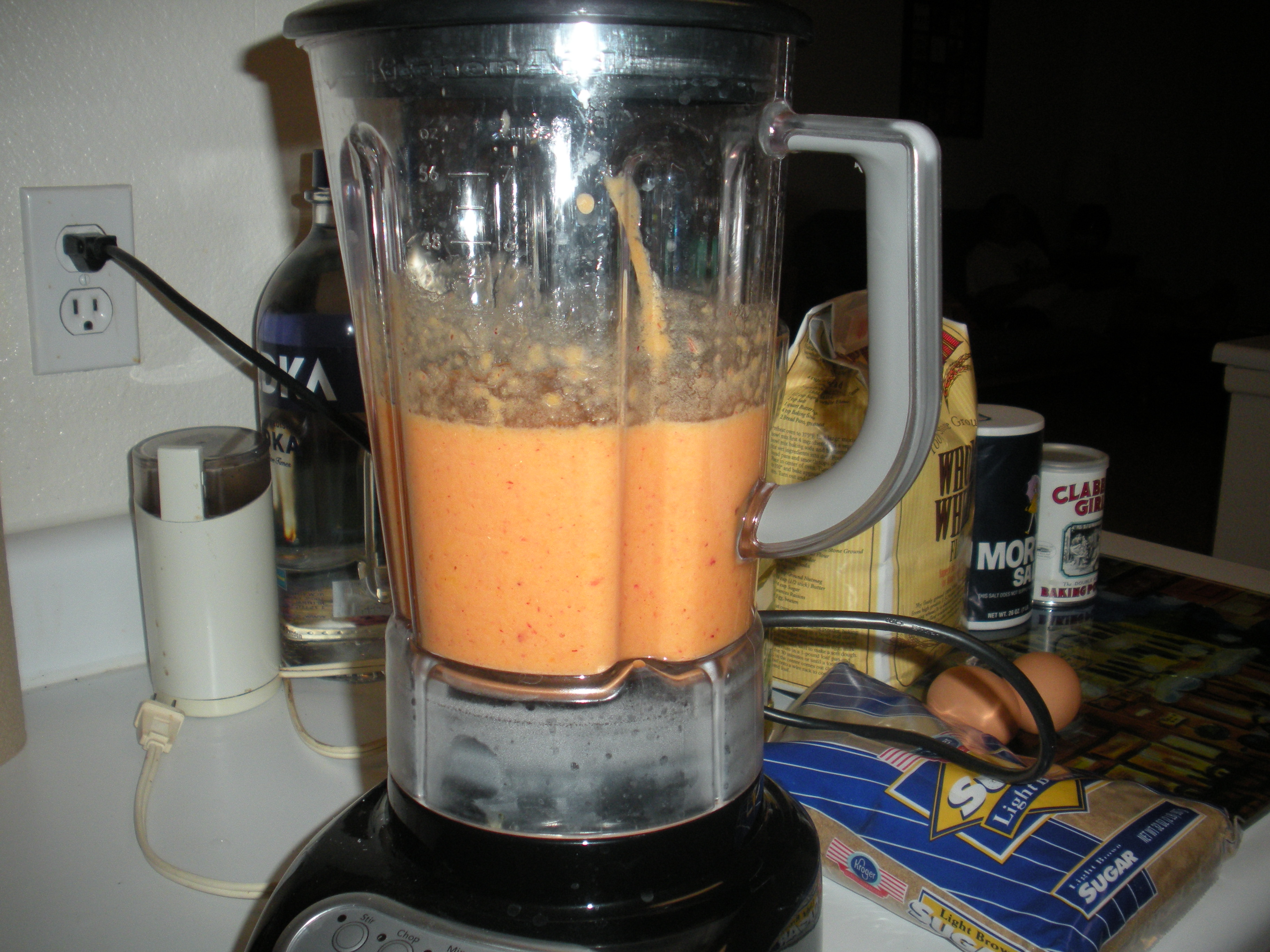
Place peaches in a food processor or blender to puree.

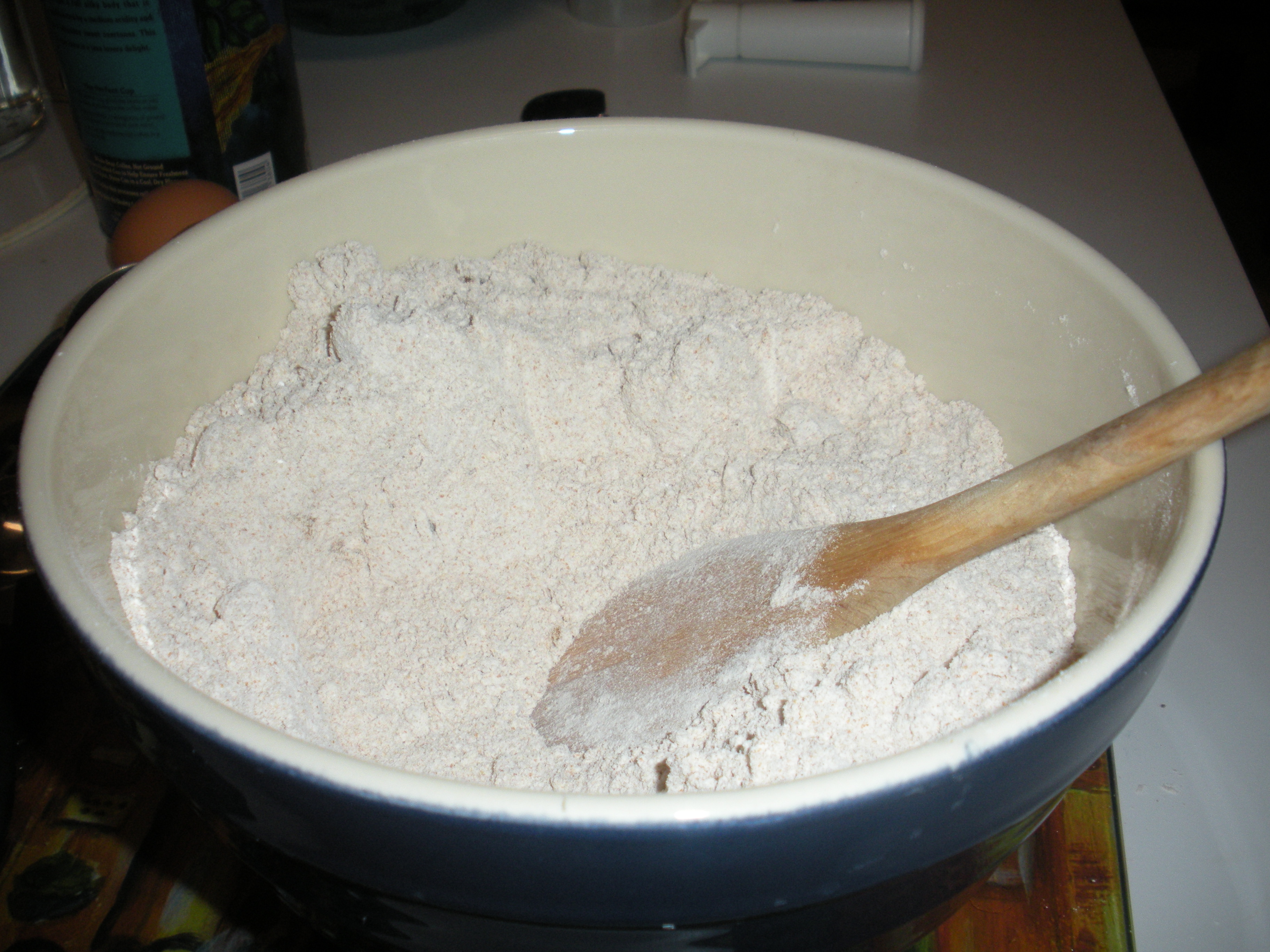
In a medium bowl, combine the flour, baking powder, salt and sugar with a spoon.

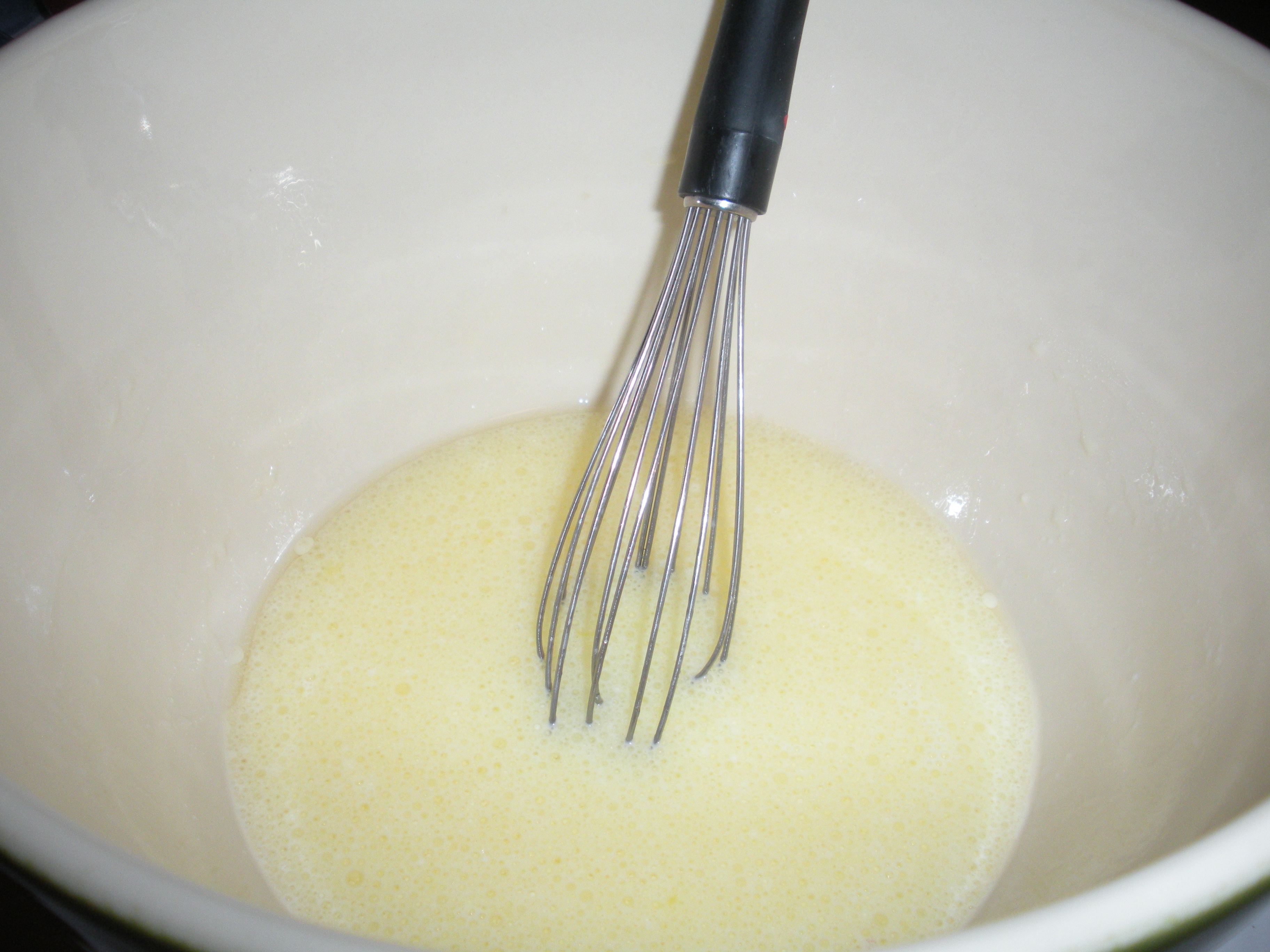
In a large bowl, whisk the eggs, oil and milk.

Add the peach puree and flour mixture and mix until combined.

Spoon the mixture into the muffin tin, ensuring each cup is filled about 2/3 full.

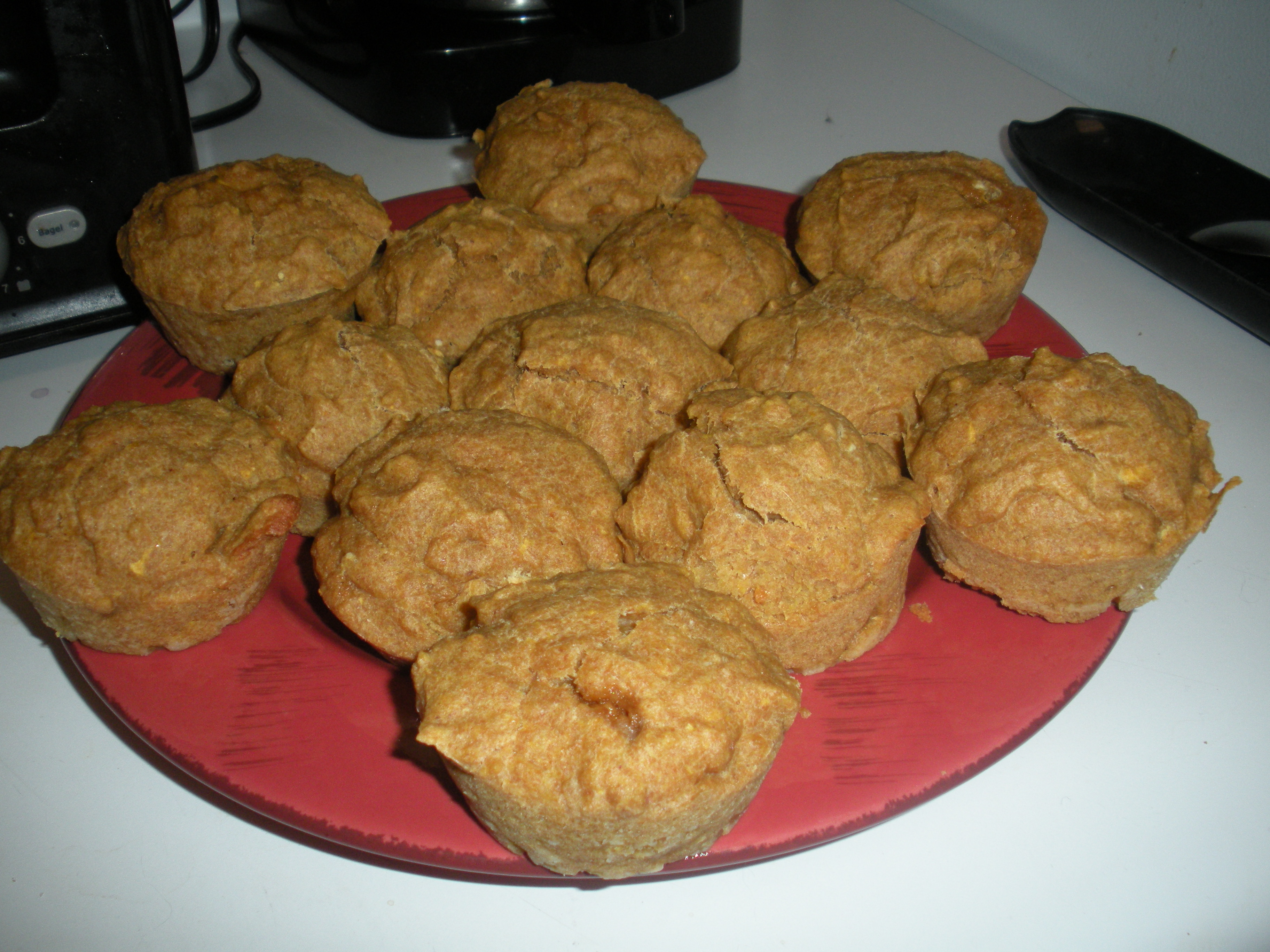
Bake for 20 minutes. Remove from oven and let cool for 5 minutes in the tin before the muffins are ready to serve. This recipe makes about 20 muffins.

Still have leftover peaches? Check out my recipe for peach-infused vodka in a few days…

Posted in DIY, Healthy Living, The Simple Living Experiment | Tagged , , , , | 1 Comment

Canning Homemade Salsa

Lately I have been looking forward to Sundays, as it’s the day of the week that I normally tackle a new project around home. Today I tried my hand at canning homemade salsa. The recipe I used below makes 3 pints and is adapted from Ball Beginner’s Guide to Canning & Recipe Booklet. I’ve modified the recipe a bit to give it a little spicy kick, and I ended up with about 1 cup extra salsa to have with dinner. If you’re not interested in canning, and plan to eat all the salsa within the next week or two, you can cut the recipe in half or one-third and ignore steps 1, 3 and 4.

To begin canning, you’ll need the following equipment – a large stockpot that is at least 7 1/2 inches tall and 9 1/2 inces in diameter, a plastic or metal canning rack that will fit in your stockpot and prevent the jars from rattling, and 3 pint size glass jars with metal rings and unused lids. Other useful tools especially for canning include a pair of tongs, a special magnet contraption to help remove the metal lids from boiling water, a funnel that conforms to the mouths of your jars, and a small non-metallic spatula. I bought my equipment in 2 separate starter kits at my local grocery store.

Step 1: Before you begin canning, you must sterilize all of your equipment in hot, soapy water. I recommend doing this by hand. Next, fill your stockpot with enough water to cover your jars with at least 1 inch of water. Place the jars (minus the lids and rings) in the plastic or wire rack and bring the water to a simmer. It is important to keep your jars warm while you prepare the salsa so that the jars don’t break once the hot mixture is added. You can add your lids, funnel and spatula to the water as well to make sure these items remain sterile.

Step 2: To make the salsa nice and spicy you will need 5 cups of chopped tomatoes, 2 1/2 cups of chopped & seeded green bell peppers, 2 1/2 cups chopped onions, 1 1/2 cups of chopped & seeded jalapenos, 2/3 cup apple cider vinegar, 4 finely chopped garlic cloves, 2 tablespoons cilantro, 1 1/2 teaspoons salt, 3 tablespoons hot pepper sauce (i.e. Tabasco or Tapatio), 1 teaspoon Cayenne pepper, and 1/2 teaspoon chili powder.

Dump all the ingredients in a large saucepan. Bring to a boil over medium-high heat, stirring frequently. Reduce heat and boil gently for another 10 minutes while continuing to stir frequently. The sauce should thicken a bit.

Step 3: Turn off the heat on your salsa and carefully remove the sterilzed equipment from the stockpot of simmering water with your tongs and magnetic lid-lifter. Dump any water from the inside of your jars back into the pot. Leave the heat turned on in the stockpot. Placing the funnel into the mouth of a pint jar, ladle the hot salsa into the jar leaving 1/2 inch headspace. Use the small spatula to remove air bubbles. Wipe the rim of the jar with a clean cloth or damp paper towel. Center the lid on the jar and twist the ring on until it is snug but not overly tight. Repeat with the other two jars.

Step 4: Crank up the heat to medium-high and cover the stockpot. Bring to a boil. Reduce the heat while maintaining a consistent boil and leave the stockpot covered for the next 20 minutes. If you live above 1,000 feet elevation boil for 25 minutes total and 30 minutes if you live above 3,000 feet elevation. When the time is up, turn off the heat, remove the stockpot’s cover and let sit in the pot for another 5 minutes. Then carefully remove the jars and place on a potholder or wire rack to cool for the next 12 hours.

To test if your jars preserved properly, press on the center of the cooled lid. If the jar is sealed correctly, the lid will not flex up or down. If the lid flexes, refrigerate your jar for immediate consumption. Otherwise your salsa will be good stored in the cupboard for around 1 year.

Posted in DIY, Healthy Living, The Simple Living Experiment | Tagged , , , , , , | Leave a comment

The Thing Around Your Neck Virtual Book Discussion

The Thing Around Your Neck by Chimamanda Ngozi Adichie. Published in 2009.

Synopsis: This is a collection of 12 short stories either set in Nigeria or about Nigerian expats living in the United States. Some pretty heavy topics are covered – imprisonment, isolation, loneliness, ethnic and religious-based violence, memories of the Biafran war, outsiders’ perceptions of Africa and African perceptions of the United States, asylum seeking, arranged marriage, death. While the stories are not inter-connected, and many have been previously published on their own in magazines and literary journals, the stories in this book can be read in order.

About the Author: At 32-years-old Chimamanda Ngozi Adichie has already been dubbed the successor to Nobel Prize Winning Fiction author Chinua Achebe; they both are of Igbo descent and hail from southeastern Nigeria. Adichie holds an MFA in creative writing from Johns Hopkins University and an M.A. in African Studies from Yale Univesity. Her two novels, Purple Hibiscus and Half of a Yellow Sun, are both award-winning. She is a 2008 MacArthur Genius Fellow.

My initial reactions about the book

I have to say, this is one talented writer of literary fiction, and it is hard to believe she is only a year older than me. My first question for those of you who have read this book, is what was your favorite short story out of the 12? I would pick 2 of the stories as my favorite.

The first story ‘Cell One,’ is about the person narrating the story’s brother going to jail in Nigeria. I loved the powerful opening of the story (and of the entire collection for that matter):

The first time our house was robbed, it was our neighbor Osita who climbed in through the dining room window and stole our TV, our VCR, and the ‘Purple Rain’ and ‘Thriller’ videotapes my father had brought back from America. The second time our house was robbed, it was my brother Nnamabia who faked a break-in and stole my mother’s jewelry.

Most of all, what I loved about this story was the way it ends by showing the compassion of her troubled brother, through his standing of for the innocent elderly man who was imprisoned for a crime his son committed.

My other favorite story was ‘Jumping Monkey Hill,’ the story about the writers’ workshop in Cape Town. I found it interesting that the organizer of the workshop, the English man who proclaimed himself an expert in ‘African studies,’ was in search of the perfect ‘African’ stories for non-Africans to read. He praised stories about violence in Tanzania, yet condemned the Zimbabwean author for not writing about Mugabe, and found the stories about lesbians in Senegal and women standing up for their rights in the workplace in Nigeria as unrealistically representative of Africa. In this story, Adichie raises the question of what is truly considered to be African.  I also found it interesting (coincidental?)that the short stories she had previously published in big-name magazines and literary journals in North America – Iowa Review, The New Yorker, Prism International, Virginia Quarterly Review – were the stories about violence in Nigeria or customs most North Americans don’t agree with (such as arranged marriage).

After reading Adichie’s Wikipedia page, I’m wondering how much the stories were based on her own life and the experiences of her family members. For example, the only story in the book written from a male’s perspective is ‘Ghosts.’ I read that her father was a statistics professor at the University of Nigeria, and the narrator of this story is a retired mathematics professor. I wondered how much of her characters’ impressions of life in the United States are similar to her own experiences as an expat living in the United States.

So what did you think of the book? How did you like Adichie’s style of writing? What was your favorite short story in this collection? Have you previously read any of her other books? Please post your comments below.

Next up for discussion: Things I’ve Been Silent About: Memories of a Prodigal Daughter by Iranian author Azar Nafisi. Discussion begins September 9th, but you can always join in anytime after that.

Posted in Around the World Virtual Book Club, Movie Reviews/Book Reviews | Tagged , , , , , | 3 Comments