Titus Andronicus at the Utah Shakespeare Festival

I saw my first performance at the Utah Shakespeare Festival when I was 9 years old. For a while, it was an annual tradition for my family, and over the years we saw The Comedy of Errors, As You Like It, The Tempest, Romeo and Juliet, and Julius Caesar. When the Randall L. Jones Theatre opened in Cedar City in 1989 we began to watch non-Shakespearean plays too — Waiting for Godot, The Imaginary Invalid, Death of a Salesman, A Streetcar Named Desire.

Since an appreciation of Shakespeare was ingrained in me at a young age, it is natural that I would grow into a Shakespeare nerd. I was probably the only 4th grader checking out Shakespeare plays at the library, in high school I acted in A Midsummer Night’s Dream and I’ve even seen a play at the re-constructed Globe Theatre in London. But my Shakespeare obsession culminated this summer when I read The Complete Works — nearly one million words of Shakespeare.

Despite being nearly broke this summer, I was determined to find a way to visit the Utah Shakespeare Festival again. For the 2012 season, they have an especially good line-up of plays, and my favorite Shakespeare play was being performed: Titus Andronicus. Fortunately we landed on some half-priced tickets, and only paid $20 a piece for center gallery seats. We made the round-trip from Las Vegas to Cedar City in a day, so it was quite an affordable venture — much cheaper than seeing a show on the Strip.

While Titus Andronicus was one of the most popular plays during Shakespeare’s day, it is rarely performed in modern times because of how gruesome it is.

The play is set during the late Roman Empire and the title character is a general in the Roman army. At the opening of the play, there is an election for the open post of Roman Emperor and the citizens are divided between the deceased emperor’s sons Saturninus and Bassianus. They instead elect Titus, who declines the post due to his age. He rather endorses Saturninus, who is quickly crowned.

Titus has just returned victorius from a war with the Goths and has taken the Goth Queen Tamora, her sons and her lover Aaron as prisoners. He sacrifices Tamora’s eldest son, refusing to listen to her cries for mercy. Tamora vows revenge. Titus offers his only daughter Lavinia to the newly-crowned emperor, but she is already betrothed to Bassianus. Saturninus decides to take the available Tamora as his emperess.Titus’ sons side with Bassianus, and frustrated by their betrayal and accusing them of treason, Titus kills one of his sons. And this is only the first act.

The next day Aaron persuades Tamora’s two surviving sons to kill Bassianus and rape Lavinia. With Tamora as consenting witness, the duo carry out the plan, cutting out Lavinia’s tongue and dismembering her hands in the process. Aaron frames two of Titus’ sons for Bassianus’ murder and they are arrested by the emperor.

Lavinia is discovered by her uncle Marcus, who later brings her to her distraught father. Aaron arrives to inform Titus of his sons’ imminent execution, but offers to spare their lives if either Marcus, Titus or Titus’ son Lucius will sacrifice one of his own hands for the emperor. Titus willingly chops off one of his hands, placing it in an envelope for the emperor. Shortly thereafter, a messenger returns with the severed heads of Titus’ two sons and Titus’ hand.

Struck by continuous grief, Titus becomes increasingly mad and hungry for revenge. Marcus discovers a way for Lavinia to write the names of her attackers in the sand while hugging a stick in her arms. At night, Tamora and her two sons show up at Titus’ study dressed as the spirits of Revenge, Murder and Rape. Titus pretends to be convinced that they are spirits sent to help him carry out revenge, and insists that Murder and Rape (played by the two sons) stay to assist him. When Tamora leaves, Lavinia and Titus kill the sons, chopping off their heads in the process.

Act 5 concludes with a banquet attended by Saturninus, Tamora and Titus’ only surviving son Lucius. Titus serves them a feast as a supposed peace offering, and as they indulge, Titus asks Saturninus if a father should kill his daughter after she has been raped to defend the family’s honor. Saturninus replies affirmatively, and Titus stabs Lavinia.

When Saturninus and Tamora beckon for Tamora’s sons, Titus delivers the classic line, “Why, there they are both, baked in that pie; Whereof their mother daintily hath fed, Eating the flesh that she herself hath bred,” and kills Tamora as well. Saturninus then stabs Titus, and Lucius kills Saturninus. Lucius is then crowned as the new Roman Emperor and given the task to heal Rome.

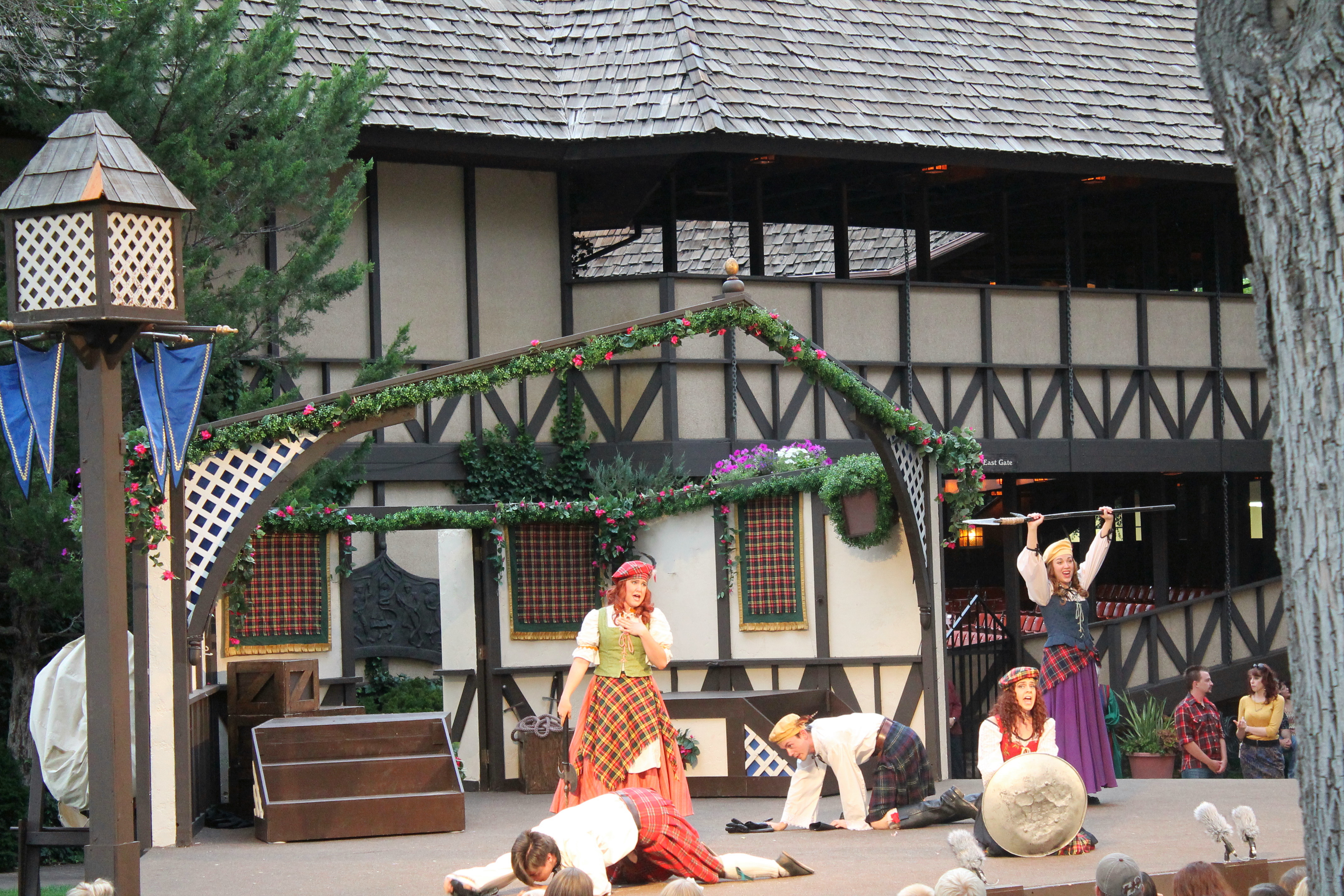
We were fortunate to witness the play in the Utah Shakespeare Festival’s outdoor theatre amidst a brewing thunderstorm, which only added to the play’s dramatic effect.

Although, the Utah Shakespeare Festival’s 2012 season will close next weekend, the 2013 season has recently been announced. There’s also a variety of free events associated with the festival, including literary and production seminars and a nightly Greenshow in the courtyard that is great for kids. Play orientations are also held in the festival auditorium each day at 1 pm for matinees and 6:45 pm for evening performances.
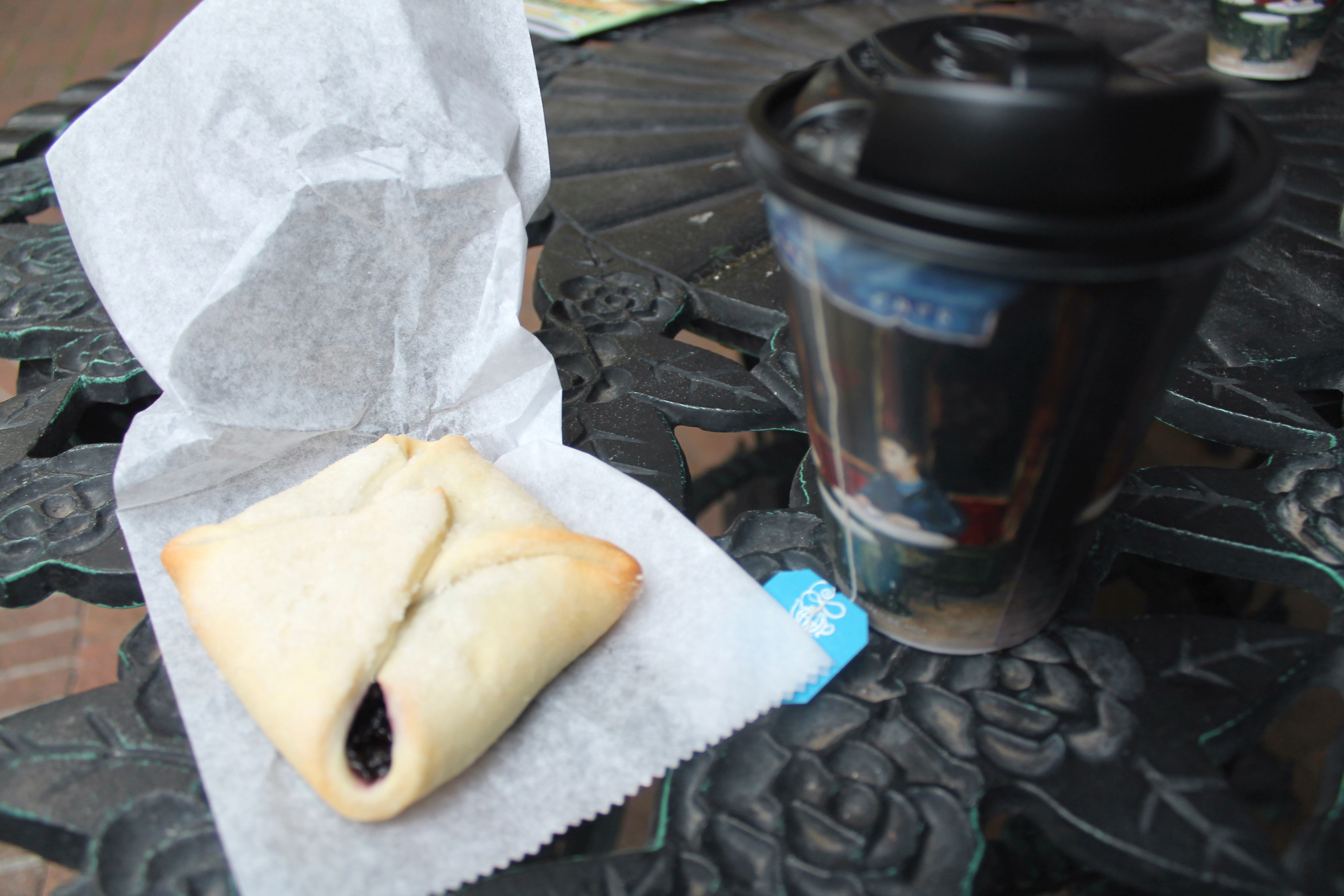
To grab a quick bite of food before the performance, the festival’s Sweet Shoppe offers an extensive menu of affordable, light bites. I opted for a tasty summerberry tart and hot English tea for $4, but they also have more substantial fare that would constitute a full meal. Of course, if you will be watching Titus Andronicus, you might want to pass on the meat pie.
Posted in Becky's Adventures | Tagged , , , , , , , | 1 Comment

Carrot Mango Gelato

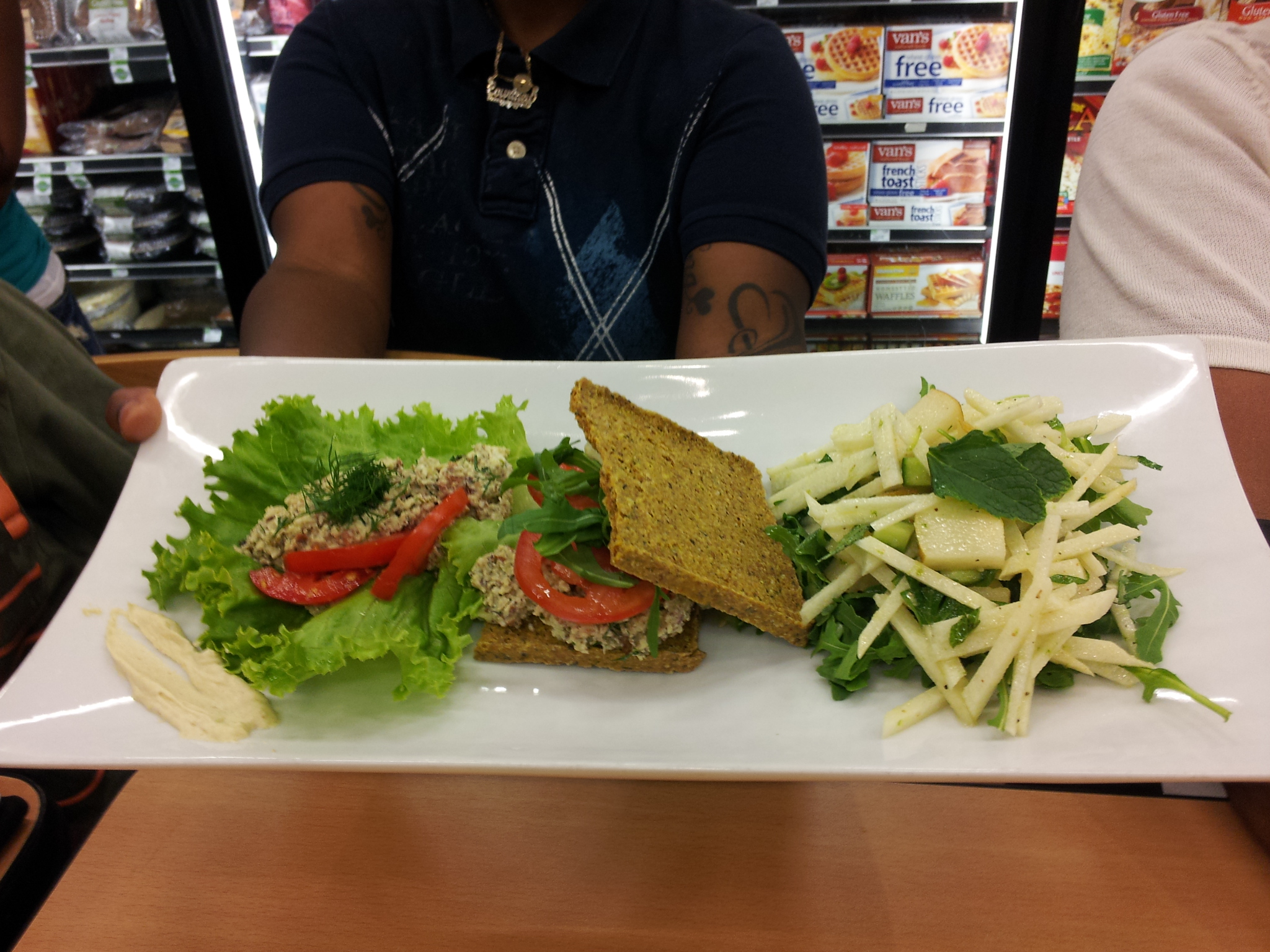
Last week I attended a Raw Food cooking demonstration at my local Whole Foods. Chef Stacey Dougan and RAW Mixologist Shane Stewart showed that you can get pretty creative in whipping up tasty raw food dishes. To add to the challenge, everything they made was not only 100% uncooked and unprocessed, it was also 100% vegan.

On the menu for the night was a Mock Tuna Sandwich with Stone-Ground Cashew Mayo, Cucumber-Jicama Asian Pear Salad, Thai Pumpkin Soup and Carrot Mango Gelato. The mock tuna sandwich was especially tasty. Instead of using fish, Chef Stacey substituted with what the fish eat — several type of kelp and seaweed. It did have that slight tuna fish taste, and I decided that I actually liked the mock tuna sandwich better than the real thing. With the addition of the cashew mayo, it was spot on.

While I like the idea of adding raw, vegan meals to my diet occasionally, I don’t think I could do it in the long-term. For starters, I would have to give up many dishes that I currently love, especially baked bread. Also, it seems that many raw food recipes have expensive ingredients, and there would be a rather large upfront investment cost. Most of the recipes made at the cooking demo were made it a VitaMix, which costs in excess of $400, and some contained pricy ingredients such as nutritional yeast and liquid aminos.

For the record, neither of our instructors admitted to eating raw, vegan foods all the time. Although Chef Stacey is vegan, she does enjoy an occasional cooked meal, and Shane indicated he’s a pescatarian. Still, an occasional raw food meal could add a bit of (healthful) diversity to one’s diet.

After the class, I was anxious to try out one of the recipes, so I chose the most simple and budget-friendly: Carrot Mango Gelato.

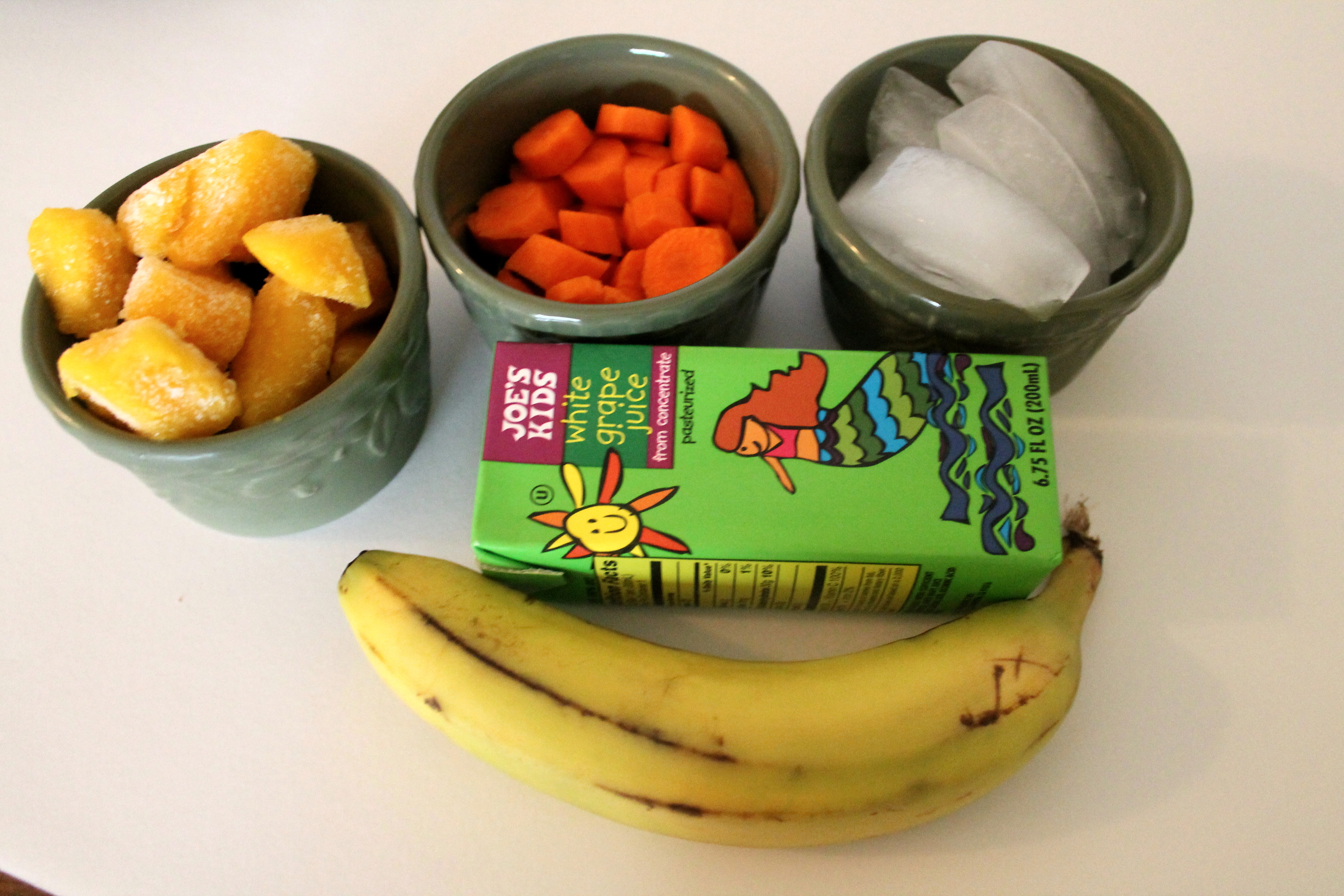
Ingredients:

1/2 cup frozen mango

1/2 cup ice

1 oz carrot (Shane recommended baby carrots, but I used a sliced whole carrot)

3/4 cup white grape juice

1/2 banana

To make, it’s as simple as combining all ingredients into a high-speed blender and mixing for about 20 seconds.

The gelato I made at home came out with more of a pudding-type consistency, but the one made at the cooking demo with a VitaMix actually had more of the consistency of true gelato. However, my ‘home version’ was just as tasty as the one we sampled in class. You can’t go wrong when mango is involved.

If anyone has recommendations of low-cost, raw, vegan recipes please send them my way!

Posted in DIY, Green Living, Healthy Living, Recipes, The Simple Living Experiment | Tagged , , , , | 1 Comment

The Summer of Shakespeare, Part 2

I’ve done it!

Although it’s around 2,500 pages of small print, I’ve finally finished reading The Complete Works of William Shakespeare It only took me about 2 months to do so.

When beginning to pursue this goal, I realized there are many versions of Complete Works to choose from. Some provide the First Folio text (1623 publication) with very little commentary. Others are abridged versions, but I don’t agree that you can have a “complete” works if its abridged. I chose The Modern Libary’s version, which was published in 2007. This version, endorsed by the Royal Shakespeare Company, claims to be “the first authoritative, modernized, and corrected edition of Shakespeare’s first folio in three centuries.” I have no other claims to dispute this.

The Modern Libary’s Complete Works begins work a 50+ page introduction with a brief history on who Shakespeare was, a history of theatre from Shakespeare’s age and a history on the publication and performance of Shakespeare’s works. Throughout the course of the anthology, editors Jonathan Bate and Eric Rasmussen provide background on each play’s plot, sources and any discrepancies between Folio and Quarto texts.

The order of the plays follows that of the 1623 First Folio, beginning with the Comedies and followed with Histories and Tragedies. Two additional plays are included that Shakespeared co-wrote — Pericles and The Two Noble Kinsmen — that were excluded from the First Folio. There’s also Shakespeare’s poems and sonnets (all 154 of them) and charts to provide additional context to the historical plays. Being the nerd that I am, I read everything.

While the plays themselves contain extensive footnotes, I found that frequently referring to them took away from enjoyment of the plays themselves. After trying to read the footnotes in the first play The Tempest, I gave up and only consulted them when I absolutely needed to. I was surprised how many of the footnotes referenced sexual inuendos — something I didn’t learn in high school English class.

My favorite comedies were The Merry Wives of Windsor and A Winter’s Tale. Merry Wives was written especially at the request of Queen Elizabeth I because she loved the character Sir John Falstaff from Henry VI and wanted to see him in a comedy. The play has a number of strong roles for women (although they were played by boys in Shakespeare’s day). It also has the highest percentage of prose of any Shakespeared play (about 95%). A Winter’s Tale is a dark comedy and one of Shakespeare’s later plays. According to legend, a live bear was brought on stage during its original performance at the Globe, although I suppose the scene where one of the characters is eaten by a bear was only staged.

I enjoyed the history plays much better than I thought I would, and it inspired me to read more about early English history as well (especially about the Plantagenets). But overall, I enjoyed the tragedies the best. I’d never even heard about Timon of Athens — about a former misanthrope who gives everything up to live in a cave — and scholars debate whether it was even performed in Shakespeare’s day. While I appreciate the genius of the power-hungry Macbeth, my favorite Shakespeare play overall was Titus Andronicus. This latter play is so disturbing that it’s hardly ever performed. But, as a stroke of (potential) fortune, they happen to be performing it this year at the Utah Shakespearean Festival. My husband and I are currently trying to procure tickets (and I don’t want to spoil the plot for the friends who might join us) so another post on that will follow.

Posted in Book Challenge, Movie Reviews/Book Reviews | Tagged , , , , , , | 2 Comments

Fresh Stawberry Tart

When I lived in Switzerland, I spent some time working with a company that had nearly 350 employees. That meant that nearly everday it was someone’s birthday, and as per Swiss work culture, that was a cause for celebration. So frequently at 4 PM sharp (in keeping with Swiss punctuality standards), a colleague would inevitably pull out a fancy cake or pastry from a local pâtisserie and a bottle or two of champage to share among our cohort. It’s one of the many fine things I miss about living in Europe.

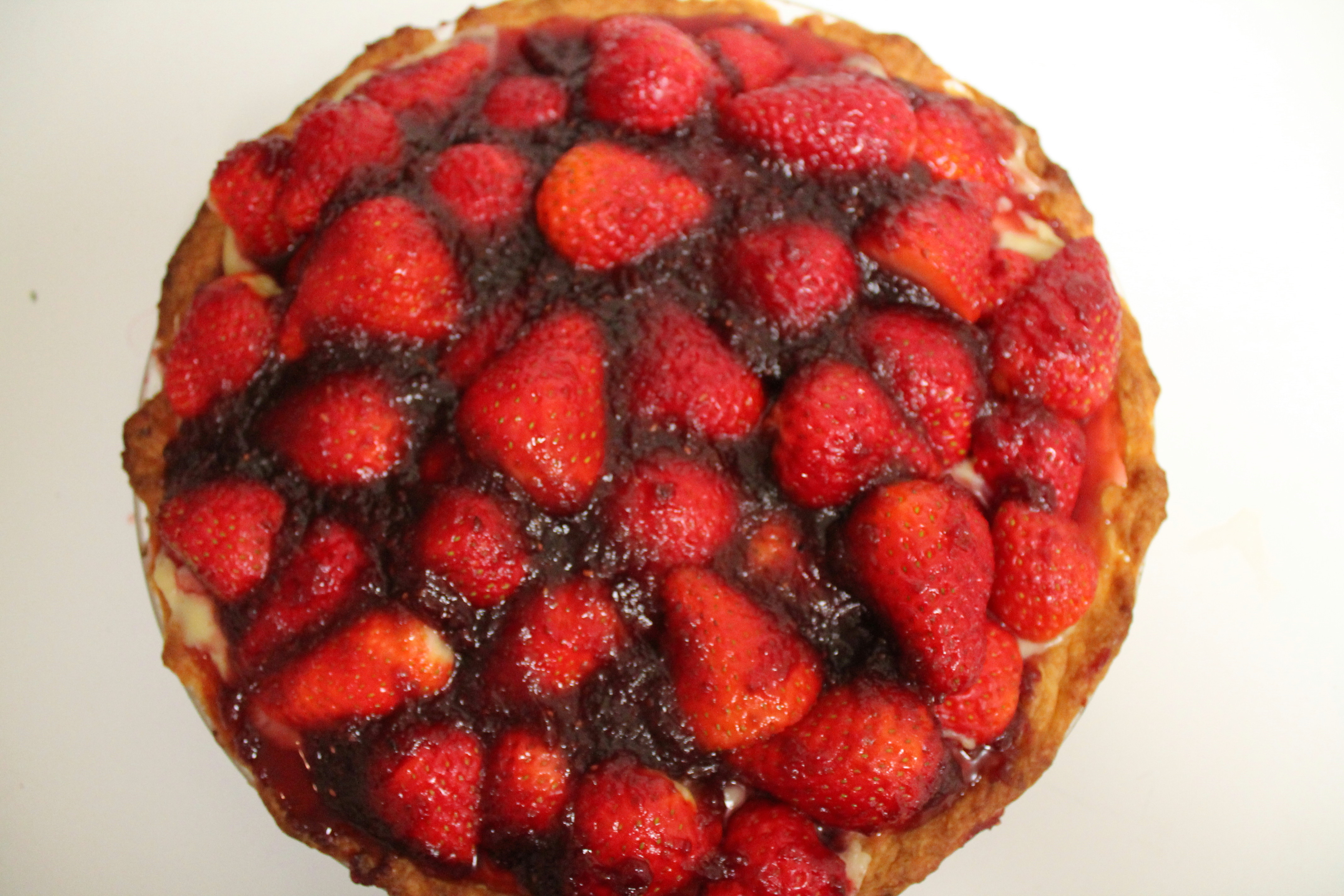
Unfortunately no one in my family has an August birthday, and as August seems lacking in the holiday department as well there’s rarely anything to celebrate for the entire month. But as today marked the 100th anniversary of Julia Child’s birth, I figured that was enough excuse to make a delectable treat. Naturally, I decided to adapt one of Julia’s recipes from Mastering the Art of French Cooking — the Fresh Strawberry Tart.

Ingredients

  • 10-inch fully baked pastry shell
  • 1 cup + 2 Tbsp. granulated sugar
  • 5 egg yolks
  • 1/2 cup flour
  • 2 cups boiling milk
  • 1 Tbsp. butter
  • 2 tsp. vanilla extract
  • 5 Tbsp. cognac
  • 1 quart fresh strawberries
  • 1 cup raspberry jelly

Julia would definitely suggest you make or own pastry shell from scratch, but since I have a big work project due on Friday I cheated and bought a pre-made pie crust from Trader Joe’s. For a tutorial on how to make pie crust from scratch, check out this post. Regardless of the pie crust route you choose to take, bake the empty shell in advance of tart assembly, as per recipe or package instructions. I baked mine at 450*F for about 15 minutes. Set aside to cool.

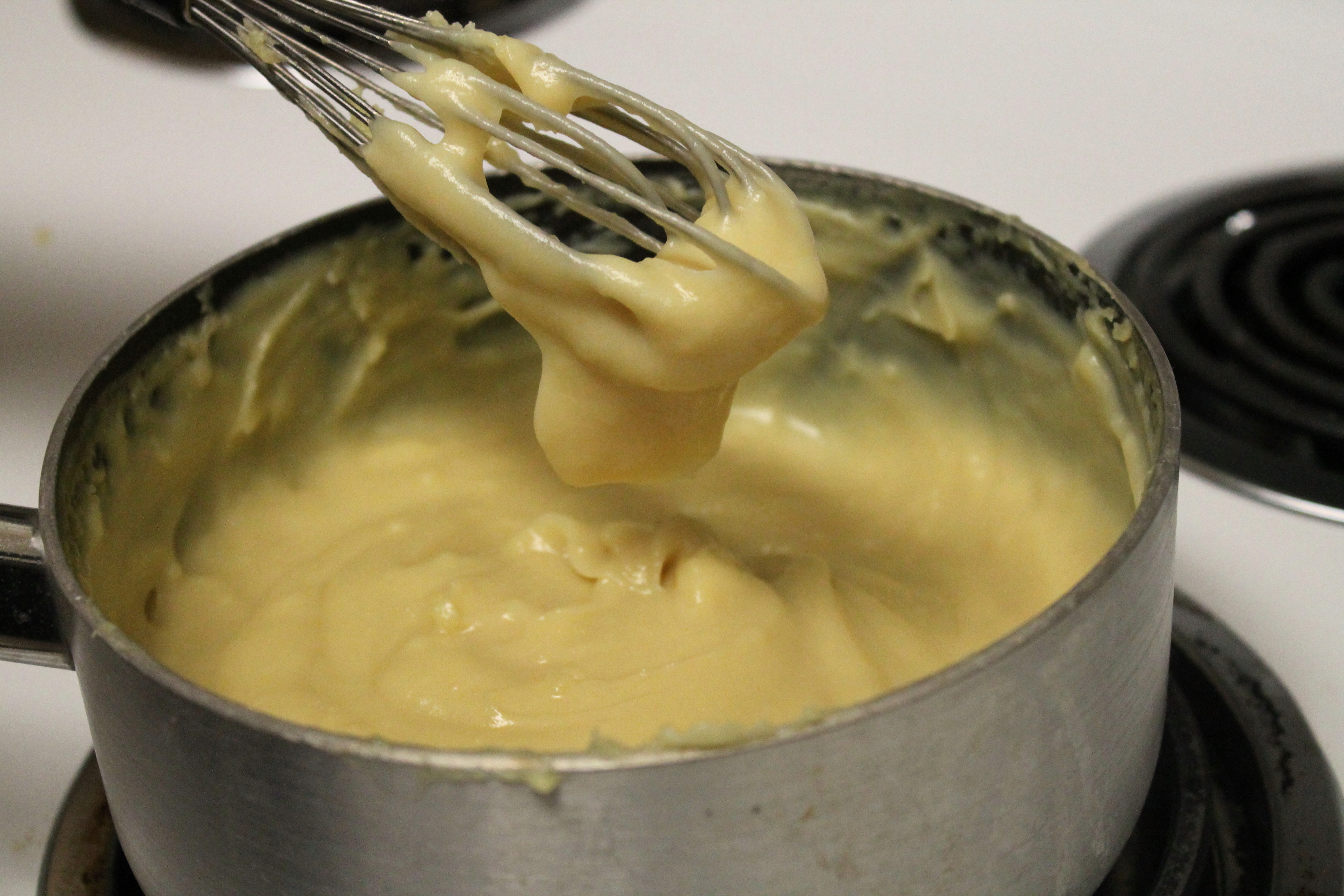
Next, you’ll prepare a crème pâtissière, which is a fancy name for an egg-based custard with booze. In a large mixing bowl, whisk together 1 cup sugar and 5 egg yolks for 2 – 3 minutes. Beat in the flour. Gradually add the boiling milk while continuing to whisk. Transfer to a saucepan set over medium-high heat. Bring to a boil while continuing to stir with a wire whisk. Reduce heat to low, continuing to whisk for another 2 -3 minutes. Make sure you scrape the bottom and sides of pan regularly so the custard doesn’t scorch. Refrigerate for at least one hour.

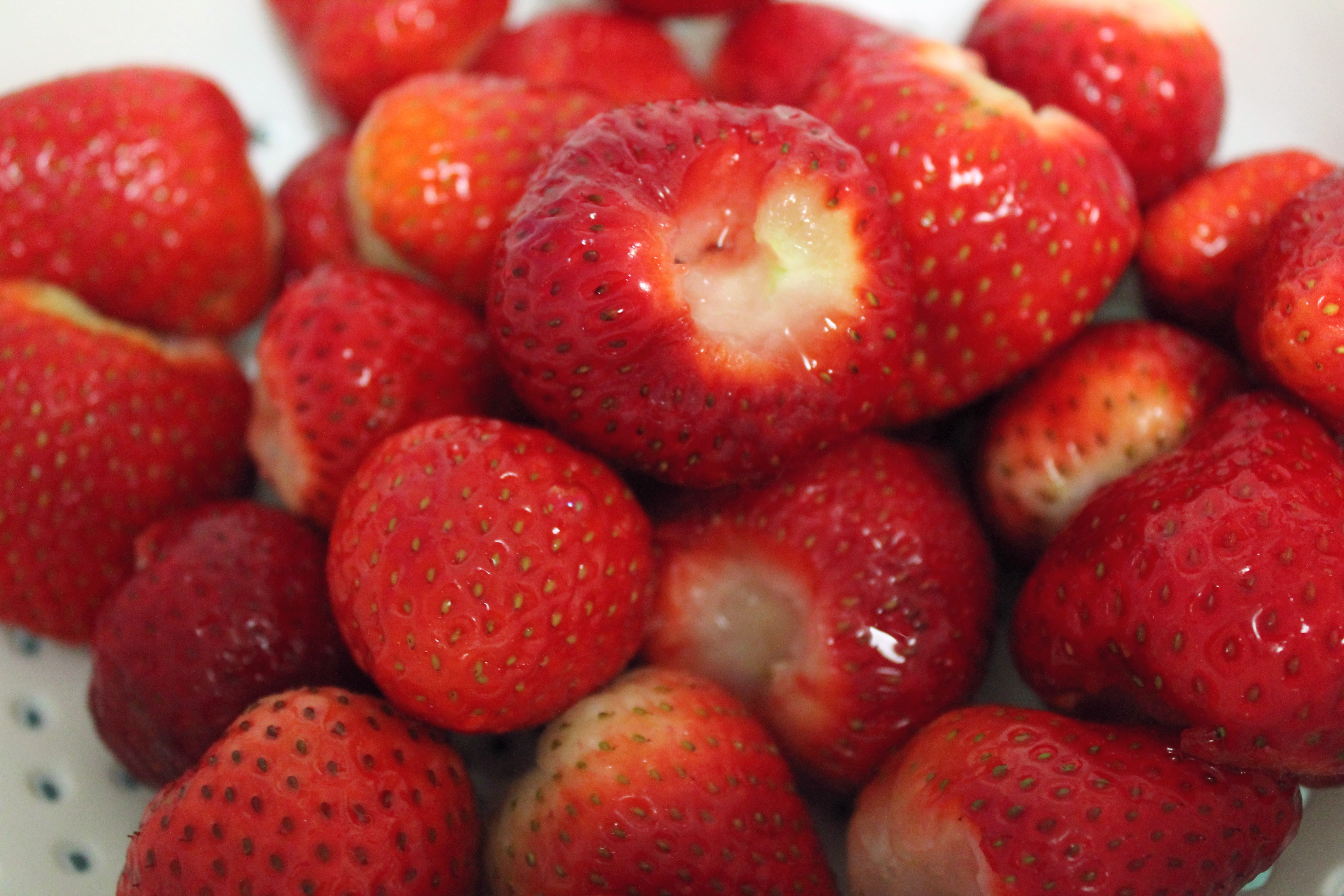
Hull, rinse and halve the strawberries. Set aside.

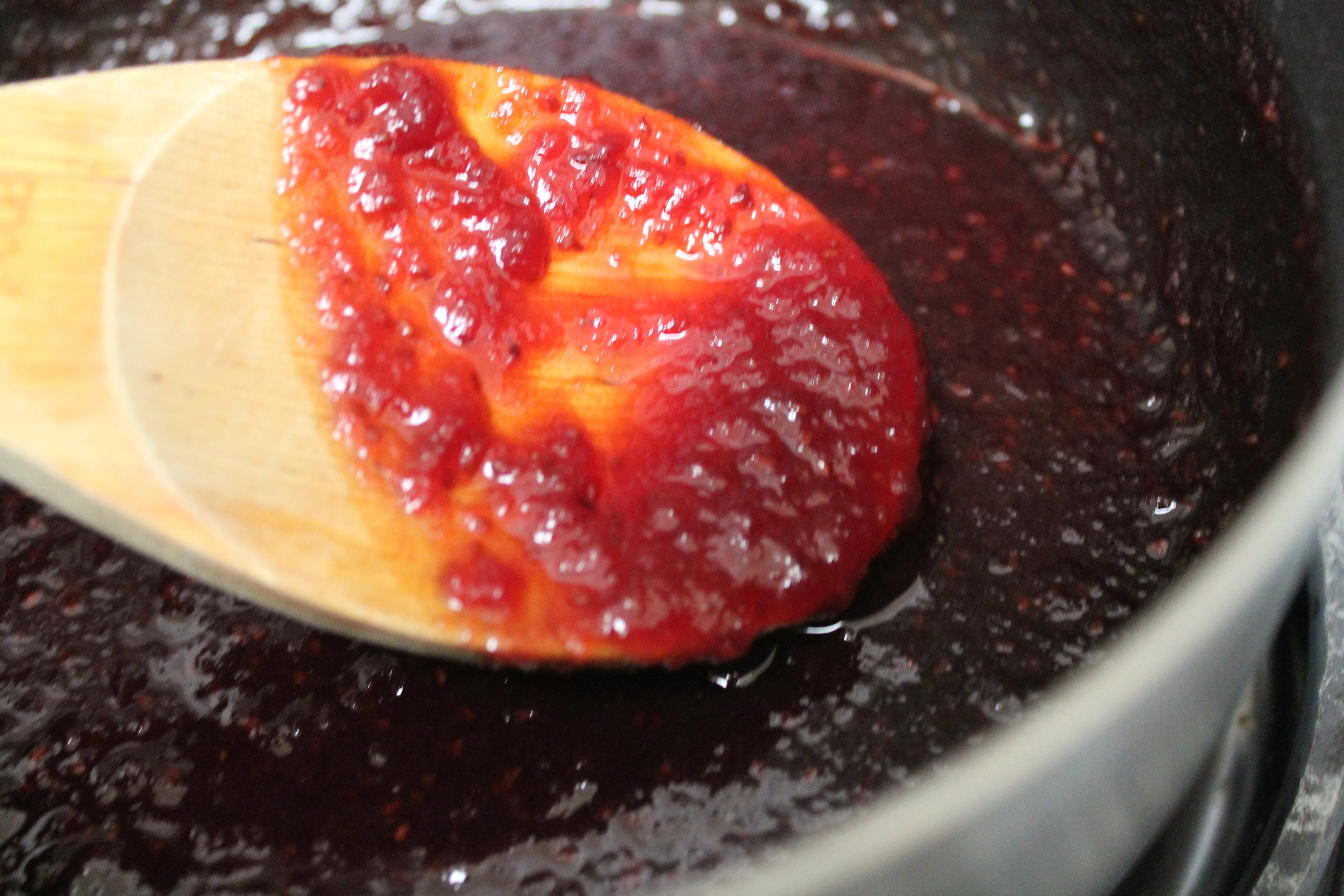
In a small saucepan, combine the raspberry jelly, 2 tablespoons sugar and 2 tablespoons cognac. Bring to a boil and remove from heat.

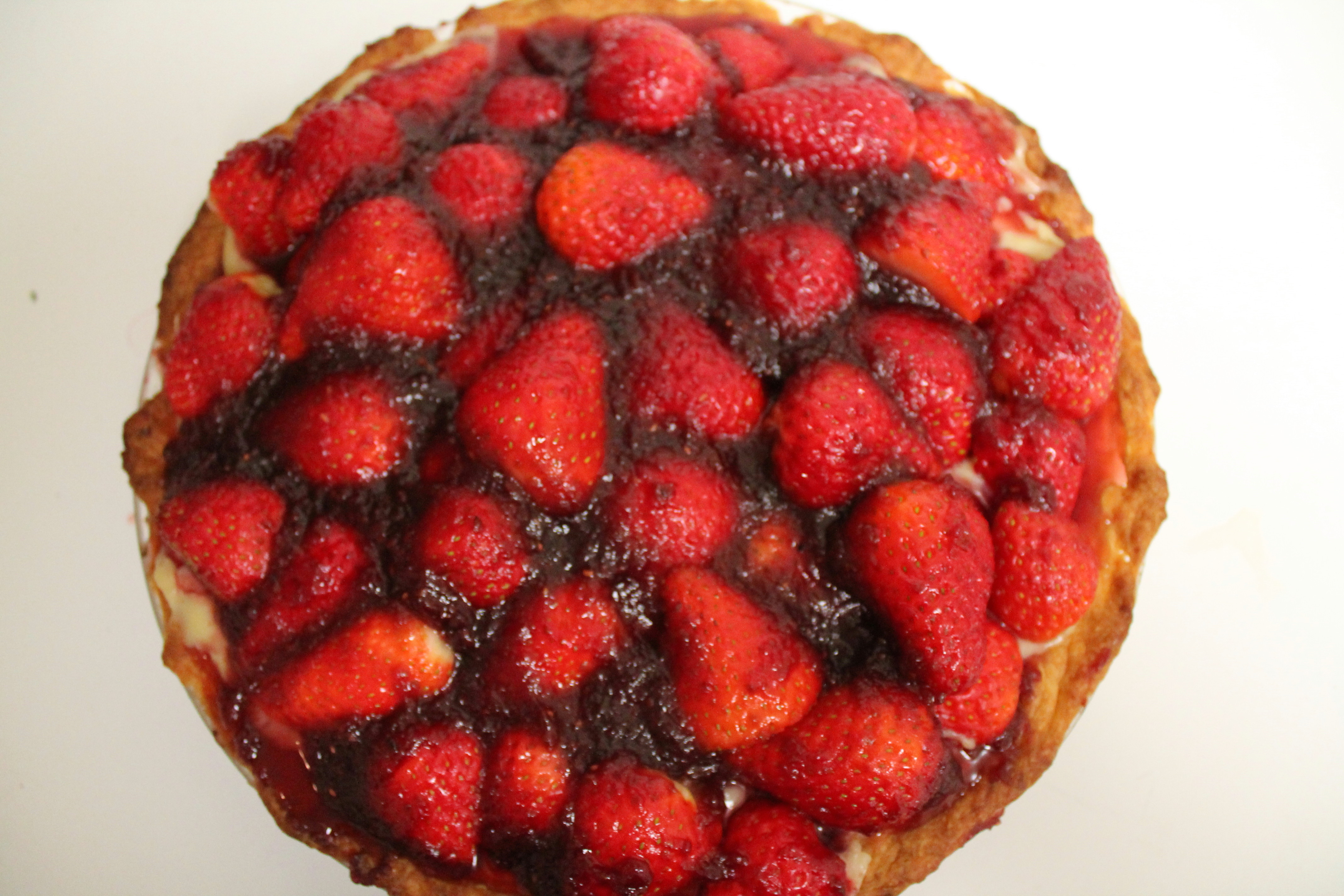
Using about 1/2 of the raspberry mixture and a pastry brush, glaze the top of the pie crust and allow to set for 5 minutes. Pour the crème pâtissière into pie plate, evenly spreading around with a spatula. Carefully arrange strawberries on top and glaze with remaining raspberry mixture. Place in refrigerator at least one hour prior to serving to allow dessert to set.

When we served it up, the dessert fell apart a bit, but it was still mighty tasty. I especially loved the boozy custard.

In the words of Julia Child from her memoir My Life in France “the pleasures of the table, and of life, are infinite – toujours bon appétit!”

Posted in DIY, Recipes | Tagged , , , , , , , | Leave a comment

On Transitions (and Overcoming Disappointment)

My husband and I are supposed to leave for Mexico on Tuesday for a six-week language and cultural immersion program. An e-mail arrived yesterday, informing me I could check into our flight up to 72 hours in advance. Because of recent life-altering events, we won’t be getting on that plane. Yet, I still archived Volaris Airline’s e-mail as a small reminder of a path that could have been.

On the first day of summer, a notice arrived that our apartment lease was up for renewal in September. I set the letter aside with a mental note that we needed to renew our lease when we paid our July rent.

That evening we went to dinner and a comedy show with my parents. When we came home around 10 PM, our front door was a jar, with fragments of its white-painted wooden body sprawled on our living room floor. On impulse, my husband quickly ran inside and grabbed his pistol from the one spot in our bedroom that the burglars neglected to ransack. After confirming we were the only ones in our home, I searched inside all of the bathroom cabinets until I found our very scared cat. A few minutes later, I noticed my laptop was gone, and over time we noticed other things missing – cash in various currencies, old casino chips my uncle had given me, my husband’s second wedding ring (the first was lost while kayaking in a sudden storm in a Costa Rican bay on our 1-week wedding anniversary and he wore this “trial ring” for nearly a year before purchasing his current Celtic ring).

It’s interesting the “things” you value most in a crisis situation. For my husband, the ability to protect our household and avoid meeting his death at the hands of his own weapon. For me, a computer is replaceable, but Samson the cat is not.

Last year, when I paid off the remainder of my debt, I vowed never to acquire new debt. A freelance job that was supposed to finish this summer and pay for the remainder of our Mexico trip didn’t pan out and we learned our renters’ insurance policy wouldn’t cover our losses (long story). Since I refuse to spend money I don’t have, and since buying a new computer was essential to my work, the Mexico trip wasn’t to be.

My husband reminded me that the last time we renewed our apartment lease, as we were walking to the leasing office, we witnessed a domestic dispute in the parking lot. “Get out!” a woman screamed to her partner for the entire complex to hear. “I never want to see you again.” If we didn’t notice the symbolism of being pushed to move on at that moment, it became apparent with the break-in.

I like to believe that closed doors are an indication that one needs to continue looking for the correct path to follow. I used to be a “planner,” but thus far 2012 has turned out entirely unexpected. I didn’t get into any of the PhD programs I applied to. My freelance work has been unreliable. I’ve had far less adventures than I’d have liked to. Yet, I’ve developed passions for karate and photography – two things I’d have never thought I had a knack for. I’ve developed new friendships which I hope will be long-lasting.

One month from today, my husband and I will move into our new apartment in Oregon Wine Country. I went to graduate school in Corvallis about 10 years ago, and briefly lived in Portland before moving to South Africa. I’ve lived quite a few places in my short lifetime – Nevada, Wisconsin, Chile, Oregon, Kenya, South Africa, Switzerland – yet the Portland area is the only place I hadn’t felt ready to leave at the time of my move. It’s as if I have some unfinished business there.

Already I am starting to feel more optimistic about life again. I’m thinking of participating in a writers’ workshop this fall at Powell’s Books, of working on some essays, of further developing my photography, of exploring new places, of eating fresh local foods, of working part-time in a bakery to supplement my freelance income. A tremendous amount of happiness can come from the smell of fresh-baked bread.

If you’d have asked me what the theme of my 20s was, I’d have said, “to travel.” If you ask me what the theme of my 30s is, I will say, “to create.”

My husband believes in a certain symbolism associated with living in the desert, the fact that it is hard for anything to grow here. We are hopeful that the evergreens of Oregon will inspire us with new colors and yield new life.

Posted in Introspection | Tagged , , , , | 3 Comments