What the World Eats

I am in Seattle for the BlogHer Food ’12 Conference, and arrived a few days early to visit my sister and brother-in-law. This afternoon we headed over to the Burke Museum on the University of Washington campus to view their temporary exhibit Hungry Planet: What the World Eats, based on the book of the same name.
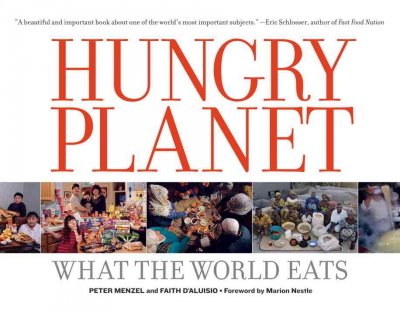
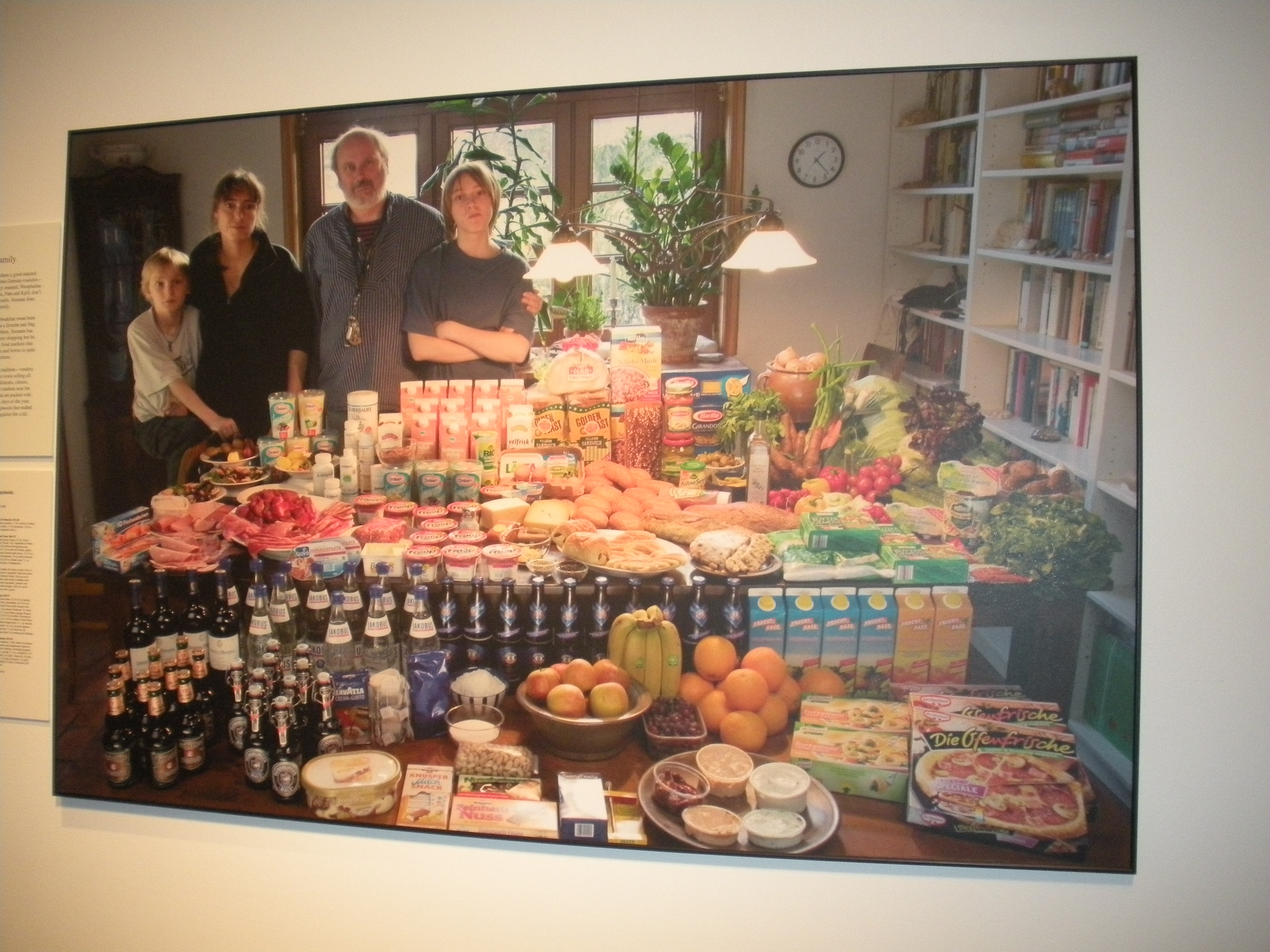
The exhibit featured 10 families from various parts of the world, and included photographs of the families surrounded by a week’s worth of groceries, local markets and meal times. Additional text listed how much the family spent on food in a given week (both in local currency and in US dollars) and broke down food consumption by major food group.

For example, in Germany, a family of four spent around US $500 on food for one week, but on closer inspection of the below picture from the exhibit and book I counted 4 bottles of wine and 30 bottles of beer (and I’ll admit I was a bit envious).
From the exhibit, I was surprised to learn that fresh produce and seafood products in Japan come with so much packaging (and I thought we were package-obsessed here in the United States), that the Mexican family consumed so much Coca-Cola and candy, and that my own diet is nothing like the diet of the American family that was featured in the exhibit (they were pictured with pizza delivery boxes, Burger King, packaged meats, canned vegetables, sugary juice drinks and other processed foods). From the 10 cultures featured, my diet was actually the most like the Egyptian family’s — heavy on the produce, with small amounts of meat, flatbread and assorted beverages.

The exhibit finishes its Seattle run this Sunday, June 10th, but fortunately almost everything that was featured in the exhibit is also included in the Hungry Planet book. The book actually features 30 families — including a Chadian family that survives on $1.22 per week — and ethnic recipes such as seal stew from Greenland. It’s a pretty cool coffee table book.

One part of the exhibit that’s not part of the book, and which was really interesting, was a small exhibit on traditional coastal foods of the Salish peoples from the Puget Sound in and around Seattle. The list below includes nearly 300 types of foods the Salish peoples traditionally ate, with an emphasis on consuming foods in season. According to the exhibit, now most people only eat an average of 12 different types of food and have a dwindling regard for whether or not the food is in season or is sustainable.

Lucky for us the museum is free the first Thursday of every month (it’s usually $10 for general admission), although we had to pay $6 to park on the UW campus for 2 hours. In addition to the temporary exhibit, there’s also an ongoing exhibit on cultures and festivals of the Pacific Rim and a natural history exhibit with fossil and skeletal remains of ancient creatures that once inhabited the region.

Posted in Becky's Adventures, Healthy Living | Tagged , , , , , | 2 Comments

Dostoevksy + Mango Lassi

Who spends 3 days engrossed in a 19th century Russian novel that’s over 600 pages long? Am I the only one raising my hand?

I’ve just finished reading Fyodor Dostoevsky’s 1866 masterpiece Crime and Punishment — book #3 in my 100 book challenge.

According to the book jacket “the story of the murder committed by Raskolnikov and his guilt and atonement is without doubt the most gripping and illuminating account ever written of a crime of repugnance and despair and the consequences that inevitably arise from it.” On that note, I was interested to see how it compared to Truman Capote’s In Cold Blood, which I read last year.

Dostoevsky spends nearly 100 pages introducing his characters before you get to the actual murder. Apparently this was one of the first-ever novels where the author delved into the soul of his character. It’s written in the third person, but the story often portrays the thoughts on the different characters, so you can really see the motives behind their actions. And while the murderer Raskolnikov is indeed a bit mad, he’s definitely not the most villainous character in the story.

The story was surprisingly easy to read for one that was written 150 years ago, although I sometimes had a hard time staying focused amidst the numerous monologues. In the end, I enjoyed In Cold Blood  more (action right away, character development later), although I appreciate just how revolutionary Crime and Punishment must have been for its time.

And while mango lassi has nothing to do with Dostoevsky, this tasty Indian-inspired smoothie is what I have from breakfast nearly every morning, and it’s especially refreshing during the summer months. On that note, I thought I’d share the recipe:

Mango Lassi

Serves 1

Ingredients:

  • 2/3 cup low-fat Greek-style yogurt
  • 2/3 cup milk
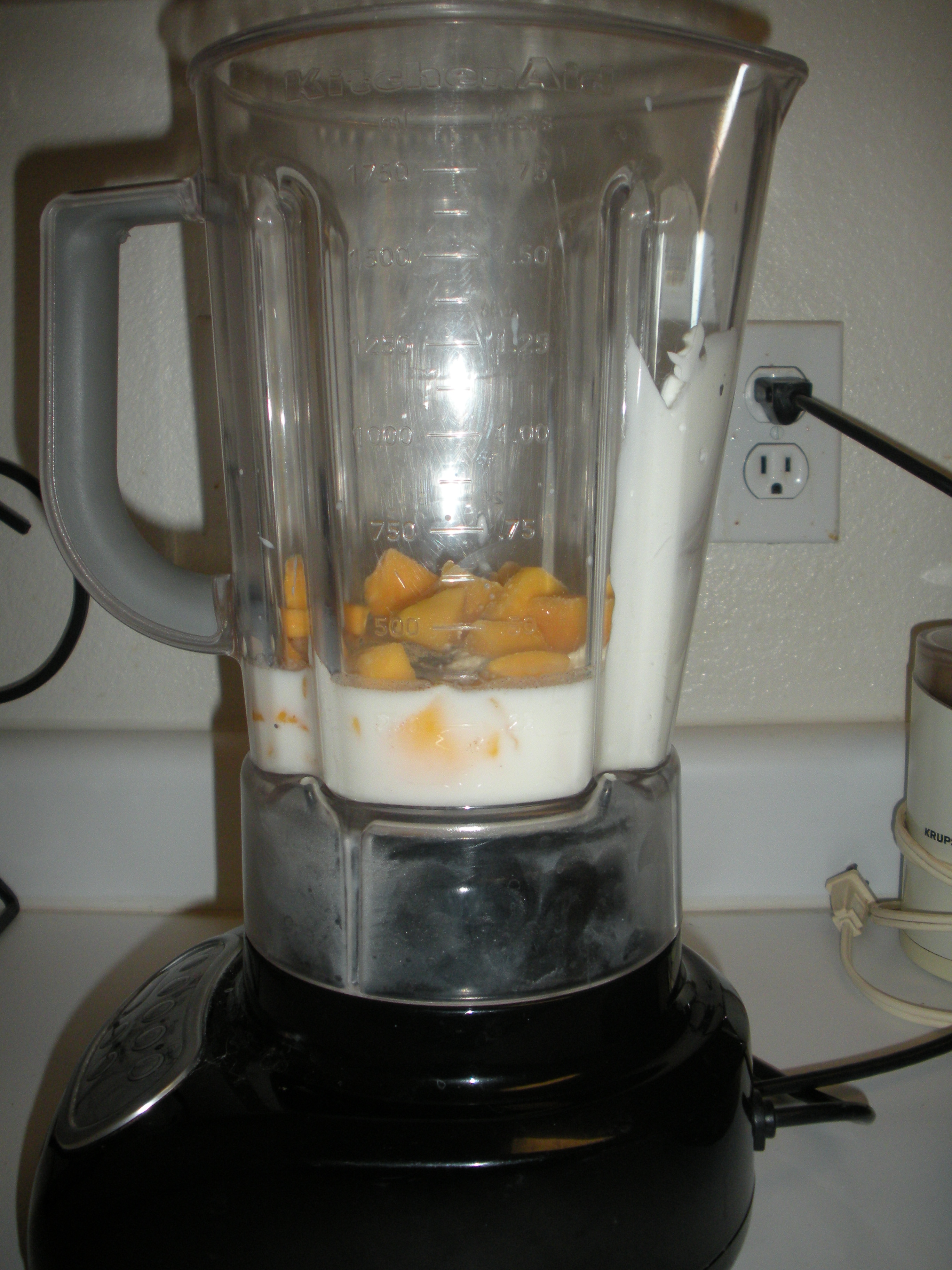
  • 1 cup cubed mango (I like to use Trader Joe’s frozen mango chunks, which gives the smoothie a milkshake consistency)
  • 1/4 teaspoon cardamom

To prepare, combine all of the ingredients in a blender and mix on high for 20 seconds. Pour into a pint glass. It’s really that simple.

Posted in Book Challenge, Recipes | Tagged , , , , , , , | 2 Comments

Pesto-Quinoa-Veggie Wrap

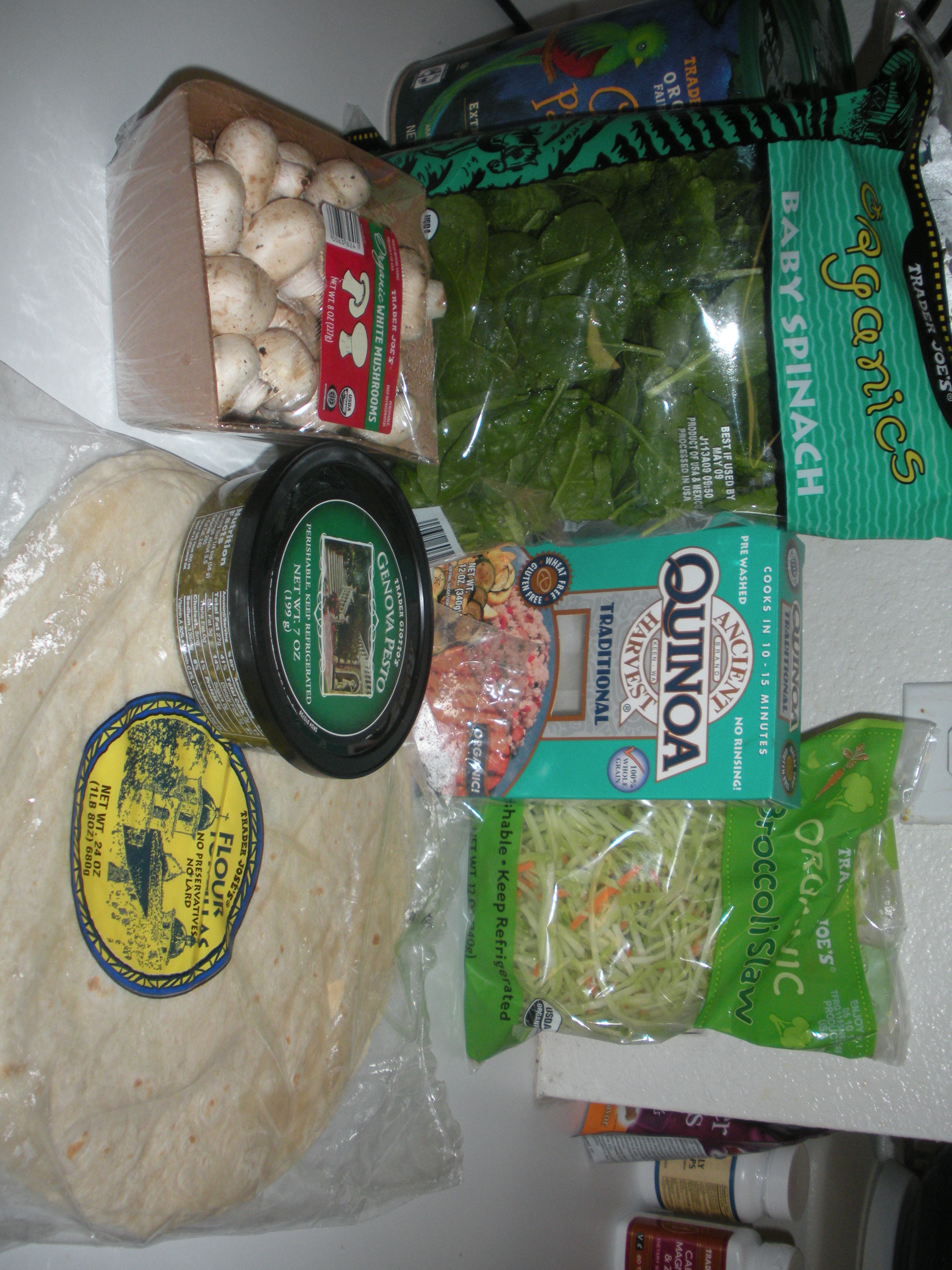
Recently I entered Trader Joe’s Quintessential Quinoa Recipe Competition. The rules were simple: (1) the recipe must feature no more than 7 Trader Joe’s ingredients (one must be quinoa) and (2) prep to should be no more than 20 minutes (not including cooking time).

For my entry, I came up with this recipe for a Pesto-Quinoa-Veggie Wrap. Since my husband and I have vastly difficult tastebuds, I am often cooking for one, and this sandwich makes for a quick lunch. I loved the raw combination of veggies so much that I ate this wrap for lunch every day for a week.

Alas, I was not selected a one of the 5 finalists in the competition (they received over 500 entries), so I am posting the recipe here for you to enjoy.

Pesto-Quinoa-Veggie Wrap
Serves 1
Ingredients:
1/4 cup uncooked TJ’s Organic Quinoa
1/2 cup water
1 Trader Jose’s Flour Tortilla
2 tbsp. Trader Giotto’s Genova Pesto
1 generous handful of TJ’s Organic Baby Spinach
1 generous handful of TJ’s Organic Broccoli Slaw
3 TJ’s Organic White Mushrooms, thoroughly washed and thinly sliced
 To Prepare:
1. In a small saucepan, combine quinoa and water. Bring to a boil. Reduce heat to low, and simmer for 10-15 minutes, until all of the water is absorbed. Remove from heat and set aside.
2. Microwave tortilla on high for 30 seconds to warm.
3. Spread pesto on tortilla.
4. Add a layer each of spinach, broccoli slaw and mushrooms.
 5. Top with quinoa and fold into a wrap. Enjoy!
Posted in Healthy Living, Recipes, The Simple Living Experiment | Tagged , , , , , | Leave a comment

Salmon with Cucumber-Yogurt Sauce + Snow

I have a mild obsession with the country of Turkey. It must be something about the East-meets-West culture, and its millennia of history. Someday I hope to visit, but for now I have to settle for exploring it in books. Most recently I read Orhan Pamuk’s 2002 novel Snow — book #2 in my 100 books challenge.

Pamuk won the 2006 Nobel Prize in Literature. Snow was his 7th novel, and the original Turkish manuscript has been translated into at least 30 languages.

The novel is set in the town of Kars, in northeastern Turkey on the Armenian border. Its main protagonist is the poet Ka, a poet from Istanbul, who has recently returned to Turkey after 12 years of political exile in Germany. While he pretends he’s traveling to Kars as a journalist to cover both a recent teenage girls suicide epidemic that has swept the town and the upcoming political election, its really to propose marriage to Ipek — a beautiful woman from his former life in Turkey, who barely know him.

Amidst a major snowstorm, a revolution is spawned by a theater troupe as an attempt to counteract the growing Islamism in the town. With all roads closed due to bad weather, there is no escape as the situation turns increasingly dangerous. Faced with skepticism from the tight-knit townfolk, Ka finds himself a major player (or pawn) in the unfolding events of the revolution over the next few days, all the while trying to win the affection of his beloved Ipek.

If you enjoy classical fiction or literary fiction, this is an enjoyable read; however, you probably won’t enjoy the 400+ page novel if you’re mostly into popular fiction.

Inspired by the book, and also wishing a bit that I was trapped inside due to a snowstorm (rather than the 104*F temperatures we’ve got in Las Vegas today), I made a simple Turkish-style Cucumber-Yogurt Salad to accompany today’s lunch. To make, combine:

  • 1 Persian cucumber or 1/2 English cucumber, diced
  • 1 cup of plain yogurt (I like to use low-fat Greek yogurt for added protein)
  • 3 sprigs of mint, finely chopped
  • A dash each of salt and pepper
  • 1 Tbsp. olive oil

I paired about 1/4 of this salad with a baked wild caught salmon filet and 1 Tandoori naan bread from Trader Joe’s (I like the frozen kind that you bake in the oven for 10 minutes before serving) to round out the meal.

Posted in Around the World Virtual Book Club, Book Challenge, Recipes | Tagged , , , , , , , , | 1 Comment

Behind the Beautiful Forevers Book Review

I’ve just finished reading Katherine Boo’s critically-acclaimed work of narrative non-fiction Behind the Beautiful Forevers: Life, Death and Hope in a Mumbai Undercity. This book — about slum-dwelling, abject poverty, garbage collecting and death by self-immolation — is so hot right now that I was on the waiting list for over 2 months to check it out from my local library, although there are 15 copies in circulation.

The book is based on over 3 years that the author spent in Annawadi, a slum outside of Mumbai, India that is situated in the shadows of Mumbai International Airport and luxury hotels. The central characters of the book include a young Muslim garbage collector wrongly accused of murder, an aspiring female slumlord and her daughter who is studying to become the first female college graduate in Annawadi, and their one-legged neighbor.

I read the book through my own lens as someone who essentially makes a living writing about poverty, so for me the book did not have the “shock and awe” effect it may have on other readers. Although I’ve never been to India, I’ve visited a fair number of slums in countries such as Brazil, Kenya and South Africa. It was easy for me to believe that people live like this, but it took me a while to grasp Boo’s purpose in writing the book — something that I didn’t fully grasp until I read her Author’s Note after the 244-page story.

So often we read about how India is an up-and-coming nation, one of the victors of globalization. At first I was bothered by the frequent theme of corruption in the book, how nothing was achieved without a bribe, how Annawadi citizens and government officials conned foreign donors, how the slum’s inhabitants were operating fictitious schools. But gradually I grew to appreciate Boo’s style of “telling it like it is.”

One of the greatest achievements of this book is that Boo leaves herself entirely out of it, and there is no mention of her own role in the story until the Author’s Note addendum. Though it’s non-fiction, the book reads like a novel, and for the most part is told without judgment of the characters.

Post in Comments: Have you read Behind the Beautiful Forevers, and if so, what did you think of it?

Posted in Around the World Virtual Book Club, Movie Reviews/Book Reviews | Tagged , , , , , , | Leave a comment