DIY Terrariums

When it comes to tending to house plants, I’ve been known to have a brown thumb. I’ve even managed to kill an aloe plant in the past, which is nearly impossible to do. Fortunately, there’s a way for non-green thumbs like me to connect with the plant world in a way that requires very little maintenance, or so I learned this afternoon at a DIY Terrariums class at my local library.

IMG_0873

Terrariums are miniature, self-contained eco-systems constructed inside a glass container with a lid. As I learned today, the concept of a terrarium dates back to an accidental discovery by a London physician in 1827. While Dr. Ward was experimenting with cocoons in covered jars, he found tiny plants growing in the jar’s soil. Upon further experimentation, we was successfully able to grow ferns in covered containers, and the concept eventually grew in popularity.

Terrariums are relatively cheap to make, with most materials available at local garden stores (and a few items also likely available at neighborhood dollar stores).  You’ll need a glass container with a lid or cover, small stones or gravel, activated charcoal (a special kind bought at a gardening store, not the kind from your fireplace), sphagnum moss (aka green moss), sterile potting mix and several tiny plants (no more than 2 inches tall). In our class, we used glass vases, and I added a plastic lid from a coffee canister when I got home. It’s a temporary fix until I can cut a piece of cork to fit my container.

The terrarium is constructed in layers with 1/2″ stones or gravel, 1/2″ activated charcoal, a thin layer of moss, 5 sprays of water from a spray bottle,  2″ of soil, 2 or 3 plants of your choice, another 10-15 sprays of water, and optional embellishments such as statues or ornaments (I chose a seashell to add to mine). The photo below shows the ideal set-up for your mini eco-system (class handout courtesy of Melissa Richmond).

IMG_0872

In terms of plant selection, it depends on whether you would like to create a tropical or a woodland environment. Tropical terrariums are ideal for indoor temperatures in the low 70s, and popular plants include creeping figs, small ferns, fittonia (aka nerve plant), peperomia, and spider plant. Woodland terrariums are ideal for indoor temperatures in the mid- to upper 60s, and common plants include seedling evergreens, wild strawberry, small ferns, and impatiens.

In our class we made tropical terrariums. I thought this was fitting since today marked the first day of snow in the Portland metro area. For my environment, I chose spider plant, red fittonia and some bright green moss.

IMG_0878

A few other tips we learned in class include:

  • Do not place the terrarium in direct sunlight. It is better to keep it in moderate, indirect light. I am placing mine on my cookbook shelf in my dining room, about 5 feet away from a window.
  • Ideally, plants in closed terrariums water themselves. Moisture in the plants creates condensation, which runs down the sides of the container into the soil. If you have too much moisture in your container, remove the lid for an hour or two to allow some of the water to evaporate. If there is no condensation, add a little more water with a spray bottle or turkey baster.
  • As your terrarium matures, remove dead leaves or spent flowers with tweezers or chopsticks in order to maintain a healthy environment.
  • If plants are growing too big for the container, they may be pruned with a pair of scissors.
  • For more information on terrariums, visit http://gardenersnet.com/hplants/terrarium.htm.
Posted in DIY | Tagged , , , , | 1 Comment

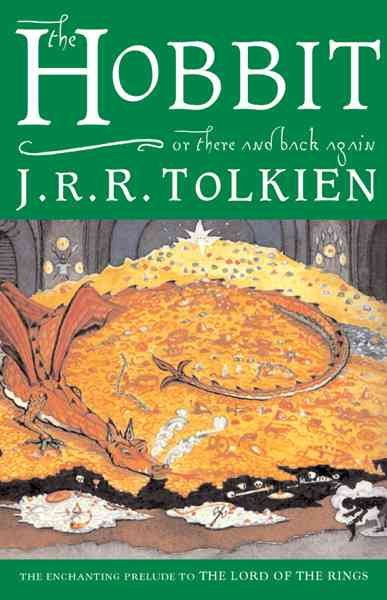
The Hobbit

I just finished reading J.R.R. Tolkien’s The Hobbit: Or There and Back Again in preparation for the movie release today. I’d  never read anything by Tolkien before, although I have seen the entire trilogy of Lord of the Rings movies because my husband is a huge Tolkien fan. So I am a Tolkien newbie, but after reading the first few chapters of The Hobbit, I quickly became a fan.

Jacket

Central to the story is the hobbit Bilbo Baggins, who I immediately took a liking to. He’s small in stature, spends most of his days in his quaint hole-in-the-wall home, and is distraught when he doesn’t get to eat two breakfasts a day. I could somewhat relate. In the first chapter, he is visited by the wizard Gandalf, who insists Bilbo accompany him on an unspecified adventure. Bilbo isn’t much for adventures, but agrees to have tea with Gandalf the next day to discuss the matter. Instead of being visited by Gandalf, Bilbo’s home is invaded by 13 dwarves he’s never met who eat all his food. Gandalf shows up and insists Bilbo will be the 14th man on the dwarves’ expedition to recover treasure that is carefully guarded by the dragon, Smaug. Bilbo ultimately agrees, and the men set off on an epic journey, encountering orcs, goblins, wolf-like creatures called wargs, and other fantastical creatures along the way.

I haven’t read much fantasy fiction in my life, but after marrying a fantasy fiction author, I’ve become a fan. The Hobbit is a fun read for those who would like to escape to an imaginary world for a while. The only downside of the book, for me, was the relentless singing — mostly by the dwarves — which I thought broke up the story too much.

My favorite part was the chapter when Bilbo meets Gollum, the ring-obsessed creature from the Lord of the Rings trilogy. This is the moment when Bilbo takes possession of the infamous ring, although it will only play a minor role in the remainder of The Hobbit story. Bilbo challenges Gollum to a life-or-death riddle game. I loved how Gollum talked to himself in the plural, and also added mutliple “s”es to words. Aside from Bilbo, he’s my favorite character in the book, and I was a bit saddened he lost his precious birthday present.

the hobbit

After finishing the book on Wednesday, I could hardly wait for the movie to open today. My husband and I went to the first showing this morning at our local cinema. While it was playing in both 2D and 3D, we chose the budget-friendly 2D option. I was glad we did, because the CGI animation was too much for me in the 2D version, and I imagine it would have been much worse in 3D.

I thought the casting for the movie was really good. Each dwarf is distinctly different, and while reading the book I sometimes had a hard time keeping them apart, I didn’t have that problem in the movie. Also, I actually liked the dwarves’ singing in the movie. They only did 2 songs, and I’d wished they’d done more.

The movie starts out much differently than the book. There’s a rather developed backstory, I guess to give non-reading movie-goers an idea of what the story is about. Then, the introduction of the character Bilbo is actually taken out of the first chapter of The Lord of the Rings: The Fellowship of the Ring, as he is writing his story for his nephew Frodo and preparing for his eleventy-first birthday party. Only after about 20 minutes into the movie do we get the visit of Gandalf to the young Bilbo, and then the scene where the dwarves invade his hobbit hole, which I thought was one of the best scenes from the movie.

I’d wondered how Peter Jackson would turn a 300 page book into a 3-part movie series with perhaps 8+ hours of movie footage. Oftentimes, when books are made into movies, scenes and characters are left out, but the opposite is the case with The Hobbit movie. Most notably is the addition of the character Radagast the Brown, a wizard that’s had way too many ‘shrooms and who is obsessed that a necromancer has taken over the woods and is killing all the animals. I don’t even remember Radagast from the book, yet he becomes a major part of the movie.

Overall, I was disappointed in the movie, and I don’t think I will be seeing the sequels in the theater. In an age of overdone CGI animation and quests for movies to be “visually stunning” at the expense of plot, I didn’t think Tolkien’s original story translated well. Despite the hundreds of millions of dollars it cost to make the film, sorry Peter Jackson, Tolkien is still the far better story teller.

Addendum: My husband said I was much too nice on my movie review. Here’s his own version.

Posted in Book Challenge, Movie Reviews/Book Reviews | Tagged , , , , , , | Leave a comment

Among the Islands

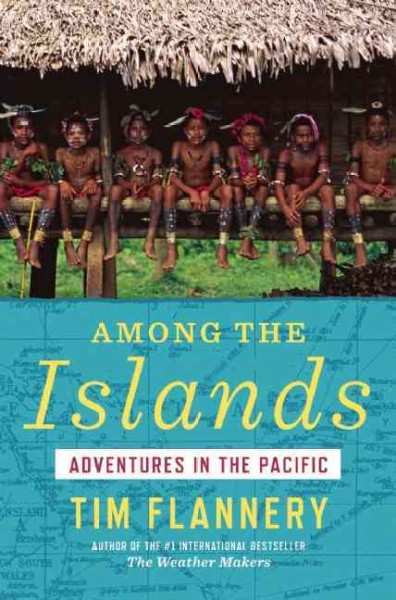
At a recent book marketing meet-up I attended, the books editor at The Oregonian newspaper spoke of the dismal fate of most books seeking a review from their publication. On average, they receive about 500 queries a week, and only review 5 books. As a consolation, he brought with him several new releases that had been rejected by their review team to give away, and I went home with an advance review copy of Among the Islands: Adventures in the Pacific. As a person with several degrees in anthropology, this was a real treat.

Among the Islands

Scientist and explorer Tim Flannery is also the author of the internationally-acclaimed The Weather Makers: How Man Is Changing the Climate and What It Means for Life on Earth. As a career mammalogist with the Australia Museum, he’s been credited with identifying more new species than Darwin.

In Among the Islands: Adventures in the Pacific, Flannery recounts nearly 25 years of adventures in the South Pacific, beginning as a young biologist in 1987. The book is organized geographically, with sections devoted to travels in Papua New Guinea, the Bismarck Isles, the Solomon Islands, Fiji and New Caledonia. Following in the footsteps of only a handful of biologists who have gone before him, Flannery travels to islands only accessible by ship, wades through piles of guano in search of new species of bats, encounters cultures with a history of cannibalism and head-hunting, and drink suspicious alcoholic beverages with government officials of small island states.

If you find that sort of lifestyle romantic, as I do, than this is an interesting read. Among the Islands is memoir, history, ethnography, and Darwinian-like study all in one. There’s reference to famed anthropologists Bronislaw Malinowski and Roger Keesing, who shared with the world the unique cultures of the Trobriand Islands and the Kwaio peoples of the Solomon Island of Malaita. There’s in depth descriptions of monkey-faced bats and the lengths a scientist must go through in order to positively identify a new species.

Though at times the writing is a bit technical, and the humor dry, Among the Islands is for the adventurer at heart and will remind many now stuck in desk jobs why they became scientists in the first place.

Posted in Movie Reviews/Book Reviews | Tagged , , , , , , , | Leave a comment

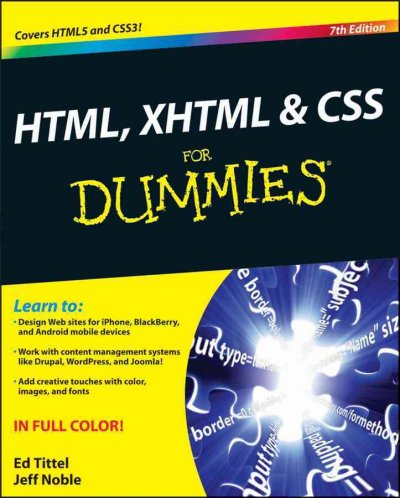
HTML, XHTML & CSS for Dummies

In the past, I have avoided reading books in the Dummies series. I think it has to do with my intellectual pride. Also, there are several things, such as raising chickens, acrylic painting and organic gardening that I’d rather learn in a face-to-face class than through a book.

I frequently wish I knew more about web page design. In September, when I transferred my blog from WordPress.com to a self-hosted WordPress.org site, I paid someone to do it for me. The WordPress Happiness Engineer I worked with used fancy terms such as CSS and CMS that I knew nothing about. As I delved into attempts at personalizing my site, I came to several dead-ends due to my inability to develop HTML codes. I looked into basic web design classes at my local community college, and found they start at around $150 and were web-based classes, which didn’t really excite me. Finally, I surrendered my intellectual pride and checked out HTML, XHTML & CSS for Dummies from my local library.

HTML for Dummies

The book is written from the stand point that you already have a basic understanding of how to use a computer and surf the internet. Very early on I learned that I really didn’t know that much about web development, such as what the acronyms URL, HTML and CSS stand for. In Part I: Getting to Know (X)HMTL and CSS, I became a bit too excited and ambitious. It was like learning a new language and the possibilities with web design became endless.

HTML, XHTML & CSS for Dummies covers topics such as creating forms within websites, how to create links to other online resources, finding and using images, and developing your own Cascading Style Sheets for easy maintenance of web page style and structure. My enthusiasm was short-lived, and I became lost at around Chapter 6: Linking to Online Resources. Though I finished the book, I came to the decision that web design really isn’t my thing.

As a WordPress software user, I realized that I’ve become spoiled by a Content Management System that pretty much does all of the hard stuff for me. HTML, XHTML & CSS for Dummies has just one chapter devoted to CMS, with equal space devoted to WordPress, Joomla and Drupal. I got the impression the authors weren’t huge fans of these programs geared toward non-technical users.

While the tools to develop my own web site didn’t stick with me, what I took away from this book is a stronger consideration for web site visual layout and user-friendliness, a basic understanding of web design lingo, and about a dozen or so useful tidbits that I might try out on my blog.

If you’re looking to develop a business or personal website from scratch, and save money in the process, HTML, XHTML & CSS for Dummies could be a useful read. But if you’re a personal blogger looking to improve your site, you might rather check out the dozens of Dummies titles on internet and social media.

Posted in DIY, Movie Reviews/Book Reviews | Tagged , , , , | Leave a comment

Reading Jack London

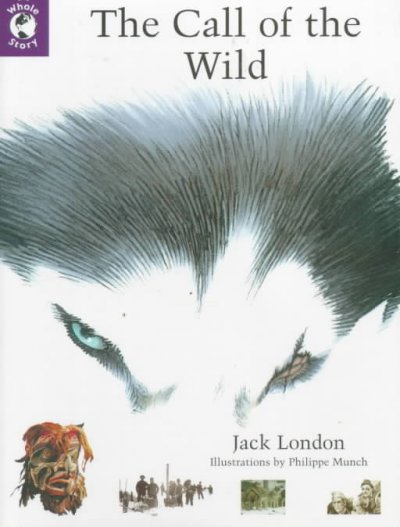
There are a handful of books on my 100 books challenge that I read in my youth. I felt that, by re-reading them through the eyes of my adulthood, I might view them in a different light. One of these books is Jack London’s 1903 young adult novel The Call of the Wild.

At the center of the story is the dog, Buck. While living in the home of a judge’s family in California, Buck is abducted and transported to the Canada-Alaska border, where he is destined to serve as a sled-dog in the Klondike gold rush. Along the way, he comes into the hands of several masters — some benevolent, others not so much.

I think I first read this book around the age of 10, and the only thing I remembered was that it was the story of a dog. As an adult, I noticed the quest for riches at any cost as being one of the over-arching themes of the book. Interestingly the only version available at my local library was the one illustrated by Philippe Munch, so in addition to reading the story, I also learned lots of tidbits about the history of the gold rush and the fauna of Alaska.

I do think this is a good read for children, even as young as elementary school age when read with a parent. It is not a sugar-coated story about a dog by any means, and deals with difficult topics such as animal abuse and death. At the core of the story is the natural world, the true instincts of animals in the quest to survive, and the battle between and amongst species.

As an adult interested in the life and writing of Jack London, I am now curious to read John Barleycorn, which is one of London’s few novels written for adults. It is supposedly highly autobiographical, and deals with London’s struggle with alcoholism, which likely contributed to his early death at the age of 40.

Posted in Book Challenge | Tagged , , , | 2 Comments