Wandering Aimlessly Around Geneva

Two weeks ago, my husband came to visit me in Geneva for a long weekend. Normally, when there is travel involved, I get in ‘super-planner mode,’ and come up with an itinerary of activities for us to do during the trip. This time I tried a different strategy.

When plans to go to an excellent Saturday farmer’s market across the border in Ferney-Voltaire, France didn’t work out, we decided to try another approach. Taking the bus to downtown Geneva, we decided to wander aimlessly, seeing what sites and activities might present themselves to us. Here are some of my favorite activities from the weekend, some that I didn’t even know existed until our little jaunt.

The St. Pierre Cathedral is a really old church in the Old Town district of Geneva, dating back to the 13th century. It played a significant role in the Protestant Reformation, orginally under Roman Catholic rule, but now part of the Swiss Reformed Church. What I didn’t know, is that the site on which the cathedral sits has been a holy site for over 2,000 years.  An archaeological site beneath the cathedral tells the story of an Allobrogian chief who was buried on the hill around 100 B.C. Originally a sacred site for an archaic religion, a Catholic church was built on the grounds in the 4th century as Geneva became a prominent stronghold in the Roman Catholic church. Visiting the site on audio-guided tour, one can see the remains of the original bapistries and mosaic floor, which now lie directly underneath the modern-day Reformed Church building.

On Sunday, we went to brunch with music at my favorite bar in Geneva, Alhambar. A weekly event in Geneva, and hailed one of the best Sunday brunches in town, one can enjoy breakfast cocktails, tea infusions, kombucha drinks, and perfectly portioned brunch entrees.
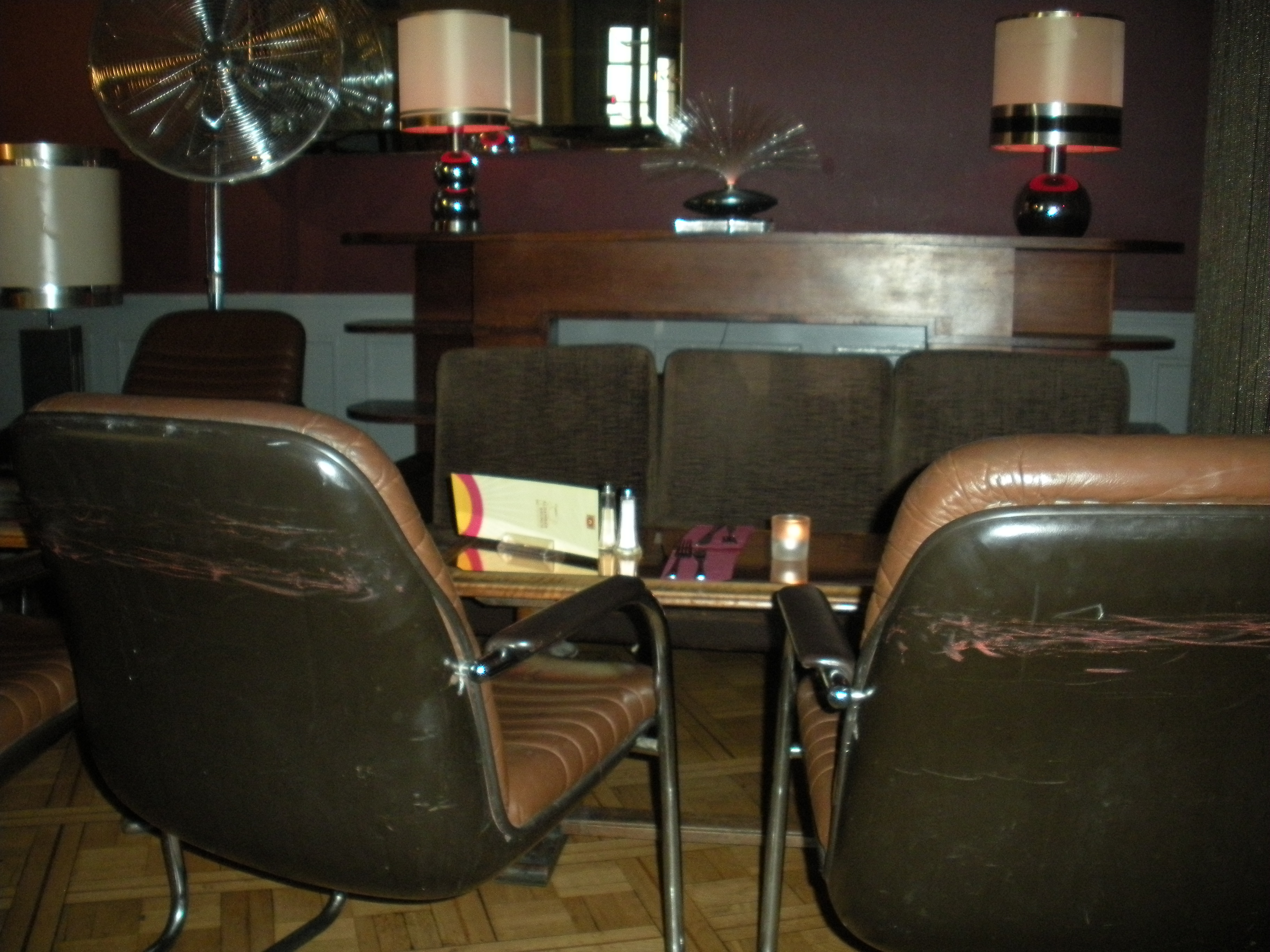
The swank and comfortable decor of Alhambar in Old Town, Geneva


Kir Royals made with real champagne, followed by a salad with mini toasts and warm goat cheese. I highly recommend it!

Leaving work early on Monday, we headed to the International Red Cross and Red Crescent Museum, known to be one of the best museums in all of Europe. The museum traces the history of the Red Cross movement, founded by a Geneva businessman after the 1859 Battle of Solferino, one of the most significant battles in the war for Italian independence. There is an excellent audio-guided tour available in a number of languages, old video footage from the first and second World Wars and natural disasters from all over the world, information about the Red Cross’ work in providing support to prisoners’ of war, and interactive exhibits about some of their more recent work, such as health education, disaster response, helping the victims of landmines, and reuniting families in the aftermath of war.

This hall of cases, with tens of thousands of handwritten index cards, contain the records of the prisoners of war from the First World War. Now prisoner of war records are kept electronically.

By wandering aimlessly through the streets of Geneva, we came across a small restaurant operated by a Portuguese family where we were served a delicious platter of fresh perch from Lake Geneva, and visited the small chapel in Old Town that was home to John Calvin and John Knox’s teachings during the Protestant Reformation. Learning from this new strategy for exploring a city, maybe next time I won’t spend so much time planning, and will just focus on being.

Posted in Becky's Adventures | Tagged , , , | 1 Comment

Simple Living Lessons from Geneva

For the past four weeks, and for the next two weeks, I have been living in Geneva, Switzerland. I am currently working as a consultant for the Ecumenical Advocacy Alliance, serving as the interim coordinator of their HIV and AIDS campaign.

Living modestly in Geneva can be a bit of a challenge. Geneva consistenly ranks among the top 5 most expensive cities in the world, and the cost of living is nearly twice that of Las Vegas. With restaurants on practically ever corner, one can easily blow 50 Swiss francs (the equivalent of about US$45) in one meal.

The majority of Swiss enjoy a high quality of life. A ‘modest’ salary is around 100,000 Swiss francs a year, and even people working in service positions, such as restaurant servers, store clerks, and bus drivers, earn a fair and liveable wage. Homelessness does exist here, but it is a rarity, and even homeless people in Switzerland enjoy a higher quality of life than their counterparts in the United States. While on a run once, I saw a homeless woman living under a bridge next to the River Arve. She had a decent quality mattress, and I couldn’t help but notice her Chanel purse. Last weekend at the train station, I saw a homeless man enjoy his Starbucks coffee and jumbo muffin with a big smile on his face.

I am struck by the fact that Switzerland is, for the most part, a cash society. As one of my Swiss friends commented, she doesn’t understand the credit system employed by most Americans, because if the Swiss can’t afford something using cash, they don’t buy. Granted, what they can afford sometimes includes Christian Dior baby clothes, 400 franc casual tops, high quality restaurant meals, and frequent ski vacations.

Worldwide, the Swiss are allegedly the second slimmest people from a developed nation after the Japanese. How can this be when a large part of their diet consists of whole milk, cheese, bread and chocolate? Geneva is a completely walkable city – one can literally walk from one end to the other in about 2 hours – and if the weather allows, pedestrians crowd the streets. In Geneva, I live on the fifth floor of an apartment building, and I make a point to take the stairs 95% of the time, even when I am carrying an armful of groceries.

This is my third time working in Geneva for an extended period of time. Benefitting from the high wages, I try to use these opportunities as a chance to save money, which means that I spend the majority of my free time in my apartment reading, sleeping and surfing the internet. This time, I was given a living allowance totalling 750 francs for the 6 weeks, which amounts to about 18 francs a day. This is well in excess of what most people in the world live on on a daily basis, yet in Geneva would require strategic experiments in modest living.

So while in Geneva, I have resorted to a traditional Swiss diet of bread with various toppings (butter, jam, and/or nutella are my favorites), crackers, local cheese, yogurt, coffee and tea, salad, spaghetti with tomato sauce, chocolate and wine. This, with my strategy of taking the stairs, has led me to lose over 5 pounds in 4 weeks, and I was already in the healthy weight range before coming to Switzerland. Yes, I have lost weight on the anti-Adkins diet, where the majority of my calories come from carbs. How can this be? Could it be that Swiss food is all-natural, and not produced in a laboratory like American food?

In addition to the HIV and AIDS Campaign that I am working with, the Ecumenical Advocacy Alliance also runs an advocacy campaign on ‘Food for Life.’ Given that last Wednesday was Ash Wednesday – the start of Lent – the organization developed a liturgy called ‘Fast for Life,’ and encouranged people of faith around the world to fast from food, consumption, and fossil fuels.

During our own Ash Wednesday service at the Ecumenical Centre, I was reminded that many of our societies are faced with overconsumption and too many choices. Something I have been thinking a lot about lately is how the world’s monetary resources are spent, both by middle-class citizens and small organizations and businesses, and by large governments and wealthy citizens. But that is the subject of another post.

So as I am continuously trying to live a modest life and advocate for the better allocation of resources, I realize that living a modest life in one of the world’s wealthiest cities is not so difficult. In many respects, it is far easier here in Switzerland than in the United States, where class differences are far more noticeable and everyone is trying to out-consume each other.

Posted in The Simple Living Experiment | Tagged , , , , | 3 Comments

A Few of My Favorite Charities

Here are some of my favorite organizations to give my money to – some well known, some lesser known:

African Women’s Development Fund: I dislike the fact that most development aid is donor driven, and oftentimes does not lead to projects that the beneficiaries want or need. AWDF is completely run by African women for Arican women, providing women-led organizations on the African continent with grants in the amount of $1,000 – $50,000. Support focuses on women’s human rights, political participation, peace building, health and reproductive rights, economic empowerment, and HIV and AIDS.

Bread for the World: While the work being done in soup kitchens and food pantries is important to address the immediate needs of hungry people, it doesn’t address the root causes of the problem. Bread for the World is an ecumenical organization that advocates U.S. decisionmakers to change policies and programs that allow hunger and poverty to persist, with the ultimate goal of ending hunger and poverty at home and abroad. Each year, Bread focuses on a major issue for advocacy efforts. Last year it was reforming foreign assistance to make it more cost-effective and development-focused.  This year’s campaign is focused on expanding the Earned Income Tax Credit to assist struggling families in the United States.

CARE: CARE is a humanitarian organization that focuses on assisting some of the world’s poorest people. With a special focus on assisting women, some of the programs that CARE funds are girl’s education, economic development and disaster response. Like Bread for the World, they also engage in policy and advocacy work on Capitol Hill to try to influence development policy, and they have a monthly giving option which makes contributing to the organization easy.

Diakonia Compassionate Ministry – Kenya: DCM works in western Kenya, the poorest region of the country and the region hardes hit by HIV and AIDS. I have a special connection to this organization, because I did an internship with them in 2002, and have since gone back to visit in 2007. My home church, like many other Lutheran congregations in the United States, participates in an orphan sponsorship program whereby an individual contributes $30 per month towards the costs of school supplies, school uniforms, and health care costs for an orphaned child. DCM is also engaged in health care work, programs for people with disabilities, peace building, HIV and AIDS support groups, and disaster response.

Posted in Becky's Activism | Tagged , , , , | Leave a comment

Immersion Experience to Central City Lutheran Mission

The three crosses on the side of the Chapel of St. Martin on CCLM's campus represent the burdens of sexual exploitation, drug addiction and incarceration.

I have just returned from a 5-day immersion experience to Central City Lutheran Mission (CCLM) in San Bernardino, California. This trip I helped to organize with an organization I work with on a part-time basis, the Lutheran AIDS Network. With so much new information and experiences I took from this trip, here are some of the things that stick out most in my mind:

One of the main programs of CCLM is a supportive housing program for HIV-positive homeless people that they operate in partnership with the U.S. Government’s Department of Housing and Urban Development. 29 people participate in the program, and live in 11 houses in one of the poorest neighborhoods in California. As part of our immersion experience, we had homestays with the residents and ate most of our meals in a soup kitchen, where they also serve 65 homeless men for breakfast and dinner each day. During 6 months out of the year, these men sleep in the sanctuary pews of St. Martin’s Chapel on the CCLM campus.

The walls at CCLM change every few days, and the people from the community are invited in to contribute their artwork. This creates a space of their own for graffiti artists. Here, part of the wall is shown with a few of the immersion participants.

Although the trip was largely focused on learning more about HIV and homelessness in the United States, I feel I also learned a lot about immigration issues. Another of CCLM’s programs is the Plaza Communitaria, which is operated in partnership with the Mexican Consulate and is similar to the GED program in the United States. CCLM works with Mexican immigrants regardless of whether they have the paperwork to ‘legally’ be in the United States.

On Saturday evening we watched the film ‘800 Mile Wall,’ a documentary about the fence that has been constructed on the U.S.-Mexico border in an attempt to keep out immigrants from the south or force them to cross the border in harsh desert terrain. It is estimated that up to 1,000 people perish in these deserts each year while trying to reach U.S. cities, where they may be able to find work and earn enough money to feed their families. Many of these deaths occur on the Tohono O’odham Indian Reservation, where there is a 75-mile break in the wall, land control is shifted and the U.S. government denies responsibility. This encourages immigrants from the south to cross into the reservation, where many die in some of the harshest terrain in the American southwest.  Hundreds of people have also perished while trying to swim across the All American Canal, thus contaminating drinking water for the city of San Diego with dead bodies.

Towards the end of the film, there is information about a guest worker program the Canadian government offers for Mexican workers, where they are flown into Canada for several months out of the year to work in the agricultural industry and fill an important gap in the Canadian work force. Too bad the U.S. government is slow to catch on that this is a humane way to handle the immigration issue, where they would profit from the Mexican workers as taxpayers and nobody loses.

On Sunday morning we had a guest speaker at mass whose son was killed in combat six days into the Iraq War. I learned that an estimated 17% of American soldiers serving in Iraq and Afghanistan are undocumented immigrants, fighting for a country that promises them green cards. This man’s son, though he gave his life for the United States’ so-called freedom, never saw his citizenship achieved.

Posted in Becky's Activism | Tagged , , , | Leave a comment

Cathedral Gorge State Park

Tired of the same old hikes at Mount Charleston, Red Rock, Valley of Fire and Lake Mead, my husband and I are on a quest for new day trip hikes from Las Vegas. Today we made the trek to up to Cathedral Gorge State Park in Lincoln County, Nevada.

Cathedral Gorge is about a 2.5 – 3 hour drive northeast of Las Vegas on the US-93. On the way there, you’ll pass the super small towns of Alamo, Caliente and Panaca. All have gas at a reasonable price and convenience stores for a quick stopover. Too bad we were a bit short on time today, because I would have loved to eat at the Knotty Pine Restaurant in Caliente (maybe next time we’re up this road?). The Knotty Pine is situated next to the Shady Motel. Gotta love Nevada place names, but sadly we didn’t see any brothels on this trip.

The best thing about Cathedral Gorge State Park is that, aside from the park ranger, we were the only people in the entire park. There’s a nice picnic area built by the Civilian Conservation Corps in the 1930s, and several easy-does-it hiking trails to choose from. We chose the 4 mile loop trail, under a small bit of snow but fairly level. For the not-so-ambitious there are several other trails around 1 mile in length. There’s also fairly nice campground on site. The big natural draw of the park is the cave-like formations and cathedral-like spires carved by erosion into the soft bentonite clay.

Much of the scenery at Cathedral Gorge looks like this

Posted in Becky's Adventures | Tagged , , | 1 Comment