Wild Book Review

I feel like I am a bit late to join the group of people reading Cheryl Strayed’s popular memoir Wild: From Lost to Found on the Pacific Crest Trail. Last year’s non-fiction sensation continues to be a best-seller. This week it appears for the 51st week on the New York Times Best-Seller List for Non-Fiction in 11th place. Currently there are 100 holds on 98 copies of the book at my local library, and I had to wait a full month to check it out. What is it that makes this book so popular? I had to find out.
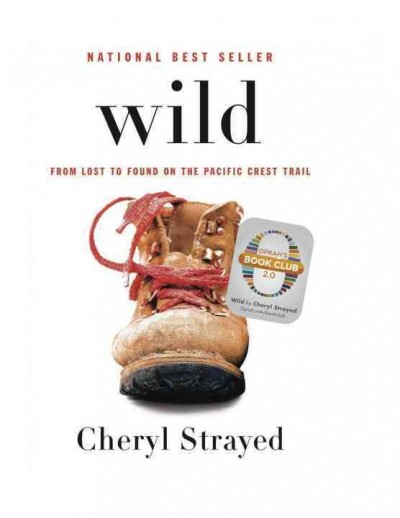
JacketWhen 26-year-old Cheryl Strayed set out to hike the Pacific Crest Trail by herself in 1995, her mother had recently died, she’d just received the divorce papers finalizing her first marriage, and she was losing the profound connection she’d hoped to maintain with the rest of her family. While in line to make a purchase at REI one day, she notices a copy of Pacific Crest Trail Volume 1 California near the check-out line. She’d never actually heard of the PCT at that point, but it soon becomes something that she must do. A pilgrimage, of sorts.

In this tell-all, at times humorously written memoir, Strayed talks about shooting heroin, chewing opium gum, cheating on her then-husband, and many other antics of her youth. This is not another book where the author glorifies himself/herself for accomplishing some amazing feat, but rather Strayed takes a more humble approach similar to “if I can hike by myself in the wilderness for 100 days, so can you.” I’d read a PCT hiker’s memoir in the former category last winter, and now I can for certain say I appreciate Strayed’s style of writing much better. Oftentimes Wild is written in the stream of consciousness, and the book is essentially more about her personal, internal journey than about the Pacific Crest Trail itself.

What I liked the best about this story is that it is one I could relate to. It is, above all, a tale of survival. Although Cheryl grossly underestimates the amount of money she will need on the trail — at times walking for days with only 2 cents in her pocket and finishing the trail completely broke — she presses on. She loses 6 toenails in the process of walking approximately 1,100 miles, but she doesn’t give up. She presses forward as if it is the only thing to do, which is essentially a metaphor for life in general. At times she calls herself a “big fat idiot” and at other times a “hard-ass motherfucking Amazonian Queen.” I was again reminded of how much a person can endure, yet still survive.

I am not sure if I’d be up for walking the entire PCT from Mexico to Canada — Strayed herself walked parts of California and the entirety of Oregon — but perhaps I would consider hiking the 500 miles through Oregon someday. I wonder what lessons such a pilgrimage would teach me.


Posted in Movie Reviews/Book Reviews | Tagged , , , , , , , | Leave a comment

Road Trip to Ashland, Oregon

Last summer, when I read The Complete Works of William Shakespeare, I was left wondering what it would be like to have been the first audience to see one of these now famous plays. The plots and characters of Hamlet, Macbeth and Romeo & Juliet are now so well known in our culture, there are few surprises, although tens of thousands of theatre-goers still flock to performances of Shakespeare’s plays each year.

Six months ago, when I bought my tickets to the Oregon Shakespeare Festival, I decided to be a bit more adventurous. I bought tickets to a World Premiere performance of Naomi Wallace’s new play The Liquid Plain. Oregon Shakespeare Festival offers a 20 percent discount on “preview performances,” the first 2 or 3 showings of the play to the public, as the theatre company is still perhaps working to get the kinks out. Last night’s performance of The Liquid Plain was the first time ever that this play was presented in front of a live audience. Although it was technically a preview performance, I thought the theatre company did a near-perfect job.

The first act of The Liquid Plain is set in 1791 in Bristol, Rhode Island. Two runaway slaves, Adjua and Dembi, pull a white man from the water. Initially they presume he’s dead, and strip him of his clothing. He soon revives, yet appears to be suffering from amnesia. Adjua and Dembi are eagerly awaiting a ship that is supposed to bring them safe passage to Africa via England, and subsequently their freedom. As the play unfolds, the characters are not at all who they seem to be.

The small, yet charismatic cast put on a phenomenal showing. Utilizing a method of casting that is exactly opposite of Shakespeare’s day, a female is cast in a male role. This is not a play for the feint of heart. There’s frequent profanity, lesbian kissing, public masturbation, partial nudity, and a character whose bloody internal organs are spilling out from him. In my mind, that makes for an excellent play.

My sister accompanied me on this two-day road trip from the Portland metro area to Ashland in southern Oregon (it is about a 4 1/2 hour drive one way). While in Ashland, we spent the night at the historic Peerless Hotel bed and breakfast, about a 15 minute walk from the festival. Built in 1900 as a boarding house for workers on the nearby railroad, the Peerless Rooms was nearly in ruins when it was purchased in 1989. It re-opened as a bed and breakfast in 1994, and while adding many modern-day conveniences such as in-room bathrooms and air conditioning, the hotel’s owners have tried to preserve as much of the hotel’s original character as possible.

IMG_1338

IMG_1336

Prior to the show, we grabbed a bite to eat at Enoteca Wine Tasting & Bistro in downtown Ashland, about a 5 minute walk from the festival. They serve as the local tasting room of EdenVale Winery of Medford, Oregon. I had a glass of their full-bodied Reserve Chardonnay and split a generous-portioned fruit and cheese plate with my sister. Highly recommended.

We also went to the free pre-play Green Show on the Oregon Shakespeare Festival grounds. Several years ago, OSF made the decision to move away from a traditional, Renaissance-themed Green Show towards a contemporary, American-themed Green Show. Each year, they put out a call for performers, and those selected each perform just a few nights during the season. I am glad they made this change. Last night’s performers were the California-based duo of folk musicians Misner & Smith.

IMG_1346

Making the most of our time along the I-5 corridor in Oregon, en route to and from Ashland, my sister and I also managed to visit a number of unique, locally-owned businesses.

At Patty Ann’s Fish and Chips in Myrtle Creek, Oregon, we split a basket of fried shrimp and fries. Super friendly staff, and the tasty cocktail sauce and cole slaw, which accompany all basket meals, appeared to be homemade. The weather was nice enough, that we enjoyed our meal on one of the brightly painted picnic tables on the restaurant’s patio.

IMG_1331

IMG_1333

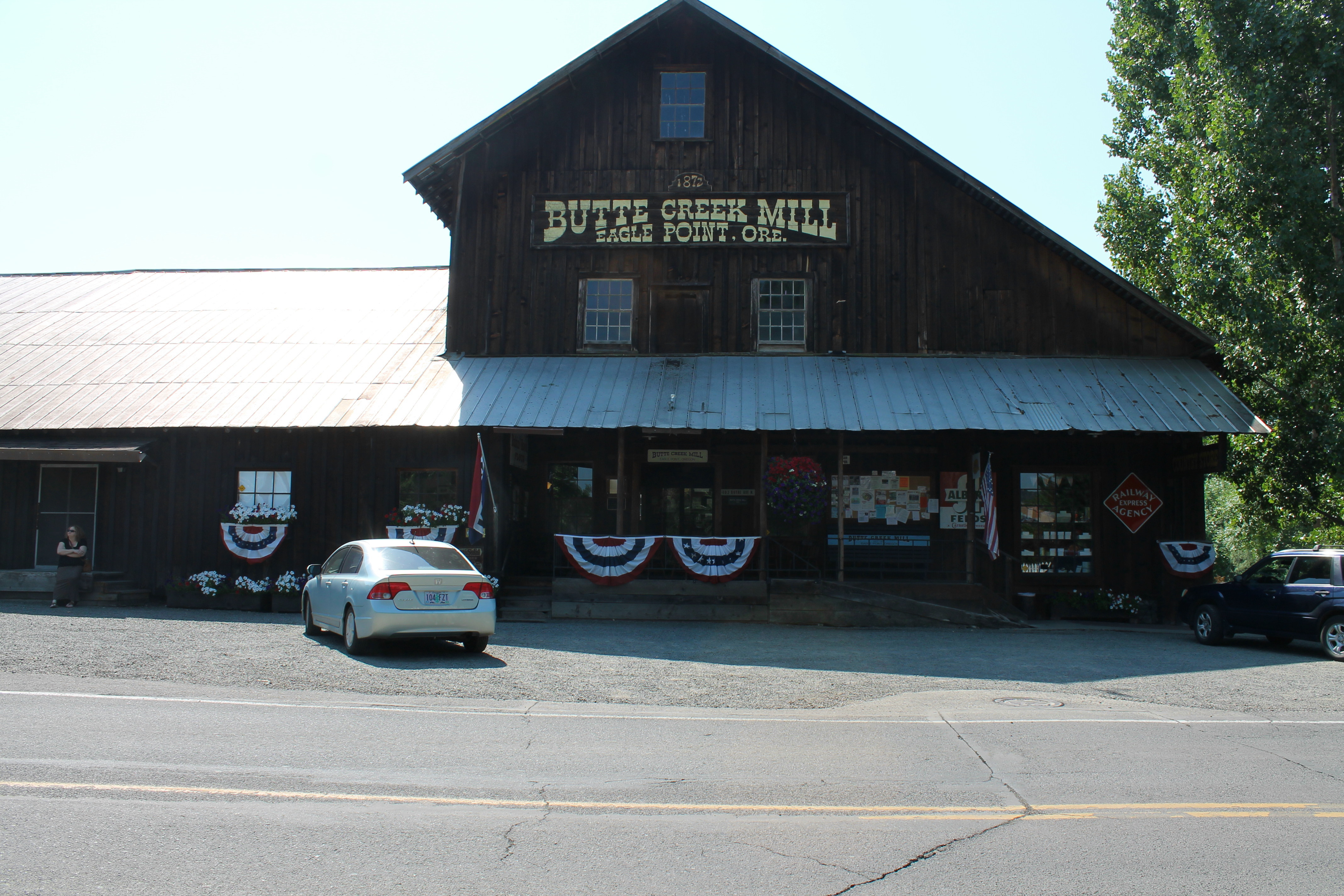
On the way home, we took a detour to the town of Eagle Point — about 10 miles west of Medford — to visit the historic Butte Creek Mill. Built in 1872, it is the only flour mill in Oregon that is still water-powered. The mill’s grounds feature a wide assortment of antique milling equipment and their country store sells a host of whole grain products.

IMG_1353

IMG_1347

IMG_1355

Glimpsing a building that appeared to be sprouting large mushroom sculptures from its roof, we had to make a stop at Magic Mushroom Oregon Gifts in Sutherlin. This one-of-a-kind gift shop features art and crafts from Oregon artists, including some pretty awesome mushroom lamps. They also have a large selection of incense and smoking supplies.

IMG_1356

We also stopped for a late lunch at The Cannery in Eugene. Here I sampled the locally made Oakshire Pearl Red Ale and wiped out three red snapper fish tacos. Very tasty.

Posted in Becky's Adventures, Oregon | Tagged , , , , , , | 2 Comments

The Language of Flowers Book Review

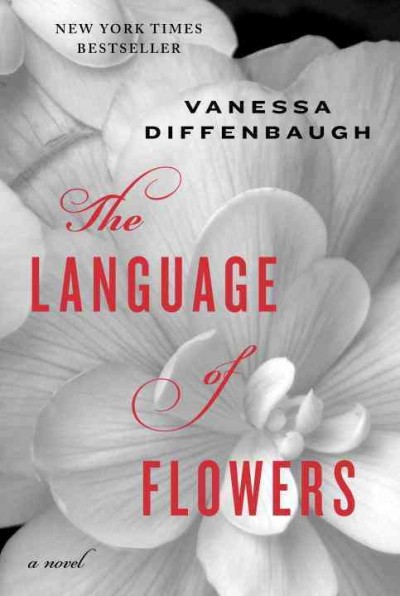
The Language of Flowers tells the story of Victoria Jones, an 18-year-old woman who has just been emancipated from a lifetime in the foster care system. Abandoned at birth, Victoria had been kicked out of numerous homes throughout her lifetime before being declared unadoptable. At age 18, she transitions into a group home for young women, but failing to get a job to sustain herself, Victoria soon ends up homeless and living in a park in San Francisco. The only thing that seems to keep her going on a day-to-day basis is her love of flowers, a passion that became a part of her during her longest foster care homestay.

Jacket

The Language of Flowers alternates between past and present throughout the novel’s short chapters. Victoria’s broken past is slowly revealed over time, while her past begins to reconcile itself with her present life path.

I would say that this book is equal parts plot driven and character driven. Told as a first person narrative, the reader really gets into Victoria’s head, and although I oftentimes found myself questioning the rationality of her decisions, in many ways I could relate to her. By alternating present and past, the story essentially has two plots — (1) Victoria trying to build up her life in the present despite all of the obstacles she faces and (2) the unfolding of events which led her to be declared unadoptable and how she comes to reconcile her past and present.

Central to the story is also the actual “language of flowers,” a mode of communication devised during the Victorian era whereby each type of flower is representative of a trait or emotion. Bestowing certain flowers on someone can carry a specific meaning. From example, red carnations mean “my heart breaks,” lavender means “mistrust,” and rhododendron means “beware.” An extensive dictionary of flowers is included as an appendix to this book. I will never look at certain flowers the same way again, such as the yellow rose, which means “infidelity.”

Posted in Movie Reviews/Book Reviews | Tagged , , , , | Leave a comment

The Spirit Catches You and You Fall Down Book Review

I first read Anne Fadiman’s 1997 award-winning book The Spirit Catches You and You Fall Down: A Hmong Child, Her American Doctors, and the Collision of Two Cultures over 10 years ago as assigned reading in a graduate level anthropology class. It is one of those stories whose premise you don’t easily forget, and the book has experienced a resurgence in popularity over the last year. I have been contemplating using it as a textbook in an undergraduate seminar I am teaching this fall, so I added it to my summer reading list.

Jacket

The Spirit Catches You and You Fall Down tells the story of Lia Lee, the 14th child of Hmong refugee parents who fled Laos in the early 1980s and began a new life in Merced, California. As an infant, Lia begins to experience severe seizures, which result in frequent emergency room visits. At first Lia’s parents, welfare recipients who do not speak English, have a hard time explaining to emergency room staff what has led to these visits; Lia has stopped seizing by the time she reaches the hospital and is mistakenly diagnosed with fluid build-up in her lungs and sent home with a course of antibiotics, of which her parents have no idea what to do with.

Finally, on Lia’s third visit she is in a continuous state of seizing and her American doctors diagnose her with epilepsy. Her parents, however, have another explanation. Lia’s soul has been stolen by an ill-meaning spirit, and the translation of this condition in the Hmong language gives the title to this book. They also don’t want Lia to fully recover, only for her condition to be eased somewhat, because in Hmong culture when a person seizes they may experience divine visions during those seizures and may grow up to become a shaman.

What follows is an ethnographic account of Lia’s family’s experiences with the American medical system, and American physicians’ experiences with a non-compliant family that is nearly impossible to communicate with. Fadiman gives a solid overview of the Hmong culture and their history, including how they served as front-line soldiers for the American side during the conflicts in Laos and Vietnam during the 1960s/1970s. She also raises important questions in medical ethics, questions those who work with clients from diverse backgrounds — especially in the medical field — should fully take to heart.

Re-reading this book nearly 12 years later, I was also interested in how my perceptions of it would change. A.M.B., who writes the blog, Misfortune of Knowing, wrote a reflective post last year on how her views on the book had changed over a similar length of time. While as a graduate student in medical anthropology, I was already interested in cross-cultural studies upon my first reading of this book. However, what surprised me the most upon re-reading is how much my views on Western medicine have changed in adulthood. I found myself more often feeling empathy with Lia’s parents. Who could really prove their views on health and healing wrong? I felt disgusted by how many times Lia was dehumanized by the medical establishment and given treatment with severe side effects, although it should be noted the medical establishment perhaps saved her life on several occasions. Moreover, I felt embarrassed about mainstream American culture for their perceived superiority complex.

It is also interesting to note that Lia Lee survived in a persistent vegetative state for 26 years, not on a costly life support machine at a county hospital (they pulled the plug within a few weeks), but by constant and diligent home care by her loving parents, who themselves subsisted on welfare. Lia passed away last August from pneumonia at the age of 30. Perhaps this recent news item is also why the book has seen a resurgence in popularity. In any case, this is one of those books destined to influence your worldview no matter where you ultimately lie on the ethical spectrum, and is a good pick for book group discussions as well.

Posted in Movie Reviews/Book Reviews | Tagged , , , , , , | 4 Comments

The Last Man Book Review

First published in 1826, Mary Shelley’s The Last Man is an apocalyptic science fiction novel about a future world ravaged by plague, written by the author of Frankenstein. The story is a first-person narrative told from the point-of-view of Lionel Verney, who grew up an orphan with his sister Perdita. In the opening chapters, Lionel holds a deep resentment for English royalty and nobility because they failed to take care of him and his sister following their father’s devastating gambling loss and subsequent suicide (apparently the royals didn’t get the memo that they were supposed to). However, this soon changes when he meets and is befriended by Adrian, heir to the British throne who harbors republican tendencies. Lionel and Adrian quickly become best friends forever, Lionel marries Adrian’s sister, and Perdita marries a military hero.

Jacket

The Last Man is divided into three volumes. The first volume is largely focused on introducing the characters and their histories. Unfortunately I didn’t find any of the characters that likeable, and in fact couldn’t wait for the plague to take effect and start killing them off. That doesn’t happen until well over 100 pages into the book.

Reading a 375 page novel written in passive voice and Victorian English doesn’t necessarily equal a quick read nor a page turner, but I am glad I finished this book for the historical perspective it holds. The novel takes place in Europe during the time period 2070 – 2100 AD, well into the future from Shelley’s perspective, but not too distant into the future from the current time. Shelley has created a world where peoples’ primary modes of transport are still boat and horseback, and while one cannot blame her for failing to predict the technological age, it was difficult to picture The Last Man as a futuristic novel.

Also, given the popularity of apocalyptic fiction over the past 30 years, a world ravaged by plague that would leave few survivors doesn’t seem all that new and creative. Yet I imagine that, like with Frankenstein, Mary Shelley was well ahead of her time, especially with her favorite sub-themes on the potential failings of medicine and science. Interestingly, The Last Man was hated by critics upon its original publication, and only received a publishing revival in the 1960s when this type of fiction became more culturally acceptable.

Still, I greatly preferred Frankenstein as a demonstration of Mary Shelley’s genius as an author, and science fiction classics like Fahrenheit 451 that portray a futuristic world that is more similar to the one we live in today. Also, I don’t think a novel with over a 100 pages of back story before any action would hold up in today’s society. Perhaps the 19th century critics had a better idea of the future than Shelley did.

Posted in Movie Reviews/Book Reviews | Tagged , , , , , , , | Leave a comment