The Mob Museum

I’ve just returned from a few days in Las Vegas to visit my family for Christmas. Among the many activities I did while I was there was visit the recently-opened Mob Museum, also known as the National Museum of Organized Crime & Law Enforcement.

IMG_0922_1

The museum is located in the old post office building in downtown Las Vegas. Exhibits are arranged on three floors, and visitors can follow a self-guided tour beginning on the 3rd floor, eventually working their way down to the entrance.

The 3rd floor focuses on the history of the mob in the United States, beginning with their ties to then-recent immigrant communities in the 1800s. The mob’s involvement in bootlegging during the prohibition era is especially highlighted, along with law enforcement efforts to bring down notorious criminals such as Al Capone. I learned the origins of one of my favorite activities in the entire world — happy hour. There are also a number of interesting artifacts on display, such as the actual wall from 1920s Chicago that was associated with the St. Valentine’s Day Massacre.

IMG_0916

There’s also a replica of the electric chair from Sing Sing Prison, which was used to execute over 600 prisoners, including Julius and Ethel Rosenberg and mob boss Louis Buchalter, allegedly the wealthiest man ever to be executed in the United States.

IMG_0918

A visit to the second floor begins with a short video on the Kefauver Trials, which took place during the 1950s across the United States, including in the very room where the video was shown. Overall, the second floor of the museum especially focused on the mob’s connections to the history of Las Vegas.

The ground floor looks at the enforcement of the Racketeer Influenced and Corrupt Organizations (RICO) Act, which has paved the way for wire tapping, surveillance, undercover FBI agents and the witness protection program, and has brought down hundreds of criminals since being enacted in 1970.

There’s also a wall of fame (or shame) with notorious mob members from the past 100 years.

IMG_0920

The “moral lesson” of the mob museum seemed to be that as long as there is supply and demand for certain items in society, organized criminals will continue to be involved in these money making ventures. Also, if you’re involved in the mob, you could end up dying a bloody, horrible death (and they have pictures to prove it).

IMG_0921

It took me about 2.5 hours to see the entire museum, but it took the rest of my especially thorough family around 3.5 hours.

Admission to the museum is $19.95 for most adults, although there are discounts for Nevada residents, children, students, military personnel and senior citizens. Parking next to the museum costs $5 per car, although my family parked for free at the Main Street Station and walked the 1/4 mile to the museum.

There is also a great gift shop on site with all things mob-related, including Mob Museum martini glasses and a whole section devoted to dog toys and costumes. Most impressive was their book collection, with titles ranging from Of Rats and Men: Oscar Goodman’s Life from Mob Mouthpiece to Mayor of Las Vegas to Criminal Crafts: Outlaw Projects for Scoundrels, Cheats, and Armchair Detectives.

Although there is a small food cart onsite, dining options are limited beyond small snacks, so if you’re as thorough a museum goer as my family, you might want to eat beforehand.

Posted in Becky's Adventures, Las Vegas | Tagged , , , , | 2 Comments

Wordless Wednesday: The Christmas Edition

Christmas 2012 023

Christmas 2012 031

Christmas 2012 027

Christmas 2012 044

Christmas 2012 046

Christmas 2012 052

Posted in Photography | Tagged , , , | 1 Comment

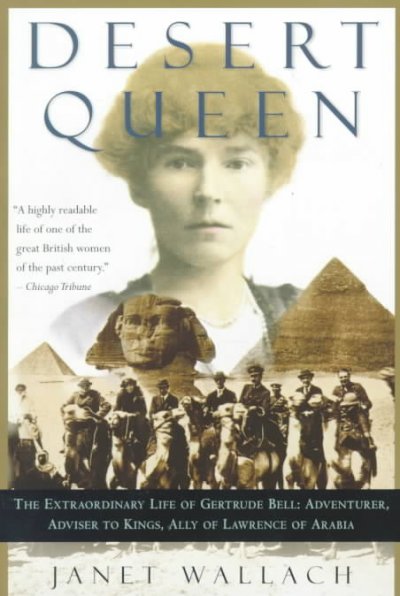
Desert Queen

For the many of us who believe there aren’t enough biographies about strong women from past generations, Desert Queen: The Extraordinary Life of Gertrude Bell: Adventurer, Adviser to Kings, Ally of Lawrence of Arabia, is an important read.

Jacket

Prior to reading this book, I’d never actually heard of Gertrude Bell, yet her colleague Lawrence of Arabia is practically a household name. Gertrude was a British citizen who lived from 1868 – 1926. She was one of the first women to graduate from Oxford, and one of the first women to hold a British-government appointed position. Late in her career she was appointed as the only British female officer in Mesopotamia, and was closely involved in the creation of modern-day Iraq, including the election of King Faisal as its first leader. In a time when women had few opportunities for career and adventure, she explored remote parts of the Middle East and has a noteworthy archaeologist. One of her final accomplishments was the establishment of the Baghdad Archaeological Museum.

This was one of the most comprehensive biographies I’ve ever read, and at times it was a bit too detailed. In conducting research for this book, it was apparent that author Janet Wallach extensively reviewed Gertrude’s diaries, personal correspondence and news clippings from her day. Not only is the book a timeline of Gertrude’s life, but a lot of her emotions are written into the story. Despite her many professional accomplishments, Gertrude’s personal life was marred by depression and tragedy. Later in life, she would reflect on how she never married, and she frequently wrote about the loneliness she felt. I won’t share any spoilers here, but I will say I was a bit stunned by the ending.

Desert Queen is also a useful read to shed light on the history of Iraq, which I also previously knew little about. It shouldn’t have come as a surprise that even 100 years ago the imperialists’ quest for oil played an important role in determining the nation’s boundaries and leadership.

Although this isn’t a quick read, it’s one I would recommend for fans of biography and history.

Posted in Around the World Virtual Book Club, Movie Reviews/Book Reviews | Tagged , , , , , | Leave a comment

Is Huck Finn A Good Role Model For Children?

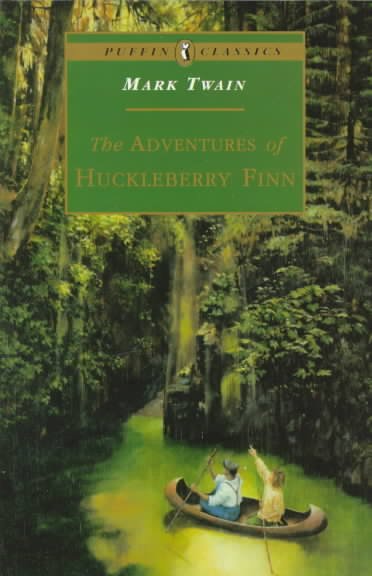
Before The Adventures of Huckleberry Finn was “revised” to replace the n-word with “slave,” my husband purchased a paperback copy. I’d read the book when I was around 12, and in my quest to read 100 classics, I am re-reading several books from my childhood.

Jacket

I’d forgotten how much I love this book. Huck Finn is just such a likeable character. Sure he smokes, lies, swears, steals, fakes his own death, runs away from home, cross-dresses, and (worst of all) is a horrible speller, deep down, you just know he has a big heart.

From its first publication in 1884 The Adventures of Huckleberry Finn has been challenged or banned. According to Alfred Kazin’s afterword to the 1981 Bantam Books edition (p. 296):

In 1885 the Concord Public Library banned Huckleberry Finn from its shelves. It was not altogether mistaken when it described the humor as “coarse,” and said that the substance was “rough, coarse and inelegant, dealing with a series of experiences not elevating, the whole book being more suited to the slums than to intelligent, respectable people.”

Yet, I argue, there is much about morality that Huck Finn can teach children. When the duke and dauphin try to steal Peter Wilks’ family inheritance, it is Huck who tries to prevent it from happening and exposes the truth to Mary Jane — although one may argue Huck had ulterior motives as well due to his crush on Mary Jane. Later on in the story, when the duke and dauphin are being tarred and feathered, Huck expresses sincere sympathy in noting, “human beings can be awful cruel to one another” (p. 230 in the 1981 Bantam Books edition), despite however much the pair may have deserved their comeuppance for all their wrong-doings.

Most importantly, Huck is compassionate and just. In a time when Whites still viewed Blacks as property, Huck stood up for what he believed was the right thing to do. He recollected that Jim viewed Huck as one of his greatest friends ever, and when Jim was captured and held captive, Huck saw that helping Jim escape was the morally correct choice to make.

But do you know who the real trouble maker in the story is?

Tom Sawyer

After Tom’s cameo in The Adventures of Huckleberry Finn, I’d wished I’d re-read the prequel to the story — The Adventures of Tom Sawyer — first.

Posted in Book Challenge | Tagged , , , , , | 1 Comment

The Cactus Eaters

While this year everyone read Cheryl Strayed’s Wild: From Lost to Found on the Pacific Crest Trail, I read a different memoir about the infamous 2,650 mile journey — Dan White’s 2008 book The Cactus Eaters: How I Lost My Mind — and Almost Found Myself — on the Pacific Crest Trail (P.S.).

Jacket

Disgruntled with their lives as small-town reporters, Dan White and his girlfriend, Alison, crave to do something adventurous and noteworthy — walk the entire length of the Pacific Crest Trail in a single season. To prepare for this epic journey, they go on a 1-night overnight backpack trip near their home in Connecticut. Their anticipated start date is delayed a bit longer than expected, and finally they set out on the trail just south of Los Angeles in mid-June, the supposed last “through hikers” of the season. Armed with enough supplies to complete an around-the-world journey, those experienced with the trail doubt that Dan and Alison will even make it to the first supply town.

The author’s inexperience, yet determination to complete this marathon journey will make any reader feel like they too could embark on such an adventure. At times the writing is crass, other times humorous. Along the way, Dan and Alison almost die of thirst on several occasions, eat cactus out of desperation, contract a disgusting and debilitating illness, and get attacked by a swarm of ticks. They encounter other hikers who briefly become interesting characters in the story. Throughout reading this book, you might constantly ask yourself, “will they complete the journey? Will Dan and Alison get married once it’s through?” I asked myself these same questions, and for 2/3 of the book, I really enjoyed following their humble journey.

And now I am going to do something I rarely do in book reviews. If you haven’t already read The Cactus Eaters and think you might like to, don’t read beyond this paragraph. I will leave you with the recommendation that this would be a fabulous book club pick, because there is much to discuss. For that reason, I must blurt out what I thought about the ending. If you have read this book, and whether you agree or disagree with what I am about to say, I would still love it if you share your thoughts in the comments section below.

**SPOILER ALERT**

Although this book was Dan’s memoir, I felt a special connection to Alison. She was the real trooper in the book, and saved Dan’s a**, and possibly his life, more than a few times. So when she was diagnosed with rheumatoid arthritis and couldn’t complete the remainder of the trail, I expected Dan to at least support her a little. But instead, he decided to complete the trail on his own. In his final missive from the trail he wrote, “don’t postpone adventure because you never know what will happen,” which I agree with in many circumstances, but not at the expense of those you supposedly care about.

It was almost as if in Part 2 of the book, the humble, goofy protagonist was consumed by a goal-obsessed narcissist who needed to complete the trail at any cost. At one point in my life, I too was goal-obsessed, but I have learned to accept that many times plans change, and that oftentimes there is more to be learned from the journey than from the outcome. So to put it bluntly, I was disappointed in the ending of this book.

I am a fan of many 19th century nature writers such as Henry David Thoreau and John Muir because I believe they teach their readers not only an appreciation of the natural world in all its beauty, but the possibilities of a life much simpler, and the responsibilities to act justly upon one’s convictions. But I am seeing a trend among many contemporary nature writers that I’ve read, in which, rather than becoming a more altruistic person after encountering nature, the person becomes more self-centered. Perhaps it has to do with the age we live in, which is summed up in a quote that begins The Cactus Eaters:

“Many lives are so empty of interest that their subject must first perform some feat like sailing alone around the world or climbing a hazardous peak in order to elevate himself above mere existence, and then, having created a life, to write about it.” — William Gass, The Art of Self: Autobiography in the Age of Narcissism


Posted in Movie Reviews/Book Reviews | Tagged , , , , , , | Leave a comment