Burger’s Daughter

On the western edge of the South-West Townships of Johannesburg, also known as Soweto, lies the community of Braamfisherville. I once visited this community, accompanied by colleagues from the HIV organization I volunteered with at the time, to invite a group of orphans to a Christmas party. Comprised mostly of South African goveirnment-built RDP homes, there’s nothing fancy about this township. Rather, I was struck by the sheer poverty of the orphan family we visited, and how their lives were far from aligning with the vision of the community’s namesake.

Bram Fischer is somewhat of a folk hero to many South Africans, but to nowhere near the degree of Che Guevara, whose image in South Africa is likely more commonly enshrined than Jesus’. A former leader of the South African Communist Party, banned by the apartheid regime, Bram Fischer is mostly remembered for leading the legal defense during the famed Rivonia Trial in 1963 – 1964 — the event that sent Nelson Mandela and other members of the African National Congress to political prison on Robben Island for nearly 30 years. Fischer himself was arrested in 1965 for being a Communist, imprisoned in Pretoria, and died while under house arrest in 1974.

Nadine Gordimer’s 1979 novel Burger’s Daughter is a coded tribute to the legacy of Bram Fischer. Originally banned in South Africa by the apartheid government, it was first published in the United Kingdom. Now it is considered a work of historical fiction from this Nobel Prize-winning author.

The central character of this book is Rosa Burger, daughter of the fictionalized, Communist, anti-apartheid activist Lionel Burger, who has recently died in prison. As a woman in her mid-20s, Rosa struggles with what it means to be the daughter of someone who has been labelled a “terrorist” by his own government for acts he committed out of his own conscience.

Throughout the course of the novel, Rosa works as a physiotherapist, enters into several love affairs and secretly travels to France to visit her father’s first wife. While trying to lead a semi-normal life, this becomes impossible for her simply because of who her family was and what they stood for.

I wanted to love this book, but partially for sentimental reasons. There was mention of familiar places I’ve visited in South Africa — Orlando, Sophiatown, Baragwanath Hospital. There was mention of familiar events — the Sharpeville Massacre and the June 16th Soweto Student Uprising — that resonated with me, not because I was there, but because I know people who were and I have heard there stories. Although this is a work of fiction, there’s frequent mention of real-life people such as Nelson Mandela, John Vorster, Miriam Makeba and even Bram Fischer himself.

But for all its possibilities, I only found the book slightly above average. It was not for the content, but rather for structural reasons. There’s frequent shifting between first-person narrative (largely Rosa’s stream of consciousness) and an unknown narrator. When there’s dialogue, it’s noted through dashes rather than quotes, which really bothered me. I oftentimes had difficulty following the narration, and frequently my mind began to wander while reading.

If you’re looking for a work of historical fiction on South African apartheid, I’d recommend Alan Paton’s Cry, the Beloved Country over this one. And my favorite recent book on the repercussions of apartheid is Antjie Krog’s Country of My Skull — a factual, journalistic account of the Truth and Reconciliation Commission.

Posted in Book Challenge | 1 Comment

Narrative of the Life of Frederick Douglass

Narrative of the Life of Frederick Douglass: An American Slave, Written by Himself — the latest book I’ve read for my 100 books challenge — is a fairly quick read and an important book from a historical perspective.

Published in 1845, the Narrative was the first of three Douglass autobiographies. The other two are My Bondage and My Freedom (1855) and Life and Times of Frederick Douglass (1881).

Interestingly, when Douglass first wrote and published his Narrative, he was still a fugitive slave, although he was living in the free state of Massachusetts at the time. In telling his story, Douglass explicitly names several plantation overseers and describes in great detail excessive physical abuse they exacted on their slaves — a few even going as far as murder. While reading, I kept trying to fathom the great risk Douglass took in coming public and sharing these stories, and wondering what would have happened if he had been captured by his master at that time.

The Narrative became an instant best-seller upon publication, especially amongst abolitionists who also used it as a propoganda piece. Upon publication, Douglass went on a ‘world tour’ to parts of the Caribbean islands, Ireland and England — likely in part to evade capture. Once in England, a group of abolitionists purchased his freedom for $711.

The Bedford series edition that I read — linked above with cover image also shown — contains an introduction and extensive footnoted commentary by David Blight, several book reviews that came out shortly after publication (including one by noted transcendalist Margaret Fuller), and a transcript of Douglass’ fiery 1952 speech “What to the Slave is the Fourth of July?”

There’s also a chronology of Douglass’ life, which made me want to read his latter two autobiographies as well, although Narrative is his most famous. I admit that prior to reading this book I knew very little about Douglass’ life, and I found it interesting to learn that he served in appointed positions in three different U.S. presidential administrations and that his second wife was a well-to-do white woman, which caused much controversy at the time.

The Narrative itself is short at around 85 pages, including an Appendix where he posits the hypocrisy of American Christianity, while he himself was quite a religious man and wrote “I love the pure, peaceable and impartial Christianity of Christ: I therefore hate the corrupt, slaveholding, women-whipping, cradle-plundering, partial and hypocritical Christianity of this land” (page 120). In some respects, it reminded me of Gandhi’s message 100 years later.

Posted in Book Challenge | Leave a comment

Treasure Island!!!

Sara Levine was one of the authors present at last week’s Wordstock Literary Festival in Portland. After I heard her read from her debut novel Treasure Island!!! I quickly decided to buy a copy. This book is a quick, fun read and I stayed up way past my bedtime last night to finish it.

Central to the book is the unnamed narrator, a 25-year-old recent college graduate. By day she works at a Pet Library, where people who can’t commit as full-time pet owners go to check out an animal for a few days. Life isn’t all that exciting for her, but after reading Robert Louis Stevenson’s classic adventure book, Treasure Island, she believes the book is “cosmically intended” for her. She resolves to live by the book’s core values: Boldness, Resolution, Independence and Horn-Blowing. To further her obsession, she develops 100 notecards with quotes from the book and their applications to her life, and splurges on an $800 Amazonian parrot named Little Richard — with money that she “borrowed” from petty cash at the pet library.

As the book progresses, it becomes increasingly twisted, and the narrator reveals evermore narcissistic and socio-pathic tendencies. All the while, she believes that she’s living according to the credo “What would Jim Hawkins (the protagonist of Treasure Island) do?” while ultimately she is far from it. The main character is so idiotic and ridiculous, as are her antics and interpretations, that I found myself laughing out loud many times.

I enjoyed this book mostly because it is the antithesis of chick-lit. It won’t appeal to everyone, and in fact it has garnered some rather mixed reviews on Goodreads. But if you enjoy your books a bit off-kilter, you might enjoy this book.

Interestingly, the book was edited by one of my favorite contemporary authors, Alice Sebold. While Sebold definitely does not write in a humorous style, Levine matches her level of dark fiction. Fans of Sebold should give Treasure Island!!! a read.

Posted in Movie Reviews/Book Reviews | 1 Comment

A Moveable Feast

After I reviewed For Whom the Bell Tolls on my blog a few weeks ago, my friend Amber sent me a copy of Hemingway’s memoir A Moveable Feast.

A Moveable Feast is a collection of essays written about Hemingway’s time in Paris in the 1920s. During that time, he was in his mid-20s and had just quit his job as a journalist to pursue fiction writing full-time — with only a few published short stories and no novel under his belt at the time. He’s married to his first wife, Hadley, and his young son Jack is a part of several stories. The memoir was first published in 1964, three years after Hemingway committed suicide, and was originally edited by his fourth wife, Mary.

The book contains 20 short essays, and is actually a quick read. His relationships to other literary figures of the time — Gertrude Stein, James Joyce, Ezra Pound, and F. Scott Fitzgeraland — are highlighted, in a sometimes humorous way (especially in regards to Fitzgerald). It references his connections with English-language bookstore Shakespeare & Company and its original owner Sylvia Beach. He frequents restaurants such as La Closerie de Lilas, which are still in existence today. And in case you’re a fan of literary tourism, I’ve just stumbled upon this handy travel guide to visit some of Hemingway’s favorite Parisian spots, many of which are referenced in the book.

Although Hemingway and Hadley were dirt poor at the time, there is just something romantic I find about their life there. Perhaps it is the abandoning of a conventional way of life in pursuit of art, maybe it is the thought of having drinks in small cafés with some of the most brilliant minds of an age.

My favorite story was “A False Spring,” which talks about the Hemingways visiting the Parisian racetracks to supplement their meager income, celebrating with champagne when winning on a long-shot, dining at Michaud’s restaurant, and memories of their time in Switzerland — which got me thinking about my own time in Switzerland when I was in my mid-20s.

Overall, I enjoyed A Moveable Feast better than Hemingway’s fiction thus far, and I recommend it if you’re looking for a quick, fun read, and if you enjoy travel memoirs or literary history.

Thanks Amber!

Posted in Movie Reviews/Book Reviews | 2 Comments

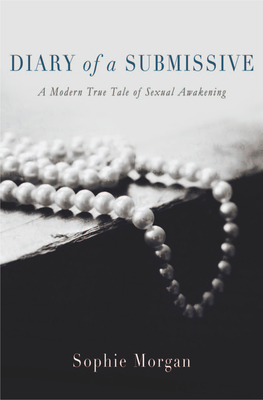
Diary of a Submissive {BlogHer Book Club}

With all the hype around Fifty Shades of Grey, I’ve avoided reading it. I heard from several friends who are avid readers that the writing is atrocious, and there’s nothing that will kill a book for me more than terrible writing. I was, however, intrigued to learn that the BlogHer Book Club was planning to read the newly released Diary of a Submissive: A Modern True Tale of Sexual Awakening, which bills itself as the real-life Fifty Shades of Grey.

Diary of a Submissive was written by a thirtysomething British woman who calls herself “Sophie Morgan.” Because she has a promising journalism career, and because she reveals some rather kinky stuff in her memoir, she can’t disclose her true identity. As she is a journalist, the book was well-written, aside from the overuse of the adjectives “vanilla” and “wet,” which became annoying as I continued reading. However, as she couldn’t reveal her true identity, there was a lack of narrative beyond her BDSM-oriented sexual experiences, and character development is what I really crave in a good memoir (for example, I really enjoyed Some Girls: My Life in a Harem).

In the end, was I glad I read Diary of a Submissive? Yes, actually. I think its content will make for some interesting conversation, albeit probably not at the dinner table. Did I enjoy the read? No, not really.

The book shares details on Sophie’s relationships with three different partners — a short-term affair while at university, a friends with benefits type of arrangement, and lastly, with a man to whom she actually feels an emotional connection. The biggest turn-off for me was Sophie’s vivid descriptions of both the physical and emotional pain she endured, how it routinely brought tears to her eyes, and how she frequently felt humiliated. Allow me to share a passage from the book (page 246-247):

In that moment I hated him. This wasn’t about submitting to feel challenged or be aroused or even to arouse him. He wasn’t pushing me out of my comfort zone or humiliating me for our mutual pleasure. But he was humiliating me, demeaning me, in a way he never had before. I properly hated him, but the loathing was tinged with prickly embarrassment and a genuine feeling of guilt…I knew what he wanted. Knew the choice was mine. Knew that I didn’t want to do it, that my every instinct was shouting for me not to, that I should hang up. But I wanted to make amends. I wanted to please him. I wanted to be able to reach the bar he had raised rather than fail him, fail myself.

I found nothing arousing in her narrative, and I rather felt like I was reading the memoir of a woman in an abusive relationship. Reading Diary of a Submissive left me wondering why this type of this relationship is now glorified in literature and what are the consequences of it? As the next BlogHer Book Club selection is billed as erotic romance, I am curious to find out if there’s a pattern.

To join in the discussion of Diary of a Submissive on BlogHer, visit the campaign’s main page.

Disclosure Statement: This is a paid review for BlogHer Book Club, but the opinions expressed in this post are entirely my own.

Posted in BlogHer Book Club, Movie Reviews/Book Reviews | 2 Comments